Showing posts with label Anne Frank. Show all posts

Monday, September 5, 2022

June 20, 1942: Rommel Breaks Through At Tobruk

Saturday 20 June 1942
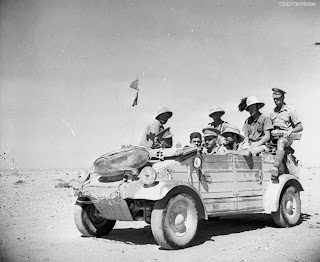
British troops in North Africa riding a captured German Kubelwagen, 20 June 1942 worldwartwo.filminspector.com
British troops drive a captured German Kubelwagen in North Africa, 20 June 1942.

Eastern Front: In Moscow on 20 June 1942, Joseph Stalin is in possession of the plans for the upcoming German Operation Blau, the planned offensive to capture the Soviet oil fields in the Caucasus. These papers were recovered from Major Joachim Reichel (now deceased) on 19 June 1942 after his plane was shot down by ground fire behind Soviet lines. While the plans are completely authentic and genuine, Stalin decides to disregard them because he believes they have been planted to deceive him.

In Crimea, both sides are experiencing supply shortages. Among other things, this compels a reduction in Luftwaffe flights by 40% and precise targeting of all bombs. The crews also are getting overworked, with some flying 25-30 missions per day. Fortunately for the Germans, Soviet resistance is crumbling and Luftwaffe war casualties are plummeting.

North of Severnaya Bay, the German 24th Infantry Division attacks the Lenin anti-aircraft and Northern Fort. While the Lenin position surrenders today, the Northern Fort holds out throughout the day despite the Germans using Goliath remote-controlled bombs and other techniques. In the south, the stalemate continues, with the Soviets retaining a firm grip on the critical Sapun Ridge and battering the nearby Wehrmacht forces with heavy artillery fire.

The Reichel Affair apparently has an immediate effect on German dispositions in Crimea. After many threats and indications that he would abandon the attempt to capture Sevastopol and turn it into a siege by transferring the essential Luftwaffe units to support Blau near Kharkov, Hitler suddenly tells Luftwaffe commander General von Richthofen that he can keep his air units in Crimea for the time being to finish the job. Richthofen joyfully writes in his diary, "Therefore, I feel reassured and can continue fighting in peace until we achieve final victory." This conclusion will turn out to be a bit premature but does reflect the upset and disequilibrium at Fuhrer Headquarters.

Luftwaffe attacks sink Royal Navy Landing Craft Tank HMS LCT-119 and LCT 150 off Tobruk.

Off Ak Mechet, Crimea, Romanian barge Danubius hits a mine laid by Soviet submarine L-6 and sinks.

Two women wearing the yellow Star of David badges in Paris, 20 June 1942 worldwartwo.filminspector.com
Women in Paris wearing the yellow Star of David badge, 20 June 1942 (Federal Archives Picture 183-B21356).

Battle of the Pacific: Japanese submarine I-26 (Yokota Minoru) shells the Estevan Point lighthouse on Vancouver Island in British Columbia. Accuracy is poor and nothing significant is hit. At the same time, I-26 first 25-30 5.5-inch (140 mm) rounds, then quickly escapes to the north and evades pursuit by five Royal Canadian Navy patrol vessels and a RCAF Supermarine Stranraer flying boat.

I-25 (Akiji Tagami) is also close to the North American coast and soon similarly will shell Fort Stevens, located at Columbia River, Oregon. During the early morning hours, it torpedoes Canadian freighter SS Fort Camosun off the coast of Washington. The freighter is badly damaged but survives to be towed into Puget Sound for repairs. It returns to service and the entire crew survives after abandoning the ship.

The U.S. Navy is still occupied with reorienting operations on an offensive footing following the dramatic success at Midway. So, local operations are the order of the day. Primarily, these are in the Aleutians, the one area of success for the Japanese.  USAAF 11th Air Force sends a bombing raid over Japanese-held Kiska Island that is hampered by poor weather conditions. Only three of nine bombers complete the mission, while three others abort and the final three divert to looking for a B-24 lost at sea on the 19th.

The crew of U.S. submarine USS S-27 (SS-132), which grounded and broke up on the 19th off Amchitka Island, makes it to a deserted village and awaits rescue. Much further south, B-17s of 5th Air Force bomb Lae Airfield on New Guinea. At Mubo, New Guinea, the 17th Australian Brigade repels a Japanese attack.

Janet Blair on the cover of Pix magazine, 20 June 1942 worldwartwo.filminspector.com
Singer/actress Janet Blair on the cover of Pix Magazine, 20 June 1942. Her most famous role was in "My Sister Eileen" (1942), for which undoubtedly this was some indirect publicity.

European Air Operations: During an RAF raid from Bourn to Emden, NF Oblt. G. Friedrich of III/NJG 1 shoots down British Wellington III bomber X3669 about 5 km southwest of Zandvoort. All four crew die.

Battle of the Atlantic: It is an oddly quiet day at sea in the Atlantic after many months of constant activity. There are no U-boat sinkings or major disasters at sea.

British 988-ton coaster Afon Dulais hits a mine and sinks near Beachy Head, East Sussex. There are no casualties.

German patrol boat V-1916 (Weser I) sinks from unknown causes somewhere in the Norwegian Sea.

Map of Tobruk battle, 20 June 1942 worldwartwo.filminspector.com
The battle of Tobruk, 20-21 June 1942.

Battle of the Mediterranean: General Erwin Rommel's Afrika Korps launches its assault on Tobruk only two days after reaching the port's perimeter. The Luftwaffe opens the attack at 05:20 by bombing the point of attack on Tobruk's southeastern defensive positions, with a theater-high 588 sorties. The Regia Aeronautica chips in with another 177 sorties. At 07:00, Gruppe Menny, positioned between the 15th and 21st Panzer Divisions, attacks in conjunction with a fierce artillery barrage. This achieves a breakthrough within 15 minutes, and the German 900th Engineer Battalion quickly enables a crossing of the port's anti-tank ditch. Panzers were rolling across by 08:30, and the infantry expands the breach.

The British defenders have not yet organized their defenses and are slow to respond to the unexpected onslaught. The defending 5th Mahratta Light Infantry immediately gives ground, and expected tank reinforcements never appear. The nearby Cameron Highlanders launch a counterattack, and then the 32nd Army Tank Brigade is ordered in, but it is too late. The British defensive effort is dispersed and overrun, aided by close German ground coordination with the Luftwaffe. By noon, the Germans have 113 tanks inside the perimeter, and by 13:30 they seize the critical Kings Cross road junction on Pilastrino Ridge. The British make a last stand by using 3.7-inch anti-aircraft guns as ground artillery, but this is ineffective. By 16:00, the port commander's headquarters, General Klopper, is under assault, and he has to escape hurriedly, losing contact with his command.

Having overcome the outer defenses, the panzers reach the port outskirts by 18:00. Realizing the developing catastrophe, British units begin blowing up port installations and ammunition dumps. By nightfall, the British defenses are in a chaotic state of disarray and the German 15th and 21st Panzer Divisions are poised to overcome all remaining defenses on the morrow.

USS Meade off NYC, 20 June 1942 worldwartwo.filminspector.com
U.S Navy destroyer USS Meade (DD-602) off New York City, 20 June 1942. This is during her delivery voyage from the Bethlehem Steel Company shipyard at Staten Island (Bureau of Ships Collection in the U.S. National Archives 19-N-30842).

Oddly, Fuhrer headquarters seems almost indifferent to Rommel's success. General Halder doesn't even mention it first in his list of the day's events, instead listing it fourth after "no change" on the Eastern Front, a mundane conference with the logistics chief, General Wagner, and a cursory description of the Reichel incident (which reflects poorly on OKH). When he finally does get to it, Halder writes:

Tobruk captured. Thus, the heavy battle in Cyrenaica has culminated on a victory that is of equally great value from the military and the political aspect.

This is one of the oddest entries in Halder's diary, completely distanced and remote from the actual state of affairs (Tobruk is not yet captured) and may reflect an underlying truth that seldom is brought out into the open. Halder and rest of OKH don't think highly of Rommel. He was not their first choice for command in Africa - General Paulus, now commander of Sixth Army, was. They view Rommel as a "loose cannon" whose victories are the result of insubordination and gambles. Rommel also has a reputation of not seeking approval for his operations. Finally, the OKH views the entire Mediterranean Theater as a sideshow that simply draws off forces that would be better employed on the theater of decision - the Eastern Front, which (not coincidentally) is completely under the control of the OKH and not the OKW (which controls western operations.

Thus, Rommel's successes are of far lesser import to the German High Command than to post-war Western accounts. Rommel only controls the equivalent of one corps, while OKH controls entire Army Groups. As long as Rommel stays out of trouble and doesn't require excess reinforcement, OKH really couldn't care less what he does. As to Hitler (who today, Halder notes, is back in East Prussia), he likely has a similar attitude but is simply happy that Rommel is keeping the Western Allies busy and giving him enough time to clear the table in the East.

Spy Stuff: The FBI picks up the German spies staying at a New York hotel following the surrender by leader George Dasch at FBI headquarters in Washington D.C. on the 19th. 

Allied Diplomacy: During discussions between Winston Churchill and President Roosevelt at the latter's Hyde Park, New York, estate, an agreement is reached to postpone an invasion of France (the Americans' preference) and instead invade North Africa (the British plan). This becomes Operation Torch and takes place in November 1942. 

US Military: Brigadier General Dwight D. Eisenhower is ordered to replace Major General James E. Chaney as Commanding General European Theater of Operations. This is a controversial choice, as Eisenhower thus leapfrogs over many more senior officers for such a prominent command. General George C. Marshall instructs Eisenhower to integrate all U.S. air units in the UK into the 8th Air Force and gives as the mission to attain "air supremacy over Western Continental Europe" in preparation for a future invasion of the Continent.

US Ninth Army under General Krueger establishes its headquarters at Milne Bay, New Guinea.
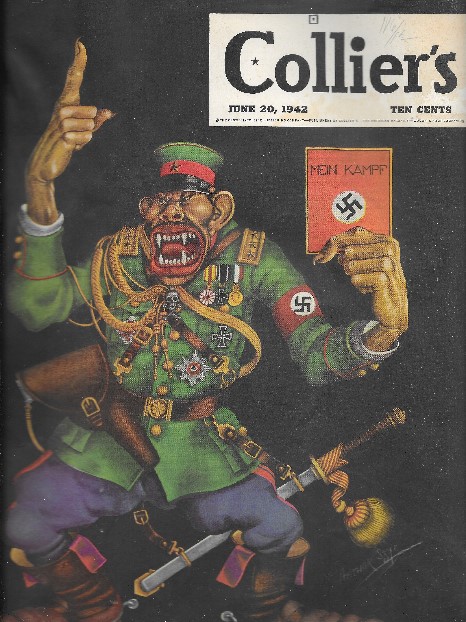
Collier's, 20 June 1942 worldwartwo.filminspector.com
Collier's, 20 June 1942 (Arthur Szyk).

Holocaust: Anne Frank discloses in her diary that she writes because she is lonely - there is nobody with whom she can share her secrets. She christens her diary "Kitty." Anne writes that she has a mother, father, and sister Margot, that they used to live in Frankfurt, Germany, and that they fled to Holland because of the persecution of people like them.

Four Polish prisoners at Auschwitz steal SS officer uniforms and drive a staff car out through the front gates. These are Eugeniusz Bendera, Stanisław Gustaw Jaster, Józef Lempart, and Kazimierz Piechowski. They are never recaptured and the last survivor, Piechowski, passes away on 15 December 2017 at the age of 98.

American Homefront: Comic book villain "Two-Face" is introduced in Detective Comics (the predecessor of DC Comics) issue #66 (the cover date is August 1942).

"Sleepy Lagoon" by Harry James and His Orchestra" becomes No. 1 on The Billboard National Best Selling Retail Records chart. It tops the chart for four weeks and becomes a standard.

Saturday Evening Post, 20 June 1942 worldwartwo.filminspector.com
"Women at Dude Ranch," Saturday Evening Post, 20 June 1942 (Fred Lukekens).

Future History: Brian Douglas Wilson is born in Inglewood, California. After moving to Hawthorne, California, Wilson begins to exhibit a special musical ability. He and his two younger brothers (Dennis, born 1944, and Carl, 1946) begin singing harmonies together while Brian plays the accordion or piano. At nine, Brian writes (or, more accurately, adapts) his first song, and writes his first independent song for a 4th-grade school project. He obsessively plays the piano and listens to the radio. After playing sports in high school, including being the quarterback of the Hawthorne football team, Brian attends El Camino Junior College, but drops out when he is disappointed at his teachers' attitudes toward pop music. In 1961, Brian and his brothers, cousin Mike Love, and friend Al Jardine form a musical group. With father Murry Wilson serving as manager, the group continues developing their skills. Brian's composition "Surfin," recorded by another act, becomes their first local LA hit. Their label, Candix Records, now changes the group's name to the "Beach Boys," but the label soon sells their contract to another label, but Murry decides to terminate it. They then attract the attention of Capitol Records, which begins releasing their tracks as singles, including "Surfin' Safari" and "409." When these become national hits, the future of the Beach Boys is assured and they become legendary performers, with their most famous album "Pet Sounds." Brian is recognized as a positive influence on The Beatles, whose Paul McCartney was born exactly two days before Brian on 18 June 1942. He thereafter battles mental health issues but largely overcomes them, with occasional relapses and continuing manageable stresses. As of writing, Brian Wilson continues touring and songwriting.  

The New Yorker, 20 June 1942 worldwartwo.filminspector.com
New Yorker, 20 June 1942 (Constantin Alajalov).

2022

Wednesday, April 13, 2022

June 12, 1942: First US Air Raid On Occupied Europe

Friday 12 June 1942

Free French attack in North Africa, 12 June 1942 worldwartwo.filminspector.com
Free French on the attack near Bir Hackeim, 12 June 1942 © IWM E 13313.

Eastern Front: On vacation in Berchtesgaden, Adolf Hitler is full of hope and secret dread for the coming "decisive" summer offensive in the Soviet Union. The whole point of the attack, he muses, is to "clear the table" and win the war. "If I do not get the oil of Maikop and Grozny, then I must end this war," Hitler admits to his cronies.

The current attacks are not going well, let alone ones in the future. The assault on entrenched Russian defenses at the Crimean port of Sevastopol continues on 12 June 1942 without much progress by either side. The Soviets receive reinforcements when cruiser Molotov and destroyer Bditel'nyy evade the Axis blockade and deliver 2,314 soldiers, 190 tons of ammunition, and 28 artillery pieces to the besieged garrison.

German ground attacks continue without much success. In the critical northeast sector, LIV Corps continues its relentless attacks and loses 1957 men in the fighting of 11-12 June, but the Soviet defenders also are in bad shape. 

The Germans, though, are determined. Super-heavy artillery piece "Dora" and eleven 420 mm mortars open fire on Fort Stalin, which guards the approaches to Severnaya Bay but have little impact. Finally, a dive-bombing attack by Junkers  Ju-87 Stukas of StG 77 knocks out three of the fort's main 76.2 mm guns, and General Erich von Manstein's 11th Army assembles an attack force to take the fort for early on the morning of 13 June.

Resistance to superior orders is fairly common within the Wehrmacht, but everyone in uniform knows that it must be done "the right way." An example occurs today in Crimea. Luftwaffe General Wolfram von Richtofen has forbidden all air attacks in the Black Sea for fear of hitting Axis naval vessels. The local German naval commander, Vizeadmiral Gotting, vehemently disagrees, but von Richtofen's order is final and he will not listen to any complaints.

Accordingly, Gotting meets today in private with von Richtofen's naval liaison, Koneradmiral von Eyssen - who gives von Richtofen all of his naval information. Together they secretly agree that the order prohibiting Luftwaffe operations at sea is counterproductive and they jointly limit the order to a very small restricted zone directly off Crimea - without, of course, telling von Richtofen. Von Eyssen then coordinates this with Luftwaffe Oberst Wolfgang von Wild, who commands Lufftwaffe forces (Fliegerfuhrer Sud) operating over the Black Sea. Von Wild also agrees that von Richtofen's order is nonsense, and all three men subvert von Richtofen's direct order. This is the "right" way to disobey orders in the Third Reich and is done by different commanders throughout the war.

At Fuhrer Headquarters in East Prussia (Hitler is on vacation on the Obersalzberg), General Franz Halder has a disturbing conference with Vice Admiral Fricke and his aide. It is disturbing because, as Halder records in his diary, "Those people are dreaming in terms of continents." He writes that they "assume without another thought" massive German land victories that will obtain ports on the Persian Gulf and on the East African coast. "The problems of the Atlantic," Halder notes with incredulity, "are treated with off-hand superiority and those of the Black Sea with criminal unconcern."  Halder, of course, has first-hand information on just how precarious the Axis position in the USSR really is.

Battle of the Pacific: Both sides are heading for home following the decisive American victory at Midway Island. Admiral Frank Fletcher, in command aboard USS Saratoga, is one day's sail from Pearl Harbor, while Admiral Nagumo is still two days' sail from Hashirajima. the Americans are eagerly publicizing their victory, while the Japanese are keeping their losses a guarded secret known only to the Emperor and a small number of high-ranking naval personnel.

USS Swordfish (Lt. Cdr. Chester C. Smith SS-193), operating northwest of Poulo Wai in the Gulf of Siam (later Gulf of Thailand), torpedoes and sinks Japanese freighter Burma Maru. The wreck is discovered in February 2017.

Japanese submarine I-21, operating off the east coast of Australia, torpedoes and sinks 5527-ton Panamanian coke freighter Guatemala while on the surface. The freighter is traveling in an eight-ship convoy from Newcastle to Whyalla, such convoys having been organized only recently due to the recent submarine assault on Sydney Harbor. HMAS Doomba picks up the crew, all of whom survive.

In China, the American Volunteer Group (Flying Tigers) has a big day. At dawn, the 1st Squadron shoots down four Ki-27 Nate bombers and five other twin-engine plans over Kweilin (Guilin, on the west bank of the Li River).

B-17s of the 5th Air Force bomb Lakunai Airfield and Vunakanau at the Japanese main overseas base of Rabaul.

NY Times 12 June 1942 worldwartwo.filminspector.com
NY Times, 12 June 1942.

Battle of the Indian Ocean: Japanese submarine I-10 shells and sinks 2052-ton Panamania freighter Hellenic Trader in the northwestern Mozambique Channel near Bahla de Cruz. Later in the day, I-10 torpedoes and sinks 5064-ton British freighter Cliftonhall.

Japanese submarine I-16 torpedoes and sinks 3748-ton Yugoslav freighter Supetar in the Mozambique Channel near Cabo de Sao Sebastiao.

Japanese submarine I-20 shells and sinks 5063-ton British freighter Clifton Hall in the Mozambique Channel off Angoche, Mozambique.

European Air Operations: A small force of a dozen U.S. Army Air Force B-24 Liberators flying from northeast Egypt bomb the Ploesti, Romania, oil fields after taking off at 22:30 on 11 June. The bombing is extremely inaccurate due to poor weather and no appreciable damage is caused. The bombers encounter flak and a few enemy fighters. Altogether, the planes drop 24 tons of bombs, with a thirteenth bomber attacking the port of Constanta. The bombers then proceed on to Habbaniyah, Iraq, making this an early example of shuttle bombing. Four bombers make it to Habbaniyah, while the others land at other fields in Iraq and Syria. Four of the bombers land in Turkey and their crews are interned. 

This is the first offensive mission by U.S. planes over Europe during World War II. General Dwight D. Eisenhower comments drily that the failed attack "did something to dispel the illusion that big planes could win the war." The bombers are from the Halverson Project 63, or HALPRO and have flown across the Atlantic for the mission. This small force forms the genesis of the 1st Provisional Bombardment Group (PBG) and the 376th Heavy Bombardment Group, completing another 450 missions.

The poor weather of spring 1942 continues and gets worse throughout the day on the Channel Front, but it is mild enough in the morning and early afternoon for some operations.

Group Captain Ken Gatward and navigator Flight Sargeant George Fern conduct The Beaufighter Raid on Paris, or Operation Squabble. This has been delayed for a month due to poor weather. This is a daring propaganda strafing run on a German parade down the Champs-Élysées that includes dropping Tricolor flags on prominent monuments (the Arc de Triomphe and the French Naval Ministry, currently being used as Kriegsmarine headquarters).

The two men take off from RAF Thorney Island in rain and clouds, but the weather clears sufficiently to carry out the mission. Flying at an extremely low altitude, the Beaufighter circles the Eiffel Tower at 12:27 and then heads for the Champs-Élysées. It turns out there is no German military parade (it hasn't begun yet), but the men drop the flags as intended. After strafing the Ministry building, the men return to RAF Northolt at 13:53. During the strafing run, the plane suffers a birdstrike, and the French crow is found in the starboard radiator. Gatward receives the DFC and Fern the DFM for their efforts.

RAF aircraft of Coastal Command engage in routine convoy patrols. They bomb and sink 1497-ton Swedish freighter Senta 30 nautical miles Cuxhaven, Germany (near the Weser River). There are no casualties.

RAF Beaufighter, 12 June 1942 worldwartwo.filminspector.com
Beaufighter Mk IC T4800 code ND-C of No. 236 Squadron RAF on the ground at Wattisham Suffolk 12 June 1942.

Battle of the Baltic: Swedish 1046-ton Bojan hits a mine and sinks off Saßnitz, Germany.

Battle of the Atlantic: German cruiser Michel, operating off the coast of Brazil, on 6 June had spotted the disabled 7176-ton U.S. freighter George Clymer and launched its MTB Esan. The MTB torpedoed the freighter and the crew abandoned ship. However, the ship remained afloat, and the crew re-embarked. British armed merchant cruiser HMS Alcantara has remained in the vicinity of the badly damaged ship since arriving on the scene on 8 June, but today departs, leaving the freighter still afloat. It is assumed that George Clymer eventually sinks.

U-158 (Kptlt. Erwin Rostin), on its second patrol out of Lorient, torpedoes and sinks US 8192-ton tanker Cities Service of Toledo 20 miles east of the Trinity Shoal Buoy in the Gulf of Mexico. There are 15 deaths.

U-124 (Kptlt. Johann Mohr), on its ninth patrol out of Lorient, torpedoes and sinks 4093-ton British freighter Dartford south of Cape Race. There are 17 survivors and 30 deaths.

U-129 (Kptlt. Hans-Ludwig Witt), on its fifth patrol out of Lorient, torpedoes and sinks 9005-ton refrigerated cargo freighter Hardwicke Grange 120 nautical miles (220 km) north of Puerto Rico. There are three deaths and 78 survivors. The survivors are in four lifeboats for two weeks, and each lifeboat lands in a different country: Cuba, the Dominican Republic, Jamaica, and Haiti.

German 125-ton minesweeper M-4212 (formerly Belgian trawler Marie-Frans) hits a mine and sinks south of Vieux-Boucau-les-Bains, France. The mine was laid previously by French submarine Rubis.

Map of North African campaign, 12 June 1942 worldwartwo.filminspector.com
Map of North African campaign, 12 June 1942.

Battle of the Mediterranean: The British in the El Adem "box" are under intense pressure by General Erwin Rommel's 15th Panzer Division and give ground as the Germans attempt to break out of  "the Cauldron." The 2nd and 4th Armoured Brigades retreat 6 km (3.7 miles) in disarray, leaving only the 29th Indian Infantry Brigade holding its ground. Rommel orders the 21st  Panzer Division to join the attack on the 13th. A breakthrough here would open a pathway to Tobruk.

The Allies are only in as good a situation as they are due to the previous stout Free French defense at Bir Hakeim. Now that the fortress has fallen, the Germans can bring much greater pressure to bear on the British. Today, General Auchinleck praises the French, saying, "The United Nations need to be filled with admiration and gratitude in respect of these French troops and their brave General Kœnig."

While the intense Luftwaffe air campaign against Malta has eased in recent weeks, it remains in a precarious position due to supply shortages. Today, the Royal Navy begins Operations Harpoon and Vigorous, typical convoy missions to the embattled island. Harpoon sets out from Haifa, Palestine, while Vigorous begins at Gibraltar.

Convoy MW4 leaves Gibraltar heading east with six merchantmen (the British Troilus, Burdwan and Orari, the Dutch Tanimbar, the American Chant, and the tanker Kentucky) carrying 43,000 short tons (39,000 t) of cargo and oil. It is protected by Force X, which includes distant cover by battleship HMS Malaya and aircraft carriers Argus and Eagle.

The westward operation is a little more complicated. Convoy MW-11a embarks from Haifa with five merchantmen (British Ajax, City of Edinburgh, City of Pretoria, City of Lincoln, and Elizabeth Bakke) heading west. It is escorted by the 7th destroyer flotilla. This convoy has trouble immediately when Elizabeth Bakke is ordered back to port because it cannot maintain station due to overloading and its poor condition. Convoy MW11b departs from Alexandria, Egypt, with a tanker (Bulkoil), a merchantman (Potaro), and a decommissioned battleship (Centurion) being used as a freighter. It is escorted by five destroyers, four corvettes, and two rescue ships (Antwerp and Malines). There also is a third convoy from this direction that departs from Port Said, MW-11C, composed of freighters Aagtekirk, Bhutan, City of Calcutta, and Rembrandt.

The objective is to confuse and disperse the Axis defenses with all of these simultaneous convoys. In theory, this should enable maximum resupply of the island despite inevitable losses.

Unknown to the British, the Axis knows all about these operations already due to a major security breach by the US Military Attaché in Egypt, Colonel Bonner Fellers. Italian military intelligence (Servizio Informazioni Militare) has broken the American code and thus has deciphered Fellers' detailed reports to Washington. While not strictly Fellers' fault, better precautions could have avoided this. In any event, this incident proves that codebreaking during World War II was not just a one-way street that benefited only the Allies.

With the Axis ready and waiting, the attacks begin almost immediately. In the evening, 15 Junkers Ju 88 bombers of I Kampfgeschwader 54 based in Crete attack MW-11c. They score a near-miss on City of Calcutta, which slows it and forces the freighter to divert to Tobruk along with its towed MBT, escorted by two escorts. During the night, MW-11c slows to arrange a rendezvous with the other two convoys off Mersa Matruh.

Separately, U-77 (Kptlt. Heinrich Schonder), on its sixth patrol out of La Spezia, torpedoes and sinks the Royal Navy destroyer HMS Grove (L77) off Sollum, Egypt. The ship sinks in 14 minutes with 110 deaths and 79 survivors. Escort destroyer HMS Tetcott picks up the survivors.

SS Hardwicke Grange, sunk on 12 June 1942 worldwartwo.filminspector.com
British refrigerated freighter Hardwicke Grange, sunk by U-129 on 12 June 1942.

Spy Stuff: U-202 (Kptlt. Hans-Heinz Linder), on its sixth patrol out of Brest, arrives off the south coast of Long Island, New York, in early-morning darkness and disembarks four German spies/saboteurs. The four men land at Amagansett. This is Operation Pastorius, one of a series of such operations planned to disrupt the economy of the United States. They are wearing German Navy uniforms to avoid being shot as spies if captured during the landing. However, upon landing and finding themselves alone on the beach, they quickly change into civilian clothes and bury their uniforms and other equipment.

A problem quickly develops when Coast Guardsman John C. Cullen spots the men posing as fishermen on a raft. Cullen also notices the submarine and sees that the men are armed. He approaches them, and the spies give Cullen $200 to keep quiet. Cullen takes the money but alerts his superiors later in the day, by which time the four spies have taken the LIRR into Manhattan.

Anne Frank's diary, begun on 12 June 1942 worldwartwo.filminspector.com
The first page of Anne Frank's diary, written on 12 June 1942.

Holocaust: In Amsterdam, Anne Frank is gifted a red-and-white plaid diary on her thirteenth birthday. The Franks, German Jewish refugees, have not yet gone into hiding. Her first entry begins, "On Friday, June 12th, I woke up at six o’clock and no wonder; it was my birthday." Later in the entry, she says, "I hope I will be able to confide everything to you, as I have never been able to confide in anyone, and I hope you will be a great source of comfort and support."

US Military: The US Army activates the 100th Infantry Battalion, composed of Japanese-Americans from Hawaii.

German Military: Oblt. Egon Albrecht becomes Staffelkapitaen of 1./ZG 1.

George Bush joins the US Navy, 12 June 1942 worldwartwo.filminspector.com
George Bush during World War II.

Russian Homefront: Russian revolutionary Anna Yakimova dies in Novosibirisk, aged 86. She was a prime early agitator against the Tsar around the turn of the 20th Century.

American Homefront: In the evening, a tornado hits the southwest section of Oklahoma City near Will Rogers Airfield. Local sources (the Ada Evening News) report 21 dead, 25 critically injured, and 250 made homeless.

Future President George Herbert Walker Bush graduates from high school and immediately enlists in the U.S. Navy despite already having been admitted to Yale University.

Future History: Bert Sakmann is born in Stuttgart, German Reich. He grows up to become a noted cell physiologist who wins the Nobel Prize in Physiology or Medicine with Erwin Neher in 1991. As of this writing, Sakmann leads an emeritus research group at the Max Planck Institute of Neurobiology in Heidelberg, Germany.

Memorial to the 100th Infantry Brigade, activate on 12 June 1942 worldwartwo.filminspector.com
Brothers in Valor Monument in Honolulu, Hawaii, commemorating the 100th Infantry Battalion and other Japanese-American units in World War II (Photo: Sarah Sundin).


2022

Saturday, April 10, 2021

May 2, 1942: Cruiser Edinburgh Sunk

Saturday 2 May 1942

U-boats at Hel naval base May 1942 worldwartwo.filminspector.com
U-boats at the Hel submarine training base in Poland on the Baltic Sea, May 1942. The two U-boats closest to the camera are Type VIIC.
Battle of the Pacific: The Japanese are on the move in the South West Pacific Area (SWPA) on 2 May 1942. Their Operation Mo has as its first objective the occupation of Tulagi, where the Japanese intend to establish a seaplane base. Coastwatcher Jack Read on Bougainville Island spots large Japanese ships departing the Buka Island area near northern Bougainville, and later coastwatcher D.G. Kennedy on New Georgia (further south on the way to Tulagi) spots the same. Alerted of these sightings on Tulagi, Australian commando commander Captain A. L. Goode and Royal Australian Air Force commander Flight Officer R.B. Peagam order the immediate destruction of their facilities and evacuation of personnel. Flyable PBY-5 Catalina flying boats already have left. The evacuation will be completed by the early hours of 3 May.

The Japanese also have their Carrier Strike Force, led by aircraft carriers Shōkaku and Zuikaku, on the way from Truk. Its commander, Vice Admiral Takeo Takagi, attempts today to deliver eighteen Mitsubishi A6M Zero fighter planes to Rabaul, but poor weather interferes. Ultimately, Takagi is able to deliver the fighters (this is unclear and disputed in the sources), but he must keep trying until the 3rd. The bad weather also prevents Takagi's force from refueling until the 4th. These delays seriously disrupt the entire Japanese timetable for Operation Mo and prevent the Carrier Strike Force from arriving at Tulagi on time to have any effect.
MacArthur on cover of Women's Weekly 2 May 1942 worldwartwo.filminspector.com
A portrait of General MacArthur on the Australians Women Weekly, 2 May 1942
A separate Japanese force out of New Ireland establishes a seaplane base at Thousand Ships Bay, Santa Isabel Island, to support the projected landings at Tulagi, while the Japanese 3rd Kure Special Landing Force occupies the Florida Islands (Nggela Islands) north of Guadalcanal.

The US Navy has a good idea of the Japanese plans because of radio intercepts. Vice Admiral Frank Jack Fletcher, commander of Task Force 17, has stationed fleet carriers USS Yorktown (TF 17) and Lexington (TF 11) about 300 nautical miles (350 miles, 560 km) northwest of New Caledonia. TF 17 completes its refueling today, but TF 11 takes longer and signals it will not be ready until the 4th. Yorktown aircraft (SBDs (VS 5) and TBDs (VT 5)) spot Japanese submarine I-21 near Nouméa and attack but score no hits. Reporting by radio to Tokyo, the Japanese commander does not indicate that the attacking aircraft are carrier-based, so the nearby US Navy carriers remain undetected.
Corregidor Island worldwartwo.filminspector.com
Corregidor.
On Corregidor Island, Philippine Islands, the embattled US garrison (many of the 4th Marine Division) continues to hold out against a vicious around-the-clock pounding from Japanese shore artillery and bombers. Malinta Tunnel is overcrowded - to step outside is to invite death. Potable water is running out, now down to a six-day supply. The US Navy scuttles the river gunboat USS Mindanao off South Harbor. The US Navy is sending submarine USS Starfish to pick up a couple of dozen more lucky people, it is scheduled to arrive on the 3rd.

US Navy submarine USS Trout torpedoes and sinks 5015-ton Japanese freighter Uzan Maru off Shikoku, Japan.

Japanese 10,930-ton seaplane carrier Mizuho, torpedoed off Omaezaki, Japan, by USS Drum on 1 May 1942, sinks about 40 nautical miles (74 km) offshore. There are 472 survivors (31 wounded) and 101 deaths.
USS Sunfish is launched on 2 May 1942 worldwartwo.filminspector.com
USS Sunfish (Cdr R.W. Peterson) is launched on 2 May 1942 at Mare Island Naval Shipyard, Vallejo, California (US Navy).
Battle of the Indian Ocean: The Japanese tighten their grip on Mandalay, Burma, on 2 May 1942. Their advance units range far to the west of the former capital. Their occupation of the city and rapid move westward blocks the escape route for part of the 1st Burma Division. It attacks the Japanese 33rd Infantry Division at Monywa, west of Mandalay, in an attempt to rejoin the main British forces north of Mandalay, but fails to make progress.

North of Lashio, the Northern Shan States Battalion, Burma Frontier Force, along with elements of a detachment of the Chin Hills Battalion, continue to block the Japanese advance north toward the regional center at Bhamo. The Allied troops are holding a key bridge across the Shweli River. The bridge has been rigged for detonation, but nobody knows how to set off the charges. The battle for the bridge rages throughout the day while the Japanese troops await reinforcements.

Eastern Front: General Franz Halder, fresh off a week-long leave in Berlin, returns to, as he puts it in his war diary, a "Quiet day along the entire front, except on the Volkhov, where local fighting continues." The Germans have cut off a large Red Army force to the west of the Volkhov River, which now is fighting for its life. Operations along the rest of the front are at a standstill due to the spring thaw ("Rasputitsa") which always peaks around this time of year.

European Air Operations: A pause in major operations by both sides continues today, likely due in part to the weather (the RCAF in England reports "Weather visibility 2000 yards, improving by midday"). The RAF sends 96 bombers of Nos. 3 and 5 Groups on minelaying all along the coast from the German North Sea coast on south to Brittany, France. Two bombers are lost. Another 11 bombers drop leaflet over France.
Picture Post 2 May 1942 worldwartwo.filminspector.com
Picture Post magazine, 2 May 1942.
Battle of the Atlantic: The battle in the Barents Sea explodes when German destroyers Z7 "Hermann Schoemann," Z24, and Z25, which attacked convoy QP 11 on 1 May 1942 and sank a freighter, find badly damaged Royal Navy cruiser HMS Edinburgh (Captain H W Faulkner). The German destroyers spot the cruiser at 06:17 about 250 miles east of QP 11. It is moving at only two knots and is escorted by seven ships: destroyers Foresight and Forester, four British minesweepers, and Soviet guard ship Rubin. Despite these poor odds, the German commander Kapitän zur See Alfred Schulze-Hinrichs, flush off his victory against the convoy, decides to attack.

Hinrichs has a problem, however. A snow shower separates his destroyer, Z7, from the two other Kriegsmarine Narvik-class destroyers. Despite this, Hinrichs attacks alone. Edinburgh can only steam in circles, but its guns remain fully operational. It scores a devastating hit on Hinrich's ship that causes it to sink later in the day.
HMS Edinburgh sinking 2 May 1942 worldwartwo.filminspector.com
Light cruiser HMS Edinburgh, with its stern blown off, unloads its crew to another ship before sinking in the Barents Sea, 2 May 1942.
During the afternoon, the other two German destroyers arrive on the scene. Z25 scores hits on both Forester and Foresight, disabling the former and badly damaging the latter. At 18:52, a German torpedo hits Edinburgh directly opposite its previous damage done to it by U-456. The blows Edinburgh's stern clean off. The German destroyers then withdraw and rescue the crew of Z7, which is still afloat, before scuttling it (other survivors from Z7 are picked up later by U-88). Edinburgh, now in very bad shape, is sunk with a torpedo from Foresight. The action of 2 May 1942 unquestionably is a German naval victory, though the convoys that are the main prize still have suffered minimal losses.

Polish submarine ORP Jastrząb (LtCdr  Bolesław Romanowski) is serving with the Royal Navy, but it is hard to distinguish friendly submarines from unfriendly ones under the gray, overcast skies of the Barents Sea. It is in the vicinity of Convoy PQ 15, perhaps loosely escorting it but more likely just on the lookout for German surface ships, when destroyer HNoMS St. Albans and minesweeper Seagull spot it. There are divergent accounts after this point, but the particulars are immutable. The two ships force the submarine to the surface and strafe the deck (killing five men including a British liaison officer and wounding six more). They damage the submarine so badly that it must be scuttled. ORP Jastrząb, incidentally, was former US Navy submarine USS S-25 that was given to the British, and thence the Polish Navy, in November 1941.
Anne Frank May 1942 worldwartwo.filminspector.com
A portrait of Anne Frank in May 1942, shortly before she and her family went into hiding in Amsterdam.
U-402 (Kptlt. Siegfried Freiherr von Forstner), on its third patrol out of St. Nazaire, torpedoes and sinks 602-ton US Navy patrol yacht USS Cythera (PY-26). This is a former civilian yacht owned by William L. Harkness that served in both World War I and II. There are 69 deaths. The U-boat picks up the only two survivors of the sinking and makes them prisoners of war.

U-66 (KrvKpt. Richard Zapp), on its fifth patrol out of Lorient, torpedoes and sinks 7624-ton Norwegian tanker Sandar southwest of Grenada in the Caribbean. There are three deaths and 37 survivors, who are picked up by US freighter Alcoa Pilot.
Halifax Harbor 2 May 1942 worldwartwo.filminspector.com
A view of Halifax on 2 May 1942, showing Royal Navy aircraft carrier HMS Illustrious and various US Navy transports (Nova Scotia Archives H.B. Jefferson Nova Scotia Archives 1992-304 / 43.1.4 64).
Battle of the Mediterranean: U-573, badly damaged on 29 April 1942 by depth charges dropped by an RAF Lockheed Hudson, limps into port at Cartagena, Spain. Since Spain is a neutral country, it can only offer a limited time period before under international law it must intern the submarine. For instance, when German heavy cruiser Admiral Graf Spee docked at Montevideo in December 1939, it was given only 72 hours for repairs.

The Spanish are much more accommodating to the Germans than the Uruguayans had been. They allow three months rather than just three days for repairs to be made before they will take action. Naturally, the British embassy in Madrid protests, but both sides must treat Spain with great sensitivity because it controls access to the Mediterranean - where a major campaign is underway. 

Kapitänleutnant Heinrich Heinsohn, however, knows that even three months is insufficient to repair the submarine in Spain. Ultimately, the crew returns to the Reich for further service and the German government sells U-573 to Spain on 2 August 1942 for 1.5 million Reichsmarks. U-573 continues in service there until 1970. U-573 ends her career with on sinking of 5289 tons (Norwegian freighter Hellen on 21 December 1941) and no casualties among her crew - a rarity in the U-boat service.
U-573 worldwartwo.filminspector.com
U-573 while still in the Kriegsmarine.
While U-573 gets away, another U-boat does not. Royal Navy destroyers HMS Wishart and Wrestler use depth charges to sink U-74 (Oblt. Karl Friederich), on its eighth patrol out of La Spezia, off Cartagena, Spain. The U-74 is a victim of bad luck, as a Catalina flying boat spots U-573 nearby, and it vectors in the Royal Navy ships that find U-74 instead. U-74 ends its career having sunk 37,144 tons of shipping.

Royal Navy submarine HMS Proteus torpedoes 3682-ton German freighter Otto Leonhardt off Sfax, Tunisia. The ship's captain manages to beach the vessel, but it is a complete write-off.

In Malta, invasion fears are at a peak as heavy bombing raids continue. Delayed-action bombs dropped near Zejtun Church and on houses south of Zejtun-Tarxien road explode, killing 21 civilians and wounding another 30. 
Bomb damage to HMS Wallace 2 May 1942 worldwartwo.filminspector.com
Bomb damage to HMS Wallace, 2 May 1942 © IWM A 9895
US Military: Admiral Chester W. Nimitz arrives on Midway Island for an inspection and to present decorations. He departs on the 3rd.

American Homefront: Chestnut stallion Shut Out wins the Kentucky Derby with jockey Wayne D. Wright.

There is a hybrid eclipse of the sun.

Future History: Jacques Rogge is born in Ghent, Belgium. He becomes an orthopedic surgeon and later goes on to become the 8th President of the International Olympic Committee (IOC) from 2001 to 2013. As of this writing, Rogge serves as the Honorary President of the IOC.
Pix magazine 2 May 1942 worldwartwo.filminspector.com
Pix magazine of 2 May 1942 features an article on "The Japanese Attitude to Women," a subject that will occupy researchers and diplomats well into the 21st Century due to the military's use of "Comfort Women."

May 1942


2021