Showing posts with label von Bock. Show all posts

Tuesday, September 28, 2021

June 1, 1942: Hitler at Poltava

Monday 1 June 1942

Hitler at Poltava 1 June 1942 worldwartwo.filminspector.com
Hitler at Poltava, 1 June 1942. From left to right: Lieutenant General Adolf Ernst Heusinger, General of the Infantry von Sodenstern, Colonel General Max Freiherr von Weichs, Adolf Hitler, General of the Panzer Force Friedrich Paulus, Colonel General Eberhard von Mackensen and Field Marshal Feodor von Bock. Federal Archive Image 183-B24543.

Battle of the Pacific: On 1 June 1942, a Japanese invasion force departs from Kashiwabara on Paramushiru Island in the Kurile Islands heading for Kiska Island in the Aleutians. Meanwhile, the US Navy sends Task Force 8.6 centered around the light cruiser USS Nashville (CL-43) to patrol 400 miles (741 km) south of Kodiak Island. The US 11th Air Force now has 12 P-40s, six B-26 bombers, and a B-17E at Otter Point on Umnak Island.

Pursuant to Admiral Nimitz's orders, aircraft carrier Saratoga sails from San Diego for Pearl Harbor following repair of torpedo damage suffered on 11 January 1942 and some modernization. It carries 14 Wildcats of VF-2 Detachment and 23 Dauntlesses of VS-3, along with four Wildcats, 43 Dauntlesses, and 14 Avengers as cargo. The cargo aircraft are carried as future replacements for aircraft expected to be lost at Midway Island by carriers Enterprise, Hornet, and Yorktown.

Five Japanese submarines (I-21, I-22, I-24, I-27, and I-29) lie off Port Hacking, Australia, waiting for the crewmen of the mini-submarines that attacks Sydney Harbour on 31 May to reach their rendezvous point. The men never arrive, having all been killed either during the attack or afterward.

The US Fifth Air Force sends B-17s to attack the Japanese base at Rabaul, while others raid Lae and Salamaua, New Guinea.
Hitler at Poltava 1 June 1942 worldwartwo.filminspector.com
Hitler driving from the airfield to his meeting with the leaders of Army Group South in Poltava, Ukraine, 1 June 1942.

Battle of the Indian Ocean: Following their successful mini-sub attack on the British fleet at Diego Suarez, Madagascar, two Japanese sailors (Lt Akieda Saburo and PO1C Takemoto Masami) have abandoned their mini-sub at Nosy Antalikely (Antali Keli) islet. Having gotten to the mainland on the boat of some friendly locals, they are proceeding on foot to the pickup point at Cape Amber. Hungry, they stop at a village, Anijabe village, to buy some food. They obtain the food from the friendly locals, but one of them contacts the British in hopes of getting a reward.

Japanese submarine I-10 launches its "Glen" seaplane for a reconnaissance mission over Diego Suarez, Madagascar. Even though this is the third straight day of such flights, the British do not notice it.

The US 10th Air Force raids the Rangoon dockyards with five bombers. The bomber crews claim to sink one tanker and damage another.  
Hitler at Poltava 1 June 1942 worldwartwo.filminspector.com
Adolf Hitler, center, greets soldiers after getting off of his Focke Wulf Fw 200 Kondor at Poltava airfield, 1 June 1942.

Eastern Front: Adolf Hitler makes a rare visit to Army Group Center headquarters at Poltava in the Reichskommissariat Ukraine. He is there to discuss the upcoming Case Blue with Field Marshal Fedor von Bock. Hitler flies in at 9 a.m. and is gone by noon. Afterward, everyone is a little mystified why he visited, but Hitler shows a bit of wanderlust in early June 1942, flying to Poltava, then to Finnland to wish Marshal Mannerheim a happy 75th birthday, and then down to Berchtesgaden for a holiday. This is the first of Hitler's two visits to Poltava, the second being on 3 July.

These visits accomplish nothing that could not also be done via simple teletype messages and phone calls. However, they serve Hitler's purposes in terms of reminding the generals and soldiers at the front who is really in charge. They also serve as good propaganda tools to show the same thing to the German public. Hitler fully expects Case Blau to be a resounding victory and the final German triumph over the USSR, so he wants to be seen prominently at the point of its inception.

At Sevastopol, General von Manstein's 11th Army bombards the Soviet holdouts throughout the day. He is preparing to finally take the port. The Red Army troops know they have no hope of relief and Stalin has not authorized a withdrawal using ships.

The action is heating up in the air over Sevastopol, too. II./JG 77's Lt. Ludwig-Wilhelm Burckhardt is shot down near enemy lines while flying an escort mission for Generaloberst Wolfram Freiherr von Richthofen's Fiesler Storch. He crash-lands near the Soviet lines, gets out of the plane, and runs for his life from advancing Soviet infantry. Burckhardt barely survives and makes it back to German lines but gets chewed out by his commander, Major Gordon Gollob, for not destroying his Bf 109 before leaving.

Back at Fuhrer Headquarters, General Franz Halder simply writes "Unchanged" in his war diary, adding "The mopping-up operation in the rear of Fourth Army [anti-partisan operation Hannover] is making good progress." Halder talks to General Hoth, the new commander of the 4th Panzer Army, about his role in Case Blue.
Hitler at Poltava 1 June 1942 worldwartwo.filminspector.com
Adolf Hitler exits his Focke-Wulf 200 in Poltava, Ukraine, 1 June 1942.

European Air Operations: German flak batteries at Ostend down an RAF Spitfire. The Belgian pilot survives two days and three nights in his dinghy before being picked up by the Germans and imprisoned.

RAF Bomber Command takes a rest after two major raids on consecutive nights, one against Cologne and the other over Essen. It considers the Cologne raid a success although the RAF lost 40 bombers. The Essen raid by 956 bombers, however, achieved little due to poor bombing accuracy.

Fires rage in Canterbury, England, after the latest "Baedeker Blitz" attack by the Luftwaffe.

 Lt. Heinz-Wolfgang Schnaufer of NJG 1 gets his first victory during the Essen raid. He will become known as "The Night Ghost of St. Trond."

Battle of the Baltic: German 981-ton freighter Malmö hits a mine in the Drogden area of the Skagerrak and sinks in Øresund southwest of Malmö, Sweden. On 8 August 1942, a Danish salvage company raises it, brings it to Copenhagen, repairs it, and returns it to service. It survives the war.

Hitler at Poltava 1 June 1942 worldwartwo.filminspector.com
Hitler arrives at the headquarters of Army Group South, 1 June 1942.

Battle of the Atlantic: U-156 torpedoes and sinks 5970-ton Brazilian freighter Alegrete between St. Lucia and St. Vincent. The attack is made after dark at 23:51, making the (neutral) Brazilian flag difficult to see. The crew quickly abandons ship and the U-boat uses its deck gun to send it under by 03:00 on the 2nd. All 64 on the freighter survive, with three lifeboats making landfall in Trinidad and Venezuela and the fourth being rescued by USS Tarbell (DD 142).

U-158 (Kptlt. Erwin Rostin), on its second patrol out of Lorient, torpedoes and sinks 5686-ton US freighter Knoxville City near the Isle of Pines and 50 miles southeast of Cape Corrientes, Cuba. This sinking is sometimes listed as having sunk early in the morning on 2 June. A torpedo strikes the engine room, killing two men instantly and stopping the ship. After an hour the ship is still afloat, so Rostin fires another torpedo that sinks it. Aside from the two men in the engine room, all 53 other crewmen survive. The crew's story is a little unusual because a Brazilian freighter, Jamaica, stops and asks the men in the boats if they want to be rescued, but they decline because they fear that this ship will be torpedoed, too. They ultimately make landfall in La Calina, Cuba, after 48 hours.

U-106 (Kptlt. Hermann Rasch), on its sixth patrol out of Lorient, sinks 2689-ton US freighter Hampton Roads northwest of Cape San Antonio, Cuba. Rasch fires two warning shots with his deck gun, causing the freighter to stop. He waits for the crew to disembark, then fires one torpedo that sinks the ship. Five men remain on board and perish, but the other 23 men take to the boats and are picked up seven hours later by Alcoa Pathfinder.

U-404 (Kptlt. Otto von Bülow), on its third patrol out of Brest, torpedoes and sinks 5492-ton US freighter West Notus 320 miles east of Cape Hatteras, North Carolina. The U-boat chases the ship for two hours and 45 minutes, using its deck gun and scoring about 20 hits in 55 shots. The crew is unable to send a distress call because one of the first shells destroys the radio. Finally, one of the shots disables the steering, causing the ship to sail in circles. The crew abandons ship after firing some rounds with a machine gun that causes minor damage to the U-boat. The U-boat then surfaces, questions the men, gives them some Perrier mineral water bottles, and directs them to Cape Hatteras. The burning freighter, meanwhile, takes a long time to sink, so in an unusual move, von Bülow sends a party on board to plant scuttling charges. There are four dead and 36 survivors, who are picked up after a couple of days by two separate freighters (Greek Constantinos H. and Swiss Saentis).

U-566 (Kptlt. Dietrich Borchert), on its fifth patrol out of Brest, torpedoes and later uses gunfire to sink 9512-ton British freighter Westmoreland northeast of Bermuda 240 miles northeast of Bermuda. The ship takes a long time to sink, and remains afloat even after a coup de grâce torpedo is used, so Borchert surfaces and uses the deck gun to sink it after a five-hour ordeal. There are three dead and 65 survivors, who are picked up by two different freighters (Canadian Cathcart and U.S. Henry R. Mallory). This is U-566's only victory on this patrol.

Some sources place the sinking of 4536-ton Panamian freighter Bushranger today by U-107, but others do so on 31 May 1942, so I covered it there.

Luftwaffe Junkers Ju 87 Stuka bombers sink 6850-ton British freighter Empire Starlight in Murmansk Harbor. The Soviets refloat and repair it in 1945, renaming the freighter Murmansk. The planes also sink 235-ton Soviet freighter Subbotnik in the harbor, with eight dead.
USS Juneau, 1 June 1942 worldwartwo.filminspector.com
The U.S. Navy light cruiser USS Juneau (CL-52). "Photographed off New York City, 1 June 1942. She has a barge alongside her starboard quarter. Her superstructure retains its original camouflage scheme, but her hull has been repainted to a different pattern." Juneau will be sunk on 13 November 1942 at the Naval Battle of Guadalcanal with the loss of 687, including the five Sullivan brothers. Naval History & Heritage Command 19-N-31264.


Battle of the Mediterranean: Following heavy Stuka attacks on British defenders of the 150th Infantry Brigade at the Sidi Muftah box (Got el Ualeb, due west of Tobruk), German soldiers of the Afrika Korps resume their attack west against them that began on the 31st of May. The British Eighth Army attempts to relieve the embattled soldiers, without success. Fierce fighting continues throughout the day into the early afternoon, when the last British soldiers surrender. The Germans claim 3000 prisoners, the destruction of 101 tanks and armored cars, and the capture or destruction of 124 artillery pieces. 

This enables the Germans to make contact with the Italian X Corps, advancing through the minefield from the west. This Axis victory clears two desperately needed pathways through the British minefields to the west so that supplies can be trucked in by the Italian Ariete and Trieste divisions.

Spy Stuff: The Wehrmacht begins a secret disinformation campaign, Operation Kreml (Kremlin). Working on the assumption that the Red Army has sources within the German army, Operation Kreml involves a phony plan by Army Group Center to mount a large-scale offensive to capture Moscow. The plan is put in motion today with the Army Group's distribution down to the regimental level of sealed maps of Moscow with instructions not to open them until 10 June, when meetings to discuss the offensive will be held. In fact, the only Wehrmacht offensive planned for the summer is the one in the south, Case Blau. Kreml is a classic misdirection counterintelligence operation.
Hermann Goering as shown in Time Magazine, 1 June 1942 worldwartwo.filminspector.com
A photo of Hermann Goering in the 1 June 1942 issue of Time Magazine.

German Military: Generals Hermann Hoth of 17th Army and Richard Ruoff of 4th Panzer Army switch commands. Hoth is considered a top panzer general is tasked with preparing the 4th Panzer Army for its critical role in the upcoming Case Blue offensive into southern USSR toward Stalingrad.

Oblt. Heinrich Kraft of 8./JG 51 becomes Gruppenkommandeur of I./JG 51.

US Military: Headquarters, United States Army Northern Ireland Force and Headquarters, V Corps (both commanded by MG Hartle) transfer from Wilmont House to Lurgan. Meanwhile, the Headquarters of Northern Ireland Base Command (Provisional) is activated at Wilmont House under the command of BG Leroy P. Collins.

Brazilian Homefront: Companhia Vale do Rio Doce (CRVD) is founded in Itabira, Minas Gerais, Brazil. It is a metals and mining corporation that eventually evolves into Vale S.A., one of the most valuable companies in Latin America. It is also is controversial due to its impact on the environment and various accidents resulting in deaths and injuries.
Time magazine, with Chiang Kai-shek on the cover, 1 June 1942 worldwartwo.filminspector.com
Chinese leader Chiang Kai-shek on the cover of Time magazine, 1 June 1942.

Holocaust: Carl Oberg officially takes up his post as Higher SS and Police Leader (Höherer SS-und Polizeiführer, HSSPF) "Frankreich" (France) with authority over German police and security forces in France, including the SD and the Gestapo. Oberg now is the ultimate authority in France for anti-partisan operations and Holocaust activities. He will earn the nickname "Butcher of Paris." 

Reinhard Heydrich accompanied Oberg to his new post in France in early May (before the Heydrich assassination attack on 27 May). Already, even before his official installation, Oberg has instituted the policy of requiring Jews in Paris to wear a yellow badge. One of Oberg's defining characteristics will be ordering mass executions of hostages as reprisals for Resistance activities.

American Homefront: The Grand Coulee Dam, which has been under construction since the ceremonial driving of the first stake on 16 July 1933, opens on the Columbia River. The reservoir fills completely and the first waters overtop the spillway. Over 21,000 acres (85 square km) of land have been flooded

The dam's first generator has been in operation since January 1941. Getting the dam into full operation is a very slow and gradual process, with the last of its 18 generators not being switched on until 1950. The total cost of the dam in 2020 dollars: $2 billion.

Future History: Thomas Frank Mankiewicz is born in Los Angeles, California. The son of Joseph Mankiewicz and nephew of Herman Mankiewicz, both power players in Hollywood, Tom Mankiewicz goes on to become an American screenwriter, director, and producer of motion pictures and television. His most famous credits include "Superman: The Movie" (1978) and some James Bond films, including "Live and Let Die" (1973). Tom Mankiewicz was famous within Hollywood insider circles as a "script doctor" brought in to "fix" shaky movie scripts. He passes away in Los Angeles on 31 July 2010 from pancreatic cancer.

Cecil Randolph Hundley Jr. is born in Martinsville, Virginia. He becomes a top catcher, particularly defensively, in Major League Baseball from 1964-1977. He is most famous for playing with the Chicago Cubs. His son, Todd, also becomes a Major Leaguer. Hundley originated the idea of baseball "fantasy camps," where fans get to play with former pros. He apparently still operates some as of this writing in 2021.

Fernando Atzori is born in Ales, Province of Oristano, Italy. He goes on to become a champion boxer before retiring in 1975. He passes away on 9 November 2020.
Life magazine with Hedy Lamarr on the cover, 1 June 1942 worldwartwo.filminspector.com
Life magazine, 1 June 1942, with actress Hedy Lamarr on the cover.

May 1942


2021

Sunday, May 16, 2021

May 19, 1942: Soviet Panic at Kharkov

Tuesday 19 May 1942

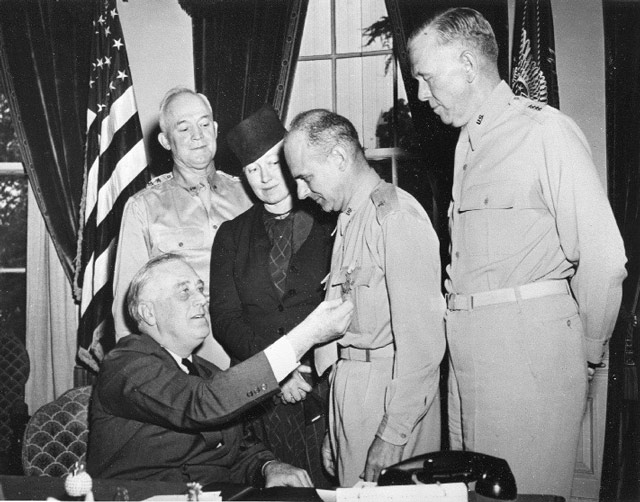
Roosevelts gives Doolittle Medal of Honor 19 May 1942 worldwartwo.filminspector.com
President Franklin D. Roosevelt presents the Medal of Honor to Brigadier General James Harold Doolittle in a ceremony at The White House, 19 May 1942. The President is seated at the left. Standing, left to right, are Lieutenant General Henry H. Arnold, Chief of the Army Air Forces; Mrs. Doolittle; Brigadier General Doolittle; and General George Catlett Marshall, Jr., Chief of Staff, United States Army. (Franklin D. Roosevelt Library and Museum, Photographic Collection, NPx. 65-696).
Battle of the Pacific: US Admirals "Bull" Halsey and Frank Fletcher are bringing their Task Forces 16 and 17 east toward Hawaii on 19 May 1942 in anticipation of a major Japanese attack. Nobody is completely sure where the attack will occur, but the consensus is that Midway Island will be the target. Light cruiser USS Nashville (CL-43) sails through the expected area of the attack from Midway to the western Aleutians today but does not see any enemy ships.

Japanese submarine I-21 launches a seaplane to reconnoiter Suva Bay, Fiji.

Battle of the Indian Ocean: The Japanese have sent a detachment of submarines, "Detachment A," to the Indian Ocean to scout for opportunities. Today, submarine I-30 launches a seaplane to reconnoiter Zanzibar and Dar-es-Salaam.
Crashed B-25B, 19 May 1942 worldwartwo.filminspector.com
A B-25B of the 39th Bomb Squadron forced to crashland at Westover Field, Massachusetts, on 19 May 1942 due to issues with the landing gear. Everyone survived. The pilot, Lt. John Henebry, ultimately becomes a major general and writes a book about his wartime experiences, "The Grim Reapers: At Work in the Pacific Theater" (2002).
Eastern Front: Commander of Army Group South Field Marshal Fedor von Bock presses his advantage against a disbelieving Red Army south of Kharkov. Having coordinated plans with First Panzer Army commander General Ewald on Kleist on the 18th, he orders Sixth Army commander General Friedrich Paulus to begin an attack from Merefa southwest of Kharkov. The objective is to occupy and distract the Soviet forces far to the west of where Kleist's panzers are attempting to surround them.

Kleist's III Panzer Corps, meanwhile, is brushing aside opposition as it continues eating into the Soviet supply corridor. The 14th Panzer Division crosses the Bereka River to take Petrovskoye while other divisions head west to block an expected Red Army breakout attempt. This narrows the mouth of the bulge to fifteen miles and deprives the Red Army forces to the west of a critical Donets river crossing.

Soviet Southwest Front, led by Marshal Semyon Timoshenko, finally begins to react to the growing Wehrmacht threat. After continuing to attack German VIII Corps south of Kharkov in the morning, it quickly breaks off the attacks and begins sending units to block Kleist's panzers to the southeast. The Luftwaffe controls the skies and sees and attacks the red Army columns on the roads. The German pilots, enjoying complete aerial dominance, claim to destroy 29 tanks during the day.

The Sixth Army war diary summarizes the situation at the end of the day: "The enemy's offensive strength has cracked. The breakthrough to Kharkov is therewith prevented."
Panzer 38(t) in Crimea, 19 May 1942 worldwartwo.filminspector.com
A German Panzer 38(t) leaves a landing craft on a beach near Yalta, May 1942 (Federal Archive B 145 Fig. F016214-0021A).
It is unclear where the Soviet orders to break off the attack in the morning came from. Post-war Soviet histories claim they came from Timoshenko on his own authority. If so, it is a dramatic turnaround by Timoshenko, who has been telling Stalin all along that the German counterattacks are not a threat. The Stavka finally reverses course at the end of the day and orders the advanced Sixth Army and Bobkin Group to terminate the offensive toward Kharkov and head southeast to confront Kleist's panzers.  
 
At his midnight conference, Hitler calls von Bock and tells him to hurry up and finish the encirclement. Kleist is to send 14th Panzer Division the final fifteen miles to reach Balakleya, where German troops of Paulus' Sixth Army await. Bock immediately calls Kleist's chief of staff and tells him to take the next town, Protopopovka, "under all circumstances and as soon as in any way possible." The fate of 600,000 Soviet soldiers to the west hangs in the balance. At Fuhrer Headquarters, General Franz Halder notes briefly in his diary that "The situation east of Kharkov is no longer dangerous."

In Crimea, General Manstein's 11th Army continues mopping up resistance in the Kerch region. Some histories record the 19th as the day of German victory in Crimea, and General Franz Halder records in his war diary that "The Kerch offensive can be regarded as closed." However, there remain Red Army holdouts (including at the port of Sevastopol), including thousands congregating in catacombs south of Kerch. In the air, Luftwaffe ace Gordon "Mac" Gollob continues a torrid victory streak, shooting down three more Soviet R-5 reconnaissance planes to raise his victory total to 99.
Japanese-American internees, 19 May 1942 worldwartwo.filminspector.com
Internees await relocation in Centerville, California. May 19, 1942. Dorothea Lange, photographer. Gelatin silver print. Collection of Oakland Museum of California. Gift of Paul S. Taylor.
European Air Operations: The weather clears sufficiently for both sides to resume their bombing operations. This is only a brief interruption of activity in what otherwise is a very quiet month along the Channel Front.

The Luftwaffe ends its lull by attacking Hull in another "Baedeker Raid." There are 50 deaths, 58 seriously injured, and extensive damage, especially in the Alexandria dock area. The bombing accuracy is quite good, especially relative to recent RAF attempts, with hits on the Blackburn aircraft factory at Brough (west of Hull). Extensive fires erupt along Scarborough Lane and Westbourne Avenue. The attack is notable for the use of an 1,800kg bomb and a 1,000kg bomb. Other areas hit include Hedon (east of Hull), Hornsea, and Withernsea. The Luftwaffe loses two Junkers Ju 88 bombers and a Dornier Do-217.

RAF Bomber Command mounts its first major raid in eleven days. The target is Mannheim. A total of 197 bombers (11 lost) embark, with 105 bomber crews claiming to hit the city. However, accuracy is very poor, and very few bombs actually hit the city. Local authorities estimate that bombs from only about ten bombers actually hit the city. However, the bombs that do hit cause an appreciable amount of damage to some small businesses in the harbor areas. There are only two deaths in the city.

In minor raids, 65 RAF bombers (one lost) attack St. Nazaire but cause little damage. Another 9 bombers lay mines off Lorient and near Heligoland, while 13 bombers drop leaflets over France.
Survivors of SS Heredia, 19 May 1942 worldwartwo.filminspector.com
The Downs family, survivors of the sinking of freighter SS Heredia on 19 May 1942 by U-506.
Battle of the Atlantic: U-506 (Kptlt. Erich Würdemann), on its second patrol out of Lorient, torpedoes and sinks 4732-ton US refrigerated freighter Heredia at 02:00 two nautical miles (3.7 km) southeast of the Ship Shoal Buoy off Louisiana. The ship sinks very quickly, giving no time to launch the boats. There are 36 deaths and 26 survivors, who are rescued by local shrimpers Conquest, J. Edwin Treakle, Papa Joe, and Shellwater, with three of the survivors picked up by a seaplane.

U-103 (Kptlt. Werner Winter), on its seventh patrol out of Lorient, torpedoes and sinks 5037-ton US freighter Ogontz 70 nautical miles (130 km) southeast of Cozumel, Mexico. There are 19 deaths and 22 survivors, who are rescued by US tanker Esso Dover.

U-751 (Kptlt. Gerhard Bigalk), on its sixth patrol out of St. Nazaire, torpedoes, shells, and sinks 3110-ton US freighter Isabela 35 nautical miles (65 km) south of Navassa Island Lighthouse. There are three deaths and 34 survivors, who make it to Cape Briton, Haiti, in lifeboats. This is the final victory for U-751.

An Italian submarine torpedoes and sinks Swedish 5747-ton steel cargo freighter Tisnaren somewhere in the Atlantic between Brazil and Senegal. Italian submarines Comandante Cappellini and Barbarigo are operating in this area but it is not definite which is the attacker.

At Hvalfjordur, Iceland, some merchant marine sailors aboard US freighter SS Ironclad notice that there is a shipment of liquor (it is en route to the US Ambassador to Moscow, Admiral William H. Standley, USN (Ret.)). They decide to help themselves and discipline breaks down, with fighting breaking out. At the behest of an armed guard officer on board, troops from the battleship USS Washington are sent over to restore order. Ironclad is removed from convoy PQ 16.
Tugboat Iriquois in Puget Sound, 19 May 1942 worldwartwo.filminspector.com
Tugboat Iriquois at sea, 19 May 1942 (Puget Sound Maritime Historical Society).
Battle of the Mediterranean: Royal Navy submarine HMS Thrasher torpedoes and sinks 1160-ton Italian freighter Penelope a few miles northwest of Monopoli, Italy.

Malta has been heavily reinforced with Spitfire fighters recently and the results are plain in the daytime sky. While Luftwaffe fighter sweeps over the island continue, the new defenders lead to a much-reduced bomber threat. In fact, they enable RAF bombers to go back on the offensive. Today, RAF bombers attack an Italian convoy northbound from Tripoli, though no ships are sunk.

Manhattan Project: Having just taken over the atom bomb research program, Robert Oppenheimer sends a letter to Ernest O. Lawrence updating him on progress. He writes that the atomic bomb design is solved "in principle" and projects that "six good physicists" should be able to work out the details within six months.

Joint Allied Command: The 30th and final in a series of Post-Arcadia meetings of the Combined Chiefs of Staff takes place in Washington, D.C. Among the topics discussed is an expected German advance toward the Persian Gulf from Syrian bases, the selection of targets for the nascent USAAF Eighth Air Force, and German development of a "new odorless gas, suitable for a surprise attack by inclusion in bombardments from the ground or from the air."
Crash site in Quebec, 19 May 1942 worldwartwo.filminspector.com
The crash site at No. 9 Bombing and Gunner School, Quebec.
Canadian Military: A Battle Mk. I crashes at No. 9 Bombing and Gunnery School, Mt.-Joli, Quebec, killing the four crewmen. This school is part of the British Commonwealth Air Training Plan, so the passengers include airmen from Canada, New Zealand, and Australia.

US Military: Brigadier General Ira C. Eaker, commander of Eighth Air Force, assumes command of all US air units in the United Kingdom.

Pursuant to a recent agreement between the United States and Panama, the 31st Fighter Squadron, 37th Fighter Group, 6th Air Force transfers its P-39 and P-40 fighters from Chorrera, Panama, to Albrook Field, Canal Zone.

Australian Military: A Tugan LJW7 Gannet aircraft flying from Batchelor Field (northern Australia) to Groote Eylandt makes a forced crash landing in a swamp in remote Arnhem Bay. The crew survives and scavengers the ruined airplane to make a raft. They survive an epic 33-day journey to the Milingimbi mission. Survivor George Booth later writes a book, "33 Days," describing how local natives helped the crew survive. This real-life story has echoes in the motion picture "Flight of the Phoenix" (1965) starring Jimmy Stewart.
General Jimmy Doolittle, 1942 worldwartwo.filminspector.com
Brigadier General James Harold Doolittle, U.S. Army Air Forces, 1942. (U.S. Air Force).
President Roosevelt presents the Medal of Honor to Lt. Colonel James Doolittle, who is also promoted to brigadier general, for the 18 April 1942 Doolittle raid. The citation reads:

For conspicuous leadership above and beyond the call of duty, involving personal valor and intrepidity at an extreme hazard to life. With the apparent certainty of being forced to land in enemy territory or to perish at sea, Lt. Col. Doolittle personally led a squadron of Army bombers, manned by volunteer crews, in a highly destructive raid on the Japanese mainland.

While, in fact, not a particularly damaging air raid as the citation reads, the Doolittle Raid was a major morale booster after the series of defeats at Singapore, Bataan, and elsewhere. It also influences Japanese strategy to its detriment, making it more defensive and paranoid.

American Homefront: The Western Defense Command issues Civilian Restrictive Order No. 1. This forces all Japanese-Americans in California, Oregon, Washington State, and southern Arizona to move into relocation camps. These camps are located in numerous states between eastern California and the Mississippi River. The total number of persons ultimately sent to camps is approximately 122,000.

Paul Waner of the Braves becomes the third National Leaguer to get 3000 hits (following Honus Wagner and Cap Anson).

Future History: Frederick "Curly" Neal is born in Greensboro, North Carolina. Curly Neal becomes a celebrity as the Harlem Globetrotters' featured ballhandler from 1963-1985. He also is featured in the animated Hanna-Barbera cartoon "Harlem Globetrotters." The Globetrotters retire Neal's No. 22 on 15 February 2008. Frederick Neal passes away in Houston on 26 March 2020.
Look magazine 19 May 1942 worldwartwo.filminspector.com
Look magazine of 19 May 1942 features a Marine Corps Sergeant Otto Nuske on the cover.

May 1942


2021

Saturday, May 15, 2021

May 18, 1942: Soviet Command Confusion

Monday 18 May 1942

Finnish mines 18 May 1942 worldwartwo.filminspector.com
Finnish sailors lay mines from minelayer Ruotsinsalmi in the Gulf of Finland, 18 May 1942. Those are mines lined up and ready to drop. Incidentally, many WWII mines remain in the Gulf of Finland and present a hazard to navigation (SA-Kuva).
Battle of the Pacific: While still awaiting definitive proof as to the next Japanese target, which has the codename AF, the three major US naval intelligence centers in Washington, Honolulu, and Melbourne on 18 May 1942 report that an attack will happen soon from AF's northwest. The Melbourne station (formerly based at Corregidor and considered the least "political" of the stations) adds that the airstrikes will take place from 50 miles northwest of AF.

Admiral Nimitz, trusting in an unproven hunch by some of his intelligence officers that AF refers to Midway, orders submarines to patrol fifty miles northwest of the island. He also orders US Navy Task Forces 16 and 17 to leave the Efate area and head east toward Pearl Harbor. This leaves no US aircraft carriers in the southwest Pacific, but Nimitz is confident that the Japanese won't stir up trouble there due to his recent ruse. The Japanese recently sighted USS Enterprise and Yorktown as Nimitz intended and don't know where they are heading. This sighting has convinced the Japanese to suspend all offensive operations in the area, completing Nimitz's successful gamesmanship.

B-17 bombers attack the airfield at Koepang, Timor.
Time magazine 18 May 1942 worldwartwo.filminspector.com
Admiral Nimitz is on the cover of Time magazine, 18 May 1942.
Battle of the Indian Ocean: Japanese troops occupy Pantha on the Chindwin River. More British and Indian troops of BURCORPS straggle into Indian and Burmese border towns such as Tamu and Imphal. the final unit of the 17th Indian Infantry Division, the rearguard 63rd Indian Infantry Brigade, arrives in Tamu. The entire division has 9,908 men and now is sent up to Imphal to reform with the 48th and 16th Indian Infantry Brigades.
Daily Mirror 18 May 1942 worldwartwo.filminspector.com
The 18 May 1942 Daily Mirror is full of news about German problems at Kharkov.
Eastern Front: In the early morning hours, General Ivan Bagramyan, chief of staff to Marshal Timoshenko at Southwestern Front, comes out openly against the continuation of the Red Army offensive in light of the fierce German counterattacks. He points to successful German advances in the Barvenkovo region and suggests moving troops there. Timoshenko disagrees and visits Stalin later in the morning, telling him that everything is fine and the offensive can continue heading west. Bagramyan appeals to political Commissar Nikita Khruschhev to appeal to Stalin. Khruschev also is having his doubts and calls Marshal Vasilevskiy of the Stavka to ask Stalin to change his mind (despite being the highest-ranking soldier in the USSR, Vasilevskiy's main job was to screen Stalin's phone calls). At this point, the primary sources contradict themselves as to who exactly speaks to whom about what, but the bottom line is that Stalin adamantly refuses to override Timoshenko. The Red Army keeps attacking 180 degrees away from the danger point.

On the German side, it is becoming clear that a major victory may be possible, but the whole affair remains a wild gamble. Field Marshal Fedor von Bock, commander of Army Group South, visits General Ewald von Kleist, commander of First Panzer Army, at Stalino to plan the next step. Both are mystified at the Soviet failure to respond to the developing mortal threat to the southern Red Army pincer arm. Bock is concerned because if the Soviets take Kharkov, he'll look bad to Hitler regardless of ultimate success. He and Kleist basically shrug and continue strengthening the push to cut the Soviets off at Izyum.

During the day, Timoshenko orders his tank forces to smash forward toward Kharkov from the south. At Fuhrer headquarters, General Franz Halder notes that "The number of tank brigades committed by the enemy is really astounding." They make temporary progress in some places, but the attacking units have been weakened by Timoshenko's removal of one tank corps to guard Izyum from the First Panzer Army counterattack (it has not yet arrived there). Local German counterattacks restore the front south of Kharkov by the end of the day.
Marder III in Crimea May 1942 worldwartwo.filminspector.com
Marder III tank destroyer (Sd. Kfz. 139) in Crimea, May 1942 (Federal Archive B 145 Fig. F016217-0015A).
The Luftwaffe continues transferring units from Crimea and begins asserting itself all across the Kharkov front. It establishes complete aerial dominance. Fliegerkorps IV claims to destroy 130 tanks and 500 motor vehicles. German panzer troops of Seventeenth Army and III Panzer Corps continue barreling north at the Soviet breakout point and reach Izyum, narrowing the Soviet supply corridor to the Red Army troops advancing further west. The Soviet breakthrough point is now down to about a 20-mile breach, still sufficient and significant but showing no signs of withstanding the advancing panzers. The Soviets are not sending troops back east through the corridor to safety, the flow of traffic remains to the west.

Luftwaffe ace Gordon "Mac" Gollob continues his torrid streak in the air after taking over JG 77. Operating out of Kerch, Crimea, he claims three Polikarpov R-5 reconnaissance bombers for his 94th to 96 victories. He is eager to reach the 100-victory mark quickly, a matter of pride to Luftwaffe units. On the ground, General Manstein's 11th Army continues to whittle away at the few Red Army pockets left in the Kerch area. General Halder notes that "the few small remnants left are still fighting fiercely."

Today is considered the termination of the Demyansk supply operation by the Luftwaffe. It has been a successful mission, but aircraft losses total 265 planes, many of them Ju-52 transports The main supply unit, KGzbV 8, is disbanded and its planes returned to training schools.
Wildcat on USS Enterprise 18 May 1942 worldwartwo.filminspector.com
A Grumman F4F Wildcat took off from the USS Enterprise's flight deck on May 18, 1942 (US Navy).
European Air Operations:  There are no major operations by either side along the Channel Front as a lengthy springtime lull continues.
Burma fire in Life 18 May 1942 worldwartwo.filminspector.com
General Stilwell's headquarters burns in Maymyo, Burma, in this photo from the 18 May 1942 Life magazine.
Battle of the Atlantic: U-558 (Kptlt. Günther Krech), on its seventh patrol out of Brest, torpedoes and sinks 1254-ton Dutch freighter Fauna in the Caicos Passage near the Turks and Caicos Islands. There are two deaths and 27 survivors.

U-156 (Kptlt. Werner Hartenstein), on its third patrol out of Lorient, torpedoes and sinks 4961-ton US freighter Quaker City 300 nautical miles east of Barbados. The U-boat surfaces, questions the crewmen in their four lifeboats, and directs them to Barbados. There are 11 deaths and 29 survivors, who are mostly rescued by USS Blakeley.

U-125 (Kptlt. Ulrich Folkers), on its fourth patrol out of Lorient, sinks 8893-ton US tanker Mercury Sun 125 nautical miles (232 km) south of Cape Corrientes, Cuba. There are six deaths and 29 survivors, who are rescued by SS Howard.

U-125 also torpedoes and sinks 2616-ton US freighter William J. Salman 125 nautical miles (232 km) south of Cape Frances, Cuba. There are six deaths and 22 survivors, who are rescued by Latvian freighter Kegums.

Italian submarine Comandante Cappellini shells and sinks 5747-ton Swedish freighter Tisnaren midway between Brazil and Senegal. All 41 crewmen are rescued by US freighter Black Hawk.

Italian submarine Barbarigo torpedoes Brazilian freighter Commandante Lyra east of Fortaleza, Brazil. The damaged ship is towed to Fortaleza by seaplane tender USS Thrush (AVP-3).

The Luftwaffe raids shipping in the Kola Inlet. The score some near-misses on US freighter Deer Lodge, but the ship remains operational. It moves to another anchorage.

After over a month at sea, the last survivors of US freighter Alcoa Guide (sunk by U-123 on 16 April) are rescued by British freighter Hororata.

After almost a month at sea, a radio operator from US freighter Steel Maker, sunk by U-136 on 19 April, is found on a raft and rescued by an unnamed rescue raft. The man is in surprisingly good condition, having accumulated supplies from several rafts that floated free from the sinking ship.

US tanker Benjamin Brewster finds 19 survivors from US tanker Gulfoil, sunk by U-506 on 16 May.
J. Robert Oppenheimer 18 May 1942 worldwartwo.filminspector.com
Scientists J. Robert Oppenheimer takes over the US nuclear program on 18 May 1942.
Battle of the Mediterranean: In Operation LB (part of "Club Run"), HMS Eagle ferries 17 Spitfire fighters to Malta. Malta now has 76 Spitfires operational. Six Albacores have issues and fail to fly off.

Royal Navy submarine HMS Turbulent sinks 2384-ton Italian freighter Bolsena off Benghazi. There are 50 deaths and 36 survivors.

Soldiers of the 1st Bn Dorsetshire Regiment on Malta capture an Italian spy at Marsascala Bay. The man, Giuseppe Guglielmo, who gives himself up willingly, admits to having been dropped off nearby by a naval torpedo boat. His mission was to investigate beach defenses. However, his pickup ride never arrived, so he surrendered.

Battle of the Black Sea: Soviet submarine ShCh-205 torpedoes and sinks 128-ton Turkish freighter Duatepe ten miles off the coast of Bulgaria. It also shells and sinks 350-ton Turkish schooner Kaynardzha in the same area.

Manhattan Project: Gregory Brett quits as the coordinator of physic research on fast neutron phenomena. Arthur H. Compton asks J. Robert Oppenheimer to replace him.

US/Panama Relations: The two countries sign an agreement providing for the use of Panamanian defense areas by US troops.
Life magazine 18 May 1942 worldwartwo.filminspector.com
Life magazine of 18 May 1942 features an article about Bombardier school.
US Military: Large numbers of US troops arrive in Northern Ireland on lighters after arriving in the Firth of Clyde aboard Queen Mary on 16 May. This is the fourth contingent of MAGNET Force. This completes the arrival of the 34th Infantry Division and includes most personnel from the 1st Armored Division. A separate group from the US Army 209th Coast Artillery (Antiaircraft) also arrives in Northern Ireland after alighting in Scotland on 17 May.

The Office of Naval Inspector General is established. Rear Admiral Charles P. Snyder is the first commander.

The US Army Air Force receives its first delivery of the Republic P-47B Thunderbolt. The plane will first see combat in April 1943.
Life magazine 18 May 1942 worldwartwo.filminspector.com
A photo from an article about Bombardier School in Life magazine, 18 May 1942.
British Military: Vice-Admiral Henry Harwood, a Lord Commissioner of the Admiralty and Assistant Chief of Naval Staff, becomes the Commander-in-Chief, Mediterranean Fleet. He flies his flag at HMS Nile.

Japanese Homefront: Hisao Yamazaki incorporates Daiwa Kogyo, Ltd. It is located in Suwa, Nagano Prefecture, Japan. Yamazaki is a local clock shop owner who is supported by the Hattori family (of Seiko Group fame), for whose company he used to work. Yamazaki's shop manufactures watch parts. In 1982, the entity, after various corporate transactions and after having evolved into a manufacturer of computer printers, renames itself the Epson Corporation.
Santa Ana Register 18 May 1942 worldwartwo.filminspector.com
The Santa Ana Register provided an update at the bottom of their front page about the "expulsion" of Japanese Americans from Orange County. By May 17, 1942, all persons with Japanese ancestry--whole or partial--were gone. (Santa Ana Register, May 18, 1942)
American Homefront: The Santa Ana Register reports that 1,543 internees from Orange County, California, are now at "a concentration camp near Parker Dam, Arizona, as a result of expulsion of all persons of Japanese ancestry under Army Orders."

"Counterspy" starring Don MacLaughlin premieres on the NBC Blue Network (which became ABC). McLaughlin plays David Harding, chief of a secret US military unit named "Counterspies." Harding's organization combats the Gestapo and the Japanese Black Dragons during the war and various other organizations after 1945. The show is popular enough to remain on the radio until 29 November 1957 and spawns two feature films, but never airs on television.
Counterspy premieres on 18 May 1942 worldwartwo.filminspector.com
Counterspy premieres on 18 May 1942.

May 1942


2021

Saturday, May 1, 2021

May 16, 1942: Sobibor Begins Operation

Saturday 16 May 1942

Field Marshal Jan Smuts inspecting sailors, 16 May 1942 worldwartwo.filminspector.com
South African Field Marshal Jan Smuts inspecting the Royal Marine Guard of Honor on board cruiser HMS Cleopatra in Alexandria Harbor, 16 May 1942. © IWM A 9105.
Battle of the Pacific: Having accomplished Admiral Chester Nimitz's intent of allowing the Japanese to spot his Task Force 16, Admiral "Bull" Halsey on 16 May 1942 heads to Efate to refuel. Nimitz's devious strategy is to forestall the Japanese Operation RY to invade Nauru and Ocean Island by "showing his hand." This has worked, as the Japanese have been scared off by the appearance of Halsey's two carriers (USS Enterprise and Hornet) in the vicinity and canceled the operation. The Japanese invasion force now is headed back to Rabaul.

Nimitz now orders TF 16 to head back to Hawaii to prepare for future operations. Having viewed recent naval intelligence findings, Nimitz projects that the Japanese soon will make simultaneous attacks on Port Moresby, Dutch Harbor in the Aleutians, and Midway Island. His plan is to concentrate Task Force 16 and other available forces at Midway to repel that invasion while allowing the other invasions to be handled by local forces. However, naval intelligence continues to be split regarding Midway as a Japanese objective, so concentrating forces there remains a gamble based on disputed interpretations and conclusions of decrypted Japanese communications. Some intelligence officials, including Admiral Richmond K. Turner in Washington, believe Hawaii may be the target, but there is still time to discern Japanese intentions with more confidence.

USAAF Fifth Air Force sends B-26 and B-17 bombers to attack Lae, with B-25s flying two sorties against the airfield there. Poor weather causes some bombers to divert from Lae to attack shipping. In the morning, the bombers attack Lae at 800 feet, then return in the afternoon and bomb from 2400 feet. Other bombers attack the Japanese seaplane base at Deboyne, which the Japanese already have evacuated. The US loses no bombers, though one B-25C must force-land at Aiyary Airstrip in the eastern highlands of New Guinea (the airfield remains in service in 2021 as Aijura Airport).

US submarine USS Tautog (SS-199), on its second patrol, torpedoes and sinks Japanese fleet tanker Goyo Maru west of Royalist Bank, Truk. Tautog is one of the submarines on the assumed route of the Japanese aircraft carriers returning to Japan after the Battle of the Coral Sea. The sinking almost turns deadly for Tautog, too, as its first torpedo circles around and heads back toward it, forcing an immediate dive.
Saturday Evening Post, 16 May 1942 worldwartwo.filminspector.com
The Saturday Evening Post of 16 May 1942 urges people to "Keep 'em Flying."
Battle of the Indian Ocean: The 1st Burma Infantry Brigade, which has crossed the Chindwin River, reaches the frontier city of Tamu today. This continues a concentration of British military power along the Indian border while essentially abandoning Burma to the Japanese. More units are still on the road to Tamu but are expected to arrive shortly.

US power is growing in the theater, too. The 10th Air Force completes its move from the United States to New Delhi, India. A force of B-17s attacks the Japanese airfield at Myitkyina, Burma, today, destroying the runways.
The Arizona Daily Star, 16 May 1942 worldwartwo.filminspector.com
The Arizona Daily Star of 16 May 1942 optimistically headlines that "Reds Continue Kharkov Drive, Hold at Kerch." In fact, Kerch already is in German hands.
Eastern Front: Facing growing German resistance and counterattacks in the northern prong of their offensive around Kharkov, the Red Army renews its attacks with little success. German tanks blunt these assaults and recover some ground. The attack south of Kharkov continues to succeed, but both prongs must meet west of Kharkov for the Soviet strategy to succeed. Even in the south, the Luftwaffe increases its strikes and Wehrmacht reinforcements pour in from the rear areas. The southern Soviet advance through forests and small towns loses cohesion, spreading out in all directions without accomplishing any meaningful objectives.

General Franz Halder shows increasing confidence in his war diary. After noting that the northern attack "unfortunately has had a measure of success against the Hungarians" but "Disposal of the situation now is no more than a tactical matter," he writes:

East of Kharkov, our tank attack has captured Ternovaya. As a result, the fighting in this area, too, is now reduced to mere tactical scope.

Despite this sanguine attitude, the German high command remains torn. Field Marshal Fedor von Bock, commander of Army Group South, advocates the textbook approach of ringing the Soviet breakthrough with defensive troops to stop their progress. Hitler, however, brusquely rejects this approach. Instead, he coordinates a counterattack by General Ewald von Kleist's First Panzer Army at the base of the Soviet offensive, the breakthrough point. The plan is for 3rd Panzer Corps and 44th Army Corps to advance from north and south to cut the Soviet line of communications.
Baltimore News-Post 16 May 1942 worldwartwo.filminspector.com
The Baltimore News-Post of 16 May 1942 is full of optimism about the Red Army attack at Kharkov. Further down on the page is a headline about Earl Browder that reads "Communist Party Leader Serves 14 Months, Freed as Step Towards "Unity.""
Von Bock privately admits he favors Hitler's approach but is "compelled by orthodoxy" to reject it because it is a huge gamble:

Now the Fuehrer will order the big solution [the counterattack at the base of the breakthrough]. The laurels will go to the Supreme Command and we will have to be content with what is left.

Hitler, of course, does order the big solution. The counterattack, which is planned to begin on the 17th, is tenuous and Kleist himself is unsure if he has the strength to accomplish the encirclement. As the entire fate of the summer offensive on which Hitler places high hopes for ending the Soviet campaign successfully hangs in the balance, the counterattack will determine the future course of the campaign.

In Crimea, General von Manstein's Operation Trappenjagd has succeeded in its major objective by capturing Kerch. The battle now evolves into a mopping-up operation to subdue Soviet holdouts from Kerch all the way to the original line along the Parpach narrows. This will take a couple of days to complete, but the outcome in the Wehrmacht's favor is assured.

Despite the German successes, some sober facts keep crossing General Franz Halder's desk at Fuhrer Headquarters. In his war diary, Halder lists Wehrmacht casualties from the start of Operation Barbarossa through 10 May 1942 as reaching 1,182,735 men, or 36.96% of the starting total Eastern Army of 3.2 million. Of these, the killed number 9,450 officers and 241,572 others. Halder lists these numbers without comment.
Adolf Galland in North Africa, May 1942 worldwartwo.filminspector.com
Inspector of Fighters Adolf Galland visits JG 27 at Martuba Airfield, Libya, May 1942. Also visible are Lieutenant Colonel Woldenga and Major Neumann (Kanitz, Federal Archive Image 101I-442-1498-26A).
European Air Operations: Operations on both sides remain light today. Seven RAF Lancaster and seven Manchester bombers lay mines off Heligoland without loss.

Six Bf 109F fighters from 10/JG 2 attack Plymouth. They drop bombs near warships and strafe the dock area, killing one sailor on HMS Brocklesby. One airplane is shot down, killing the pilot, Hans-Joachim Schulz. The engine 

Battle of the Atlantic: U-751 (Kptlt. Gerhard Bigalk), on its sixth patrol out of St. Nazaire, torpedoes and sinks 1445-ton US freighter Nicarao north of the Bahama Islands. There are eight deaths and 31 survivors, who are rescued by US tanker Esso Augusta.

U-506 (Kptlt. Erich Würdemann), on its second patrol out of Lorient, torpedoes and shells US 7306-ton tanker William C. McTarnahan 35 nautical miles (65 km) east of the Ship Shoal Lighthouse in Louisiana. The crew abandons the ship with 18 dead and 27 survivors (rescued by local shrimpers). Tankers are famously difficult to sink due to their compartmentalized construction, and William C. McTarnahan follows this pattern. US Navy tugs Barranca and Tuckahoe take the ship in tow, and it is repaired and returned to service as St. James.

U-506 also torpedoes and damages 9002-ton US tanker Sun in the same vicinity just before the William C. McTarnahan. All 42 men on board survive. As with William C. McTarnahan, the crew abandons the ship, but when Sun does not sink, they reboard. The tanker still has power and makes its way to New Orleans.

U-103 (Kptlt. Werner Winter), on its seventh patrol out of Lorient, torpedoes and sinks 2637-ton US freighter Ruth Lykes off Cape Falso, Nicaragua. Torpedoed at 23:58, the freighter actually sinks at 00:44 on the 17th. The U-boat surfaces and uses its deck gun to finish off the ship, stopping to allow the crew to abandon the ship. There are five deaths and 27 survivors, rescued by Norwegian freighter Somerville. One crewman rescued later dies of wounds. The U-boat picks up one swimmer who has injuries, treats him, and then places him in a lifeboat.

Royal Navy 18-ton motor torpedo boat MTB 338 explodes and burns from unknown causes at Trinidad.

A Luftwaffe patrol shoots down a Catalina of RAF Squadron No. 210 200 miles west of Trondheim, Norway. All ten men aboard perish.
Freighter Ruth Lykes, torpedoed on 16 May 1942 worldwartwo.filminspector.com
US freighter Ruth Lykes, torpedoed by U-103 on 16 May 1942.
Battle of the Mediterranean: Fierce air battles continue over Malta. The Axis bombers focus on airfields. Several Spitfires are damaged but no planes or pilots are lost.

Partisans: With the Wehrmacht in possession of the port of Kerch in Crimea, many Red Army soldiers are trapped on the Kerch peninsula with a difficult escape route across the Strait of Kerch. In the town of Adzhimushkay, Colonel Pavel Yagunov forms a pocket several thousand strong to hold out indefinitely or until sufficient transportation can be arranged. Numbers are small at first, but they swell with time to about 13,000 as escape becomes impossible. Several different garrisons are formed.

Yagunov's force evolves from a holdout force into a guerilla operation based in the Great Adzhimushkay catacombs system. As with other large partisan operations, its fatal weakness is that its location becomes known to the Germans. Its priority is forced to shift from hit-and-run attacks to self-defense, and German reactions constantly whittle down its size. The operation survives until October 1942 with occasional successes against the occupying German forces but the eventual death or imprisonment of virtually everyone. 

This is known as the Adzhimushkay Defense. A museum is established in 1966 and a memorial complex in 1982.
Oveta Cullp Hobby becomes leader of the WAAC on 16 May 1942 worldwartwo.filminspector.com
Mrs. Oveta Culp Hobby, leader of the WAAC. Her name has been floated in the 2020s as a possible replacement for a military base.
US Military: Mrs. Oveta Culp Hobby is sworn in as director of US Women’s Army Auxiliary Corps.

Liner Queen Mary arrives in the Clyde, completing the first troop transport voyage carrying over 10,000 people (9880 troops, 875 crew). The voyage takes five days, three hours, and 45 minutes at an average speed of 25.58 knots.

The USAAF orders 25 lightweight wooded Bell XP-77 fighters.

German Military: Major Gordon "Mac" Gollob leaves JG 54 and becomes Geschwaderkommodore of JG 77, supporting General Manstein in Crimea. He gets off to a great start flying out of Kerch. During the day, he shoots down three Lavochkin-Gorbunov-Gudkov LaGG-3 fighter aircraft to raise his victory total to 89.

US Government: In a secret memorandum to US President Franklin Roosevelt, George C. Marshall recommends reducing the allocation of aircraft to the RAF substantially. These amounts were established by the Arnold-Porter (chiefs of the US and British air forces, respectively) Agreement of 13 January 1942. Marshall writes that the "situation... has greatly altered." Among those changed circumstances is new secret information about British aircraft production which shows that it is twice as large as the British claimed at the time. 

Among Marshall's suggestions are that 50% of all aircraft types except Martin 187 light bombers be immediately reallocated to the United States, with 100% of all aircraft reallocated to the US beginning in August 1942. Naval aircraft also should be reallocated to the US, Marshall argues. Basically, Marshall claims in diplomatic phrasing that the British have been misleading the US about the state of their aircraft production by undercounting it in order to get more free lend-lease planes from the US.
Ukrainian laborers waiting to go to Germany, May 1942 worldwartwo.filminspector.com
Ukrainian women, many in traditional garb, reporting for registration at an employment office at Artemovsk in order to be hired for work in Germany in May 1942. They are waiting at the train station. (Knodler, Karl, Federal Archives Image 183-B19878).
Holocaust: Sobibor concentration camp is located in a bucolic setting near the village of Sobibór. This is in the easternmost area of the General Government region of German-occupied Poland. Originally opened on 15 April 1942, the Sobibor camp becomes fully operational as an extermination camp on or about 16 May 1942.

After a crude start, Sobibor now begins operating with chilling efficiency. Trains from across Europe enter the camp station off a special rail spur, and the passengers ("evacuees") are immediately relieved of their personal possessions (the very few they were permitted to carry). Of course, the arrivals don't know why they are there, as the authorities have given them some concocted story about resettlement and jobs that will keep them from causing any trouble. The Germans actually give a lot of thought to this tactic and go to great lengths to disguise their true intentions. Everything appears innocent and routine right up until the end, though with increasing degrees of degradation.

Once out of the train, the passengers are separated by gender and sometimes other factors (such as the ability to work) and compelled to disrobe completely. Camp internees come and shave the hair off the incoming females, then everyone is separated into groups and led down a 100-meter (330 foot) long pathway euphemistically called the Himmelstrasse ("Road to Heaven"). The destination down the Himmelstrasse is an ordinary-looking bunker that the prisoners are told is a communal shower. In fact, it is a disguised gas chamber. The prisoners walk in, the door is barred behind them, and then engines (usually tank engines which give off a lot of exhaust) are started up. The exhaust is fed into the crowded chamber. The deed is done within about fifteen minutes.

After this process is completed, the gas is cleared, the door is opened, and the bodies are disposed of in various fashions. At first, the bodies are buried in mass burial pits, but as time goes on this becomes impractical. Bodies then are simply burned in the open air where they lie, but this, too, cannot keep up with the supply. Finally, the bodies are incinerated in ovens which are upgraded over time. Huge mounds of ash result.

The victims come from across the breadth of Occupied Europe, with heavy concentrations from Poland and the Balkans. Many of the earliest victims arrive from Slovakia and nearby regions. Much of the work at Sobibor, as at other camps, is done by auxiliaries ("Sonderkommando") who are internees themselves. Fearing for their own lives, they are only interested in getting the job done as fast and efficiently as possible to please their captors. These auxiliaries, of course, only want to stay out of the chambers themselves (few survive the war).
Sobibor opens for operation on 16 May 1942 worldwartwo.filminspector.com
Welcome to Sobibor.
Dr. August Becker, SS Untersturmführer, sends a letter to SS-Obersturmbannführer Rauff dated 6 May 1942 in which he gives details on gassing vans. Becker says in part:

The application of gas usually is not undertaken correctly. In order to come to an end as fast as possible, the driver presses the accelerator to the fullest extent. By doing that the persons to be executed suffer death from suffocation and not death by dozing off as was planned. My directions now have proved that by correct adjustment of the levers death comes faster and the prisoners fall asleep peacefully. Distorted faces and excretions, such as could be seen before, are no longer noticed.

Becker also notes that the vans have become "well-known" and that both local authorities and the civilian population call them "death vans."
Picture Post magazine, 16 May 1942 worldwartwo.filminspector.com
Picture Post magazine of 16 May 1942 shows a British soldier completing a climb up a 60-foot hill.
British Homefront: Prime Minister Winston Churchill visits Leeds. He says in part:

In the height of the second great war, it is a great pleasure to come to Leeds and bring to the citizens a word of thanks and encouragement in all the work they are doing to promote the common cause of many nations and in many lands. That cause appeals to the hearts of all those in the human race who are not already gripped by tyranny or who have not already been seduced to its insidious voice. That cause is shared by all the millions of our cousins across the Atlantic who are preparing night and day to have their will and rights respected. It appeals to the patient millions of China, who have suffered long from cruel aggression and still fight with faithful stubbornness. It appeals to the noble manhood of Russia, now at full grips with the murderous enemy, striking blow for blow.

His most quoted phrase is, "Now we see the ridge ahead." Churchill enters town standing in the back of an open limousine to crowds lined along the roadway. Huge crowds attend his speech. Afterward, Churchill tours the Leeds industrial districts.

American Homefront: An Assistant Solicitor General in the US Office of Legal Counsel, Oscar Cox, gives a legal opinion on the "Removal of Japanese Aliens and Citizens From Hawaii to the United States" (Hawaii in 1942 not yet being a State). The specific issue is whether such persons can be placed in internment camps on the mainland under martial law. Cox asserts:

Hawaii is still within the Pacific theatre of war and subject to attack again. Continuance of martial law in Hawaii is doubtless justified. If military necessity dictates it -- as it well may -- those Japanese who were interned in Hawaii or those whose presence is dangerous can be removed. To hold otherwise would be deciding upon the impractical.

Cox cautions, however, that:

The existing case law indicates some doubt on the power to remove and intern the Japanese citizens in the United States. But the conditions of modern warfare are different from those of prior wars. Because of this the courts might well follow a different course than that indicated by the earlier decisions.

Due to the legal uncertainty, Cox concludes that "the safest legal procedure would be to hold the Japanese who are American citizens in Hawaii." The next best course would be to intern them in Hawaii and give them the option of coming to the mainland voluntarily to become members of the work corps of the War Relocation Authority. The final option, evacuating them from Hawaii to mainland internment camps may be legal under President Roosevelt's Executive Order 9066 and Public Law 77-503 but would require factual proofs of military necessity that should be avoided if "feasible."

"Tangerine" by Jimmy Dorsey and His Orchestra with Bob Eberly and Helen O'Connell remains at No. 1 on the Billboard singles chart for the second week in a row.

Future History: Polish anthropologist Bronisław Malinowski passes away from natural causes in Mexico. While his work is important in the history of anthropology, Malinowski's personal diaries become his real legacy. Never intended to be published, the diaries are found after his death and published in 1967. These diaries give deep insight into the true impulses motivating academics, many of which are interpreted by readers to be venal and conflicted. Malinowski's self-critiques and reproaches call into question how "unbiased" observations of other cultures can be. While their usefulness is highly debated and controversial, the Malinowski diaries become a continuing point of contention and well known in the field of anthropology for decades.
Recruiting pig King Neptune, 16 May 1942 worldwartwo.filminspector.com
King Neptune (shown) is born on the Sherman Boner farm near West Franklin, Illinois, on 16 May 1942. A navy recruiter uses him to raise $19 million in war bonds for the construction of the Iowa-class battleship Illinois between 1942 and 1946. The recruiter, incidentally, saved King Neptune from his original fate of serving as the centerpiece at a fundraising pig roast. Upon his death in 1950, he is buried with military honors. A monument to King Neptune (with an incorrect birth year) later is placed at a northbound I-57 rest area. It still stands.

May 1942


2021