Showing posts with label Ted Williams. Show all posts

Thursday, June 3, 2021

May 22, 1942: AF Is Midway!

Friday 22 May 1942

Stjepan Filipović about to be hanged, 22 May 1942 worldwartwo.filminspector.com
Stjepan Filipović shouting "Death to fascism, freedom to the People!" seconds before his execution on May 22 1942. Filipović was declared a National Hero of Yugoslavia on 14 December 1949.

Battle of the Pacific: In one of the most significant intelligence coups of World War II, US Navy cryptanalysts on 22 May 1942 decode a Japanese message from 20 May confirming that Midway is their next invasion target. Because of what it leads to, the decryption is the turning point of the war in the Pacific.

For weeks, American naval intelligence has known that a place codenamed "AF" by the Japanese is the next objective. Falling for a classic ruse in which US forces on Midway sent messages pretending to have a water shortage, the Japanese unknowingly blundered into the trap and gave the entire game away. The analysts today decode a routine Japanese message from later the same day as the phony radio messages from Midway were sent (20 May) from a low-level Japanese bureaucrat stating that "AF is short of water" so the invasion fleet should bring additional water supplies. This confirms growing US suspicions about Japanese intentions and helps the US Navy plan a strategy to defend the isolated island and turn the tables on the overly aggressive Japanese.

That's not all. The cryptanalysts today also decode portions of a lengthy message sent by Japanese Admiral Yamamoto (subject line "Operational Order 14") also sent on 20 May. The message details the invasion plans in great detail. Based on these interceptions, Commander Joseph Rochefort and his team at Station HYPO (also known as Fleet Radio Unit Pacific, or FRUPAC) in Hawaii are able to provide Admiral Chester Nimitz with precise details about the projected date of the invasion (4 or 5 June 1942). This information includes the Imperial Japanese Navy order of battle. Based on previous intelligence, Nimitz already has ordered Admiral "Bull" Halsey to bring his aircraft carriers USS Enterprise and Yorktown back to Pearl Harbor from the Southwest Pacific to prepare for the battle. Now, everyone can plan a trap at Midway when otherwise the US Navy might not even have had any ships in the area.
Ted Williams being sworn in, 22 May 1942 worldwartwo.filminspector.com
Baseball star Ted Williams is sworn in to the US Navy on 22 May 1942.

Meanwhile, the Japanese continue their methodical preparations for the upcoming battle. Cruiser Division 8 and the battleships Kongo and Kirishima depart the Inland Sea of Japan today. Other ships under Admiral Nagumo already are at sea.

US submarine Silversides (SS-236) torpedoes and damages 4550-ton Japanese Navy freighter Asahisan Maru in the Kii Strait. The ship loses its bow but the captain manages to beach it to prevent sinking. The Japanese refloat Asahisan Maru on 27 May 1942 and return it to service on 15 July 1943.

US submarine Tautog (SS-199) torpedoes and damages Japanese freighter Sanko Maru southwest of the large Japanese base at Truk.

The USAAF continues its attacks on Japanese bases in New Guinea. B-17s of the 5th Air Force attacks Lakunai Airfield, while B-25 and B-26 bombers attack shipping and the airfield at Lae. Two B-25s fail to return.
Roseburg, Oregon, News-Review, 22 May 1942 worldwartwo.filminspector.com
Like many other US newspapers, the 22 May 1942 Roseburg (Oregon) News-Review celebrates US Navy submarine successes.

Eastern Front: By now thoroughly aware of the peril facing his advanced units south of Kharkov in Army Group Kotenko, Soviet Marshal Timoshenko orders those troops to begin an orderly withdrawal to the east. He plans their departure for 23 May by the 9th and 57th Soviet armies through the narrow corridor to the east still held by Red Army troops.

The Wehrmacht forces attempting to cut Soviet Army Group Kotenko off, meanwhile, complete their encirclement late in the day. The 14th Panzer Division, advancing from Petrovskoye, lunges north and completes the final eight miles to make contact with Sixth Army units at Balakleya. At the same time, the 16th Panzer Division and 60th Motorized Divisions broaden the slender corridor the panzers have established between the massive Red Army forces to both east and west. They drive northwestward from Petrovskoye to meet other German troops ten miles west of Balakleya.

At Fuhrer Headquarters, General Franz Halder notes "The Izyum pocket has been weakly sealed on its eastern periphery." He notes disapprovingly that Field Marshal Fedor von Bock's plan to strengthen the encirclement:
is not well-conceived; it calls for an attack ... from the constricted bridgehead at Andreyyevka. To my mind, this is a very ineffectual solution. The right thing to do would be to have the armor now becoming available east of Kharkov strike for Savintai, on the north bank of the Donets. Bock had a talk with the Fuehrer and secured approval for his plan. I think it is wrong.
It is interesting that Halder, from his lofty position at the top of the military chain of command, feels so free to criticize decisions made by both a field marshal and Hitler in his official war diary. It probably helps that Hitler is in Berlin today (and for the next couple of days), giving Halder a sense of freedom from the oppressive twice-daily situation conferences. This incident also shows that Hitler was not always wrong and the generals right about military strategy, as the approved strategy turns out to be far from "ineffectual" and in fact leads to one of the greatest German victories of World War II.

Far to the north, German troops remain committed to the siege of Leningrad. Artillery fire sinks two Soviet Navy torpedo boats, TKA-103 and TKA-123. With the ice melting in the spring thaw, the Germans fear a Soviet naval breakout into the Baltic.

European Air Operations: Continuing a major lull in operations that lasts throughout May 1942, neither side launches any major attacks. The only significant activity is a mission by 27 Halifax bombers to attack the U-boat pens at St. Nazaire. Poor weather prevents all but three bombers from dropping their bombs. An additional 31 bombers lay mines off St. Nazaire and the German Baltic ports. No aircraft are lost.
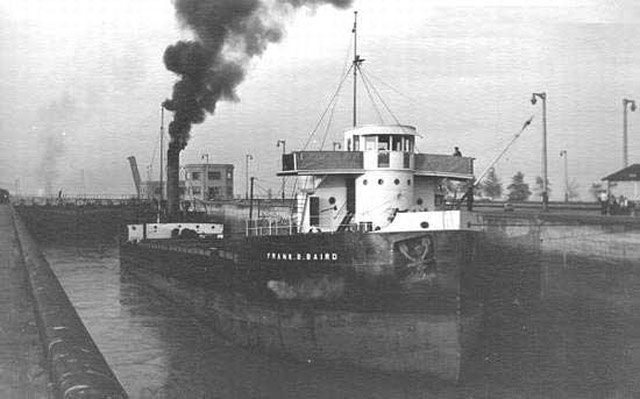
Canadian freighter Frank B. Baird, sunk on 22 May 1942 worldwartwo.filminspector.com
Canadian freighter Frank B. Baird, sunk by U-158 on 22 May 1942.

Battle of the Atlantic: U-753 (KrvKpt. Alfred Manhardt von Mannstein), on its fourth patrol out of La Pallice, surfaces and stops 326-ton British three-masted schooner E.P. Theriault in the Gulf of Mexico 55 miles west of Dry Tortuga. The Germans allow an orderly evacuation of the ship and then attempt to scuttle it, but they fail and it drifts ashore in the Bay of Cardenes, Cuba, on 27 May. The ship is refloated, repaired, and sold to Cuba, where it sails as the Ofelia Gancedo. The crew survives and makes landfall in Cuba in their lifeboats.

U-158 (Kptlt. Erwin Rostin), on its second patrol out of Lorient, surfaces and sinks 1748-ton Canadian freighter Frank B. Baird far south of Bermuda. Rostin uses his deck gun to sink the freighter. Norwegian freighter Talisman rescues the 23 crewmen and takes them to Point Noire, French Equatorial Africa.

U-588 (Kptlt. Victor Vogel), on its third patrol out of St. Nazaire, torpedoes and sinks 3282-ton US freighter Plow City 200 nautical miles (370 km) east of Cape May, New Jersey. There are one death and 30 survivors, who are picked up by USS Sapphire.

Battle of the Mediterranean: It is a quiet day at Malta, perhaps the first such day in months. There are a couple of Luftwaffe patrols near the island, but no bombing attacks and no fighter interceptions. RAF forces have been built up to previously unheard of strength recently.

Partisans: Serbian security forces hang partisan Stjepan Filipović, 26, at Valjevo, Yugoslavia (Serbia). Filipović, a communist and ethnic Croat, was commander of the Partisans' Tamnavsko-Kolubarski unit in Valjevo. A photo of him (top of this page) becomes famous worldwide as a symbol of resistance to tyrrany. There is a statue to Filipović in Valjevo. Both of his brothers also perish in the partisan operations.
El Paso, Texas, Herald-Post, 22 May 1942 worldwartwo.filminspector.com
As the 22 May 1942 El Paso Herald-Post headlines, Mexico takes a dim view of U-boat sinkings of Mexican ships.

Mexican/Axis Relations: As a consequence of U-boat sinkings of Mexican ships, including one on 20 May 1942 by U-106, Mexico declares war on Germany, Italy, and Japan.

US Military: The 19th Fighter Squadron, 18th Fighter Group, 7th Air Force transfers its P-40s from Bellows Field in Waimanalo to the new nearby Kualoa Field at Kualoa Ranch, Hawaii, while the 73rd Fighter Squadron transfers from Wheeler Field to Bellows Field to replace it. Kualoa is a satellite field used for training. Among its typical characteristics are that it is made of perforated high strength steel (Marston mats) and that the runway crosses a road (Kamehameha Highway) to the north shore.

Under General Orders 25, the US 1st Armored Division in Northern Ireland is divided into three units for training, discipline, and administration.

Former Ambassador to France Admiral William D. Leahy boards Swedish liner Drottningholm at Lisbon, Portugal, for his voyage home to New York. 

German Military: General Halder records that he has a meeting with Count Claus von Stauffenberg and Lt. Colonel Mueller-Hillebrand about staffing and "other current organization matters."

Halder also notes in his diary, "Preparation for chemical warfare." This is in reference to a meeting with Genera Wilhelm-Francis Ochsner. This is one of several oblique references in Halder's diary to the possible use of poison gas. There are allegations that the Wehrmacht used gas against Soviet partisans using catacombs south of Kerch, Crimea, around this time. To be fair, both sides make contingency preparations (including the production of large quantities of poison gas) for the possible use of chemical weapons throughout the war.
Adolf Hitler at the Carl Rover funeral, 22 May 1942 worldwartwo.filminspector.com
Adolf Hitler and Hermann Goering attend the funeral of Gauleiter Carl Röver in Berlin on 22 May 1942. It appears the widow is sitting next to Hitler in the place of honor. Also visible in the second row are Joseph Goebbels and Heinrich Himmler (mostly obscured).

German Government: In Berlin for a couple of days, Adolf Hitler attends the funeral of Gauleiter Carl Röver (Reichsstatthalter for the states of both Oldenburg and Bremen) in the mosaics room at the Chancellery. Röver, 53, officially died of either pneumonia or heart failure.

Why Obergruppenführer Röver, a relatively minor party functionary but longtime NSDAP member since 1924, merits Hitler's attention and lavish ceremony at the Chancellery is a bit unclear. Some historians, including David Irving, have claimed that Röver was assassinated on orders from Martin Bormann - ostensibly Röver's friend and sponsor - because Röver was proving to be an embarrassment to the NSDAP due to progressive dementia caused by advanced syphilis.

But there may be more to it. For years, Röver successfully has resisted Hermann Goering's (who also attends the funeral) attempts to incorporate Bremen into Prussia (Goering is Minister of the Interior for Prussia). Hitler consistently took Röver's side, and Goering could not have been too happy about that. This ceremony may be an oblique way for Hitler to signal that he still agrees with the deceased Röver and opposes Goering's empire-building plans.
The Carl Rover funeral, 22 May 1942 worldwartwo.filminspector.com
Reich Minister Alfred Rosenberg speaks during the Carl Röver funeral ceremony at the Chancellery, Berlin, on 22 May 1942.

Australian Homefront: In Townsville, Australia, about 600 African-American servicemen (laborers) of the 96th Battalion, US Army Corps of Engineers, mutiny. They do so after hearing a rumor that a white office had struck or murdered a black sergeant. The mutineers already had been banned from Townsville due to previous incidents. The mutineers fire machine guns at the tents of white officers, with at least one death and dozens injured (a contemporary report says that 19 men are killed). The mutiny lasts for eight hours. A Texas congressman visiting Australia, Lyndon B. Johnson, arranges to suppress news of the mutiny, which does not become public until 2012. The mutiny is put down with the assistance of Australian infantry units armed with live ammunition. This is considered one of the worst mutinies in United States military history and it is the first of several similar incidents during World War II (Port of Chicago in July 1944, Agana, Guam, in December 1944, Freeman Air Force Field in Indiana in 1945).
Adolf Hitler at the Carl Rover funeral, 22 May 1942 worldwartwo.filminspector.com
Adolf Hitler (center) attends the funeral of Gauleiter Carl Röver on 22 May 1942.

Holocaust: Transport trains arrive at Auschwitz carrying 1000 Slovak Jewish citizens transferred from Majadanek Concentration Camp at Lublin. Another nine previously arrested by the state security services (Sipo and SD) arrive from Helcl Prison in Krakow. Almost all of the new arrivals are dead by mid-August.

American Homefront: Baseball star Ted Williams enlists in the Navy Reserve after initially petitioning to be exempt from the draft as the sole source of support for his mother (Class 3-A). Pushback from sponsors and fans have contributed to his change of heart.

The Navy allows Williams to finish out the season. Williams will become a second lieutenant in the United States Marine Corps as a Naval Aviator. Having batted .406 in 1941 (the last player to best .400 to date), Williams is having another outstanding year and is on his way to the American League Triple Crown (leading in batting average, runs batted in, and home runs). After being called to duty in November 1942, Williams will miss the 1943, 1944, and 1945 baseball seasons.

The United Steel Workers of America is formed as a combination of smaller unions.
Poster celebrating Mexico's entry into the war on 22 May 1942 worldwartwo.filminspector.com
A poster celebrating the entry of Mexico in the war on 22 May 1942.

Future History: Theodore John Kaczynski is born in Chicago, Illinois. In high school, he shows a strong interest in mathematics and develops a reputation as a "walking brain." After participating in mind control experiments that may be part of the CIA's Project MKUlttra, he graduates from Harvard in 1962. He becomes a doctor of mathematics in 1967 but resigns from a teaching position abruptly in 1969. In the 1970s, he moves to a remote cabin in Lincoln, Montana, attempting to become self-sufficient. He develops obsessive views against development and begins acting violently, including setting booby traps and committing arson. This develops into his mailing or hand-delivering bombs to individuals he associates with trees and forests, including at least two individuals who apparently are targeted simply because their last names are "Wood."

For these violent acts, the as-yet-unidentified Kacynski becomes commonly known as the "Unabomber." This continues intermittently until 1995, when the Washington Post accedes to his demands and publishes his crazed manifesto condemning the Industrial Revolution. After a massive investigation, the FBI arrests Kaczynski on 3 April 1996. As of mid-2021, Ted Kaczynski is serving eight life sentences without the possibility of parole at a supermax prison in Florence, Colorado.

Barbara Parkins is born in Vancouver, British Columbia, Canada. At the age of 16, she moves with her mother to Los Angeles, California, where she studies acting. She makes her film debut in "20,000 Eyes" (1961). Later in the decade, she stars in ABC primetime soap opera "Peyton Place" and the film adaptation of Jacqueline Susann's novel "Valley of the Dolls." This begins an extensive acting career that lasts through the 1990s. As of mid-2021, Barbara Parkins is a photographer.  

Richard Raul "Richie" Garcia is born in Key West, Florida. After serving in the US Marine Corps as a combat engineer in the early 1960s, Garcia becomes a baseball umpire in 1970. He goes on to a prominent and popular career as a leading American League umpire that has several high-profile controversies, including his participation in the 1999 Major League Umpires Association mass resignation (which ends his umpiring career, though he returns to baseball in other capacities). As of mid-2021, Richie Garcia is retired in Florida.
Loyola college coeds support the war effort, 22 May 1942 worldwartwo.filminspector.com
College co-eds pitch in to help with the war effort. Skyscraper, 22 May 1942, Mundelein College Records, Loyola University Chicago Digital Special Collections, accessed June 3, 2021.

May 1942


2021

Friday, May 28, 2021

May 21, 1942: U-106 Sinks the Wrong Tanker

Thursday 21 May 1942

P-36C that ran off the runway in Connecticut, 21 May 1942 worldwartwo.filminspector.com
P-36C Ser. No. 38-204, 61st Pursuit Squadron, skids off the runway after mechanical failure at Bridgeport Airport in Connecticut, 21 May 1942. The pilot, Lt. George D. Hobbs, is uninjured.
Battle of the Pacific: Japanese Admiral Nagumo sails his Kido Butai carrier force out of the inland sea port of Sasebo on 21 May 1942. His crews spend the day practicing fleet maneuvers as they head through the Bungo Strait. Badly damaged at the Battle of the Coral Sea, aircraft carrier Zuikaku limps into Kure today. It is unavailable for the upcoming attack on Midway.

The Americans remain in doubt about the next target of Japanese aggression, though many officers in naval intelligence suspect it is Midway. Seeking definitive proof, decryption teams in Washington, D.C., Honolulu, and Melbourne, Australia spend the day working on a stack of intercepted Japanese radio messages. These include one long message that has been flagged for priority processing. Japanese radio intelligence operators, meanwhile, also notice an increase in American radio traffic out of Hawaii. They intercept 180 messages and note that 72 are marked as urgent.

The Japanese continue their gradual occupation of the Philippines. After landings in the Leyte Gulf, they enter the city of Bacolod, Leyte, and Samar. Organized Allied resistance ended with the fall of Corregidor, so the Japanese only have to contend with occasional guerrillas.

US Army Air Force B-26 bombers attack Lae, New Guinea.
I-10 in port at Penang, 1942 worldwartwo.filminspector.com
I-10 at Penang sometime in 1942.
Battle of the Indian Ocean: Japanese submarine I-10, part of A Detachment which is scouting the Indian Ocean for targets, surfaces off Durban, South Africa. The crew launches its E14Y1 floatplane to perform reconnaissance. The pilot spots no targets and quickly flies back to the submarine when challenged by Allied forces over the radio. This is the first Japanese venture to Africa during the war.

Eastern Front: Marshal Timoshenko, belatedly concerned about the mortal danger to his forces south of Kharkov posed by German counterattacks, spends the day regrouping his forces. The Luftwaffe has complete aerial supremacy and wrecked Red Army vehicles block many roads. 

At Fuhrer Headquarters, General Franz Halder notes that "The situation at Kharkov continues to develop to our satisfaction." After writing that an encircled German force at Ternovaya (northeast of Kharkov) has been relieved, he continues that "We can now take out forces from this sector [north of Kharkov] and get them ready to meet Kleist, converging from the north." He concludes that Kleist's advance is taking "a gratifying course" and "we are now recapturing the initiative." Throughout the middle years of the war, "having the initiative" is a major aim of both sides, sometimes to their detriment.
German magazine Illustrierter Beobachter, 21 May 1942 worldwartwo.filminspector.com
Supply difficulties on the Eastern Front are shown on the cover of the 21 May 1942 Illustrierter Beobachter. 
Southeast of Kharkov, Kleist's panzers of the 14th Panzer Division advance another four miles. This reduces the Soviet breakout point through which all of their supplies flow to Timoshenko's troops to the west from 12 to 8 miles. The Germans remain puzzled that the Red Army on either side still has not attempted to pierce the thin line that the Wehrmacht is establishing east of Timoshenko's armies.

Halder sums up Manstein's victory in Operation Trappenjagd: "Kerch operation concluded. Regrouping at Sevastopol, where the enemy is evidently making preparations against our impending attack."

There is an oblique but telling reference in Halder's diary to the German high command's condescending attitude toward its allies. He writes that the Hungarian military attache visited during the day and requested information about the Kharkov battle. Halder notes simply, "I politely refuse." This is a peculiar attitude considering the key role that the allied troops are projected to play in the upcoming "decisive" summer offensive, Case Blau. However, it also is quite common in the Wehrmacht.

European Air Operations: An extended spring lull continues for both sides over the Channel Front. The only major action is the RAF sending 33 Wellington and 15 Stirling bombers of No. 3 Group to lay mines at the Biscay ports. However, poor weather permits only 18 bombers to complete the mission. No aircraft are lost.
U-106 worldwartwo.filminspector.com
U-106. Its sinking of a Mexican oil tanker on 21 May 1942 leads to a declaration of war.
Battle of the Atlantic: U-106 (Kptlt. Hermann Rasch), on its sixth patrol out of Lorient, torpedoes and sinks 6067-ton Mexican oil tanker Faja de Oro. There are ten deaths and 21 survivors. This sinking, along with other events, leads Mexico to declare war on Germany.

It isn't really Rasch's fault that this leads to war, of course. He is just doing the job asked of him and the sinking of neutral ships is quite common by 21 May 1942. In fact, if U-106 didn't sink Faja de Oro, another U-boat was in a position to do so. U-754 was stalking Faja de Oro and watched as U-106 torpedoed it. Two U-boats were ready to do the deed. So, the tanker was doomed and Mexico was fated to declare war.

U-103 (Kptlt. Werner Winter), on its seventh patrol out of Lorient, torpedoes and sinks 3372-ton US freighter Clare 40 nautical miles (74 km) south of easternmost Cuba. All 40 crewmen survive, either reaching land in their lifeboats or picking up by a Cuban naval vessel.

U-103 also torpedoes and sinks 4727-ton US freighter Elizabeth about 30 nautical miles (56 km) south of Cape Corrientes, Cuba. There are six deaths and 36 survivors.
U-201 entering port at Brest, France, 21 May 1942 worldwartwo.filminspector.com
U-201 returning to Brest, 21 May 1942. the crew has the binoculars out to see what is in port (Leskin, Federal Archive Image 101II-MW-4939-22).
U-159 (Kptlt. Helmut Friedrich Witte), on its second patrol out of Lorient, gets its first two victories of the war today. It torpedoes and damages 2646-ton Royal Fleet Auxiliary RFA Montenol 140 nautical miles (260 km) southeast of Santa Maria Island, Azores. RFA Montenol is with convoy OS 28. There are three deaths and 61 survivors, who are rescued by HMS Woodruff. RFA Montenol is deemed unsalvageable and is scuttled by HMS Wellington.

U-159 also torpedoes and sinks 6529-ton British freighter New Brunswick 140 nautical miles (260 km) southeast of Santa Maria Island, Azores. New Brunswick is part of Convoy OS 28. There are three dead and 59 survivors, who are rescued by British freighter Inchaga, HMS Totland, HMS Weston, and HMS Woodruff.
Canadian freighter Troisdoc, sunk on 21 May 1942 worldwartwo.filminspector.com
Canadian freighter Troisdoc, sunk by U-558 on 21 May 1942.
U-558 (Kptlt. Günther Krech), on its seventh patrol out of Brest, torpedoes and sinks 1925-ton Canadian freighter Troisdoc west of Jamaica. All 18 crewmen survive and are rescued by USCGC Mohawk.

U-156 (Kptlt. Werner Hartenstein), on its third patrol out of Lorient, torpedoes and sinks 1738-ton Dominican Republic freighter Presidente Trujillo off Fort-de-France, Martinique. There are 24 dead and 15 survivors.

U-69 (Oblt. Ulrich Gräf), on its eighth patrol out of St. Nazaire, torpedoes and sinks 1927-ton Canadian freighter Torondoc 60 nautical miles (110 km) northwest of Martinique. All 22 crewmen perish.

After two weeks at sea, four survivors of Neosho (AO-23) are rescued by the destroyer USS Helm (DD-338).

Convoy PQ 16 departs Iceland, bound for Murmansk.
German magazine Beobachter Illustrierter, 21 May 1942 worldwartwo.filminspector.com
An article about expressive dance in the 21 May 1942 Illustrierter Beobachter.
Battle of the Mediterranean: British troops in Malta find a man in bad condition in a cave beneath the Dingli cliffs and bring him to Imtarfa military hospital for treatment. He identifies himself under a phony name, Caio Borghi. By chance, he is recognized at the hospital by a boyhood neighbor who now is a captain in the British Army. The man, Carmelo Borg Pisani, then admits to being an Axis spy sent to report on conditions on Malta.

The Luftwaffe continues its recent pattern of sending Bf 109 fighter-bombers on sweeps over Malta. The RAF attempts to intervene, but is usually too slow to arrive. On one of these attacks over Hal Far aerodrome, they kill two men and wound three others. One of the deaths is Sgt. Dewhurst, recently awarded the Military Medal.
Postcard commemorating the laying of the keel of USS Pargo on 21 May 1942 worldwartwo.filminspector.com
A postcard commemorating the laying of the keel of USS Pargo on 21 May 1942.
US Military: Having been greatly reinforced in recent days by troops brought over to Northern Ireland by liner Queen Mary and other transport ships,  US Army medical battalions begin taking over some facilities. These include hospitals at Musgrave Park on the outskirts of Belfast and at Irvinestown.

North Pacific Force is established in Alaska. It controls all US and Canadian forces in the region. Its first commander is Rear Admiral Robert A. Theobald.

Holocaust: German forces deport 4300 Jewish residents of Chelm to the death camp at Sobibor. All are gassed to death.

German firm IG Farben establishes a factory outside the Auschwitz extermination camp in order to profit from slave labor.
Deportation of Slovak Jews from Czechoslovakia on 21 May 1942 worldwartwo.filminspector.com
Deportation of Slovak Jews. Stropkov, Czechoslovakia, May 21, 1942.
American Homefront: MGM releases "Tortilla Flat," directed by Victor Fleming and starring Spencer Tracy, Hedy Lamarr, John Garfield, Frank Morgan, and Akim Tamiroff. Morgan is nominated for the Academy Award for Best Supporting Actor.

In her 'My Day" syndicated column, First Lady Eleanor Roosevelt notes that many women in New Mexico have volunteered and been trained as nurses. They now are "being used in all clinics and hospitals throughout the state." This frees up trained nurses and doctors for other tasks.

Ted Williams goes 3-5 with a home run and four RBIs in an 8-3 Boston Red Sox victory over Cleveland. This is his last game before joining the U.S. Navy on 22 May. After being sworn in, Williams returns to the Red Sox and finishes out the season, coming in second in MVP voting to NY Yankees second baseman Joe Gordon.

Future History: Danny Ongais is born in Kahului, Hawaii. He serves in the US Army in Europe in the late 1950s as a paratrooper, then returns to Hawaii and enters motor racing. He becomes a top drag racer, winning the AA Gas Dragster Championship in 1963 and 1964, and in the National Hot Rod Association AA Dragster championship title in 1965. He enters Championship Auto Racing Teams (CART) in 1979 and races in several Indianapolis 500 races. To date, Ongais, who becomes known as the "Flyin' Hawaiian" due to his flamboyant personality, is the native Hawaiian to race in the Indianapolis 500. Danny Ongais is inducted into the Motorsports Hall of Fame of America in 2000 and retires from racing in the late 1980s, though he returns for a final race in 1996 and remains associated with the sport for years afterward.
Internees in Arizona making mattresses with straw on 21 May 1942 worldwartwo.filminspector.com
Internees at the Poston internment camp in Arizona filling mattresses with straw, 21 May 1942 (Fred Clark, National Archives and Records Administration, Ctrl. #: NWDNS-210-G-A145, NARA ARC #: 536112).

May 1942


2021

Monday, April 26, 2021

May 14, 1942: Where in the World is AF

Thursday 14 May 1942

HMS Trinidad sinking, 14 May 1942 worldwartwo.filminspector.com
HMS Trinidad after being fatally damaged by Luftwaffe bombers in the Barents Sea on 14 May 1942. It had to be scuttled.
Battle of the Pacific: On 14 May 1942, the Commander in Chief, United States Navy, and Chief of Naval Operations Admiral Ernest J. King strongly suspects that the Japanese are planning another big operation. He instructs Admiral Chester Nimitz to declare a state of  "Fleet Opposed Invasion" and gives Nimitz complete control of all military resources in the central Pacific, including those in the Hawaiian Islands. There is a growing consensus within the naval intelligence service that the next Japanese moves will be toward Midway Island and Dutch Harbor in the Aleutian Islands, but this is not yet absolutely certain.

Led by the naval intelligence office in Hawaii, HYPO, naval codebreakers in Washington and at Station CAST in Melbourne, Australia, have cracked the main Japanese fleet code, called JN-25B. Unfortunately, even reading the Japanese communications in plain language does not completely reveal where the attack will take place. The Japanese refer to their next main target cryptically as being at "AF." Unfortunately for the codebreakers (but a sign of good code discipline by the Japanese), the messages do not identify where AF is. Different people in naval intelligence come up with different theories, but there is no certainty.
Admiral Turner and General Vandegrift in 1942 worldwartwo.filminspector.com
"Rear Admiral Richmond Kelly Turner, USN (left), and Major General Alexander A. Vandegrift, USMC. Working on the flag bridge of USS McCawley (AP-10), at the time of the Guadalcanal-Tulagi operation, circa July-August 1942." Naval History and Heritage Command 80-CF-112-4-63.
The head of the War Plans Division in Washington, D.C., Admiral Richmond K. Turner, does not believe the conclusion by HYPO and CAST that Midway is the target. Instead, he relies on the Navy's main codebreaking unit in Washington, OP-20-G (Station NEGAT), which draws a different conclusion. Perhaps influenced by Turner's personal preconceptions and beliefs, the station concludes that AF is the Hawaiin Islands and not Midway. Wherever AF is, other decrypted communications have established that it is going to be bombed, strafed, and subjected to an amphibious assault before too long, so everyone understands the urgency.

Turner has complete control over OP-20-G and forbids its members from disseminating any interpretation of AF as Midway Island. The situation turns into a classic bureaucratic turf war with everyone determined to make their point of view prevail. At HYPO in Hawaii, Commander Joseph J. Rochefort sees how Turner (who has caused Rochefort problems in the past) is distorting the intelligence results and resolves to force Turner to accept the evidence as he sees it.

Rochefort consults his staff members for ideas on how to break the logjam. One of them, Jasper Holmes, comes up with the idea of planting news of a false water shortage crisis at Midway in order to see if that will dupe the Japanese into unknowingly revealing the identity of AF. Following military protocol, Rochefort takes the idea to his superior, Chief Intelligence Officer Edwin T. Layton, who then mentions it to Admiral Nimitz. Nimitz ultimately likes the idea and approves it. 
USS Saratoga, 14 May 1942 worldwartwo.filminspector.com
USS Saratoga at the Puget Sound Navy yard, 14 May 1942. If you look closely at the upper right, you also can see an unidentified battleship (US Navy).
All of this will take a couple of weeks to set up and get the necessary approvals. Nimitz orders a message sent to Midway using an undersea cable (that the Japanese presumably aren't reading) telling them to send a false radio message about a water shortage. They will do this using a code the Japanese are known to have broken. Just to "get the message out" further, Midway also sends an uncoded radio signal about the water shortage. This sets in motion one of the greatest military intelligence successes of World War II.

Nimitz also engages in his own game of bluff with the Japanese. Since the intelligence is hardening that the next Japanese objective is Midway, he needs Admiral Halsey's Task Force 16 ready for it. Halsey, however, is still east of the Solomons to counter the expected Japanese invasions of Nauru and Ocean Island. Nimitz orders Halsey to make sure the Japanese see his ships. Once that is accomplished, Halsey is to head back to Pearl Harbor and prepare for the Midway battle. Nimitz also places eight submarines along the suspected path of Japanese carriers Zuikaku and Shōkaku.

Fifth Air Force sends B-17 and B-26 bombers to attack Rabaul and Lae.

Battle of the Indian Ocean: British forces retreating in Burma are congregating at the border town of Tamu. The Japanese are content to solidify their control of the rest of the country, where there are still scattered Allied units that have not yet reached safety.

While the Allied ground forces in Burma are retreating, the US Army Air Force 10th Air Force is on the offensive. Several B-17 bombers attack Myitkyina for the second time. Extensive damage is done to airport runways and buildings.
The Charlotte News, 14 May 1942 worldwartwo.filminspector.com
The Charlotte News, 14 May 1942.
Eastern Front: After a very dangerous start to the battle at Kharkov for the Germans, they begin to regain their equilibrium and blunt the Soviet drive west. While the Luftwaffe remains badly outnumbered over the battle, it gradually succeeds in establishing air superiority. On the Soviet side, Marshal Semyon Timoshenko is forced to bring up his reserve air units, which also are quickly ground up. Gaining control of the air enables the Luftwaffe's ground attack planes called up from Crimea to attack effectively. At Fuhrer Headquarter, General Franz Halder indicates the view there that the situation south and east of the city is the crisis point.

The Soviets are attacking along two fronts on either side of Kharkov, across the Barvenkovo River in the north (Soviet Southwestern Front) and from a Soviet projection into the front at Izyum (the "Izyum Bulge) to the south (Southern Front). The plan requires both pincers to advance and meet to the west of Kharkov. In the Soviet view, one of the main purposes is simply as a spoiling attack to prevent the Germans from launching a major offensive toward Moscow. What the Soviets don't realize is that the Germans have no immediate plans for Moscow and instead have, like them, concentrated their power along the southern sector of the front - right where the Red Army is attacking.

The Germans are having their greatest success in slowing the offensive on the northern sector despite the Soviets initially having more success there. The Germans are attacking Soviet pincers in several localized offensive using fresh reserves that, because of the early Red Army successes there, have been sent to the north pincer rather than the southern one.
Map of the Caucasus in The Charlotte News, 14 May 1942 worldwartwo.filminspector.com
A map of the Caucasus from the 14 May 1942 The Charlotte News. 
Hitler discusses the Kharkov situation with General Ewald von Kleist, in command of the 1st Panzer Army along the southern salient. He tells Kleist to use the 3rd Panzer Corps in a quick counterattack toward the base of the Soviet breakthrough. The options are to try to contain the Soviets or to cut them off. Typically, Hitler prefers the latter option. If it succeeds, it potentially would encircle the Soviet troops in the south. However, if it fails, the summer offensive is off and the strategic situation radically deteriorates for the Reich. Allowing the Soviet offensive to mushroom to the west while trying to cut off the Red Army's communications to the east is a bold strategy that will either lead to a brilliant victory or a debilitating defeat.

In Crimea, meanwhile, the Soviet defense is collapsing. General Erich von Manstein has three divisions approaching Kerch today, threatening the only good Red Army escape route. However, Hitler still mandates a full Luftwaffe effort there at the expense of the Kharkov front.

European Air Operations: A lull in operations by both sides continues, most likely due to the weather.
U-84 at Brest, 14 May 1942 worldwartwo.filminspector.com
U-84 enters the submarine pen at Brest, 14 April 1942 (Federal Archive Fig. 101II-MW-4905-07).
Battle of the Atlantic: U-564 (Kptlt. Reinhard Suhren), on its fifth mission out of Brest, torpedoes and sinks Mexican tanker Potrero del Llano off Cape Florida. This is a mistake, as Mexico is a neutral country. While watching the ship early in the morning, Suhren misreads the Mexican flag as Italian (which, due to the variation of the flag being flown, is an easy mistake to make). In any event, Suhren, not realizing the ship is Mexican, decides it is a legitimate war target. He torpedoes Potrero del Llano, causing 13 deaths and 22 survivors, who are picked up by USS PC-536. This sinking causes a diplomatic incident between Mexico and Germany. After another sinking on 20 May 1942, Mexico declares war two days later.

After being bombed and damaged in the Arctic Ocean by the Luftwaffe on 14 May 1942 and then running into one of its own torpedos, 8821-ton Royal Navy cruiser HMS Trinidad, now trying to return to the UK for permanent repairs and with speed reduced to 20 knots, is attacked by 20+ Ju-88s. One bomb hits near the previous damage and starts a fire that gets out of control. It must be scuttled by HMS Matchless the next day. There are 63-69 deaths, including 4 Czech airmen.

U-507 (KrvKpt. Harro Schacht), on its second mission out of Lorient, torpedoes and damages 4148ptno Honduran freighter Amapala in the Gulf of Mexico. US Coast Guard Cutter Boutwell takes Amapala in tow, but it eventually sinks. There are one death and 57 survivors, rescued by patrol aircraft and fishing schooner Gonzalez.

U-155 (Kptlt. Adolf Cornelius Piening), on its second patrol out of Lorient, torpedoes and sinks 2483-ton Belgian freighter Brabant in the Caribbean southwest of Grenada. There are three deaths and 34 survivors.

U-162 (FrgKpt. Jürgen Wattenberg), on its second patrol out of Lorient, torpedoes and sinks 6917-ton British tanker British Colony 90 nautical miles (170 km) northeast of Bridgetown, Barbados. There are four deaths and 43 survivors.

U-125 (Kptlt. Ulrich Folkers), on its fourth patrol out of Lorient, torpedoes and sinks 2493-ton Honduran freighter Comayagua in the Caribbean 14 nautical miles (26 km0 southwest of Grand Cayman Island. There are seven deaths and 35 survivors, who are rescued by British freighter Cimboco.

U-506 (Kptlt. Erich Würdemann), on its second patrol out of Lorient, torpedoes and damages 6821-ton US tanker David McKelvy 35 nautical miles (65 km) south of the Mississippi River. While the ship is beached on the Louisiana coast, it is written off. There are 17 deaths and 25 survivors, who are rescued by USCGC Boutwell.

German minesweeper M 1307 Neufisch I hits a mine and sinks off Esbjerg, Denmark. There are eight deaths.
Lt. Upholff of U-84, 14 May 1942 worldwartwo.filminspector.com
The commander of U-84, Horst Upholff (center) and Heinrich Lehmann Willenbrock (left) upon U-84's return from a patrol on 14 May 1942. U-84 sank two ships of 8,240 tons on the patrol (Federal Archive Image 101II-MW-4905-23).
Battle of the Mediterranean: Greek 6692-ton freighter Mount Olympus hits a mine and sinks off Port Said. There are three deaths and 27 survivors.

British submarine HMS Turbulent sinks 243-ton Italian schooner San Giusto. There are 1 death and 11 survivors.

Air attacks continue against Malta despite its improved air defenses. RAF pilots John "Tony" Boyd and Colin Finlay are shot down and killed.

Battle of the Black Sea: Soviet 1326-ton destroyer Dzerjinsky hits a mine and sinks off Sevastopol. There are 260 deaths.
Women's London fashions, 14 May 1942 worldwartwo.filminspector.com
Norman Hartnell exhibits his first collection of utility dresses for women, 14 May 1942 (AP Photo).
Special Operations: Operation Fritham takes place. This is a Norwegian attempt, launched from the River Clyde aboard ice-breaker D/S Isbjørn and the sealer Selis, to secure coal mines on Spitsbergen, Svalbard. The icebreaker turns out to be absolutely necessary, as the bay is covered in ice. The two ships are discovered almost immediately by a Junkers Ju 88 reconnaissance plane. Before the ships can make it to their destination, however, four FW 200 Condor bombers arrive and sink the icebreaker and set the other ship on fire. No equipment can be rescued from the ships.

With thirteen men dead and nine others badly wounded, the remaining crews take refuge in nearby houses abandoned since Operation Gauntlet in 1941. This essentially ends the effectiveness of the operation, and it turns into a survival exercise that ultimately is ended without results.
Beaufort fighter, 14 May 1942 worldwartwo.filminspector.com
Beaufort Mk II of RAF No. 86 Squadron, 14 May 1942.
Spy Stuff: U-213 (Oblt. Amelung von Varendorff), on its second patrol out of Lorient, has been laying mines near St. John's, Newfoundland, but it has a passenger who it lets off near the town of St. Martins, New Brunswick. This Lieutenant M.A. Langbein, who has documents identifying him as "Alfred Haskins" of Toronto, Ontario. Langbein's role is to monitor convoys leaving Halifax, Nova Scotia.

Once ashore, Langbein acts in a very un-spy fashion. He destroys his radio and makes it to Ottawa, Ontario, which isn't the best place to observe convoys from. Langbein ultimately surrenders himself to authorities late in 1944, having done no spying but having run through the thousands of dollars his spymasters have provided him.
President Franklin Roosevelt signs legislation, 14 May 1942 worldwartwo.filminspector.com
President Franklin D. Roosevelt approved legislation establishing the Women’s Army Auxiliary Corps (WAAC), 14 May 1942.
US Military: President Roosevelt signs legislation authored by Massachusetts Republican Rep. Edith Nourse Rogers creating the Women’s Army Auxiliary Corps. It authorizes a voluntary enrollment program for up to 150,000 women in non-combat roles. Under the WAAC umbrella, women fill a variety of jobs including as medical care professionals, welfare workers, clerks, cooks, messengers, military postal employees, chauffeurs, and telephone and telegraph operators. In 1943, this evolves into the Women's Army Corps.

Full convoys begin along the US East Coast. The first convoy departs from Hampton Roads, Virginia, to Key West, Florida.

Australian Homefront: Food and clothing rationing to begin.

American Homefront: The Cincinnati Symphony Orchestra premieres Aaron Copeland's "Lincoln Portrait." The piece includes narration that is often handled by celebrities such as Tom Hanks, Charlton Heston, and James Earl Jones.

Future History: Atanacio Pérez Rig is born in Ciego de Ávila, Cuba. As a boy, he plays baseball for the team of the sugar mill that employs his father, and, eventually, he works. In 1960, Cincinnati Reds scout Tony Pacheco sees him playing on the sugar factory team and signs him to a contract with the Reds' instructional team in Havana. Known professionally as Tony Pérez, he does well, sets various team batting records in the Reds' system, and is called up to the major league team on 26 July 1964. Tony Pérez goes on to a Hall of Fame career, including being a seven-time all-star and a three-time World Series champion. He has his uniform number (No. 24) retired by the organization. Perez also has managed the Florida Marlins. As of 2021, Tony Perez remains closely associated with the Reds organization.
Ted Williams and Bobby Doerr, 14 May 1942 worldwartwo.filminspector.com
On 14 May 1942, Boston Red Sox left fielder Ted Williams, left, tests the arm of Red Sox second baseman Bobby Doerr before their game against the White Sox, in Chicago. Williams will join the US Navy Reserve on 22 May 1942.

May 1942


2021