Showing posts with label Sevastopol. Show all posts

Sunday, September 11, 2022

June 21, 1942: Rommel Takes Tobruk, Allies Stunned

 Sunday 21 June 1942

Rommel and Bayerlein in Tobruk, 21 June 1942 worldwartwo.filminspector.com
German generals Erwin Rommel and Fritz Bayerlein, Afrika Corps Chief of Staff, in Tobruk ca. 21 June 1942 (Moosmuller, Federal Archive Picture 101I-785-0299-08A).

Battle of the Mediterranean: South African Major General Hendrik Klopper, commander of all Allied forces at Tobruk, spends the early hours of 21 June 1942 trying to figure out a strategy following the German breakthrough at the port perimeter. Klopper sends a message to Eighth Army Headquarters, "Am holding out but I do not know for how long." Army headquarters responds by suggesting a breakout on the night of the 21st/22nd. Eighth Army commander General Ritchie orders his 7th Armored Division to attempt a relief mission from the south. At 02:00, Klopper signals that he agrees with the breakout but somewhat cryptically adds that the garrison would "fight to the last man and the last round."

At dawn, though, Klopper reviews the situation and changes his mind. After Klopper informs HQ of this, Ritchie replies, "I cannot tell tactical situation and therefore leave you to act on your own judgment regarding capitulation. With this clearance, Klopper quickly invites some German staff officers to his headquarters in Tobruk to discuss terms. Klopper then orders a surrender which some units do not honor, and scattered fighting by holdouts continues in various places into the 22nd, but the surrender effectively ends the battle for the port. The Germans claim 25,000-33,000 (19,000 British) prisoners (sources differ) of the British 30,000-troop garrison. The Germans only suffer 3360 casualties.

It is a brilliant lightning attack, as the Axis forces only surrounded Tobruk on the 18th. Most German generals would have settled in and built up forces over a long period of time for a set-piece attack against such a formidable target, as Erich von Manstein has done in Crimea regarding Sevastopol. However, Rommel proves here that speed of attack and strategy is sometimes more important than weight of numbers.

Italian medium tank of Ariete Division at Tobruk, 21 June 1942 worldwartwo.filminspector.com
Italian medium tank of the Ariete Division advancing on Tobruk, ca. 2 June 1942.

In the United States, British Prime Minister Winston Churchill is meeting with President Franklin Roosevelt when an aide come in with a message for the President. FDR then passes the note to Churchill, who has his own military aide confirm the news from London. Churchill later writes that this is the greatest shock he receives during the entire war. He says to FDR, "Give us as many Sherman tanks as you can spare and ship them to the Middle East as quickly as possible." These tanks will prove important - perhaps decisive - at El Alamein in October and November.

On the German side, there is tempered joy., as noted below with General Halder's official reaction. Theater Commander Field Marshal Albert Kesselring visits Rommel's headquarters in the afternoon and reminds him of a previous understanding that an invasion of Malta would follow. To that end, Kesselring informs Rommel that he is withdrawing Luftwaffe units from North Africa to Italy.

British POWs marched out of Tobruk, 21 June 1942 worldwartwo.filminspector.com
British POWs marched out of Tobruk ca. 21 June 1942.

German E-boats are operating off Tobruk to forestall an evacuation by sea and they claim 250-ton South African Navy auxiliary minesweeper HMSAS Parktown. There is one death.

RAF bombers attack and sink 7744-ton German freighter Reichenfels, which is bringing supplies for Rommel's panzers, north of Tripoli. 

British submarine Turbulent torpedoes and destroys Italian destroyer Strale. The Italian ship had run aground due to attacks by Royal Navy Fairey Swordfish) at Ras el Amar on 21 March 1942. There are one dead and 221 survivors. There are alternate dates for all of these events at various places online (this sinking is sometimes fixed on 6 August), but the basic facts are confirmed.

Soviet Cossack commander near Kharkov, 21 June 1942 worldwartwo.filminspector.com
 A Soviet commander of a Cossack unit in the Kharkov sector of the Eastern Front, 21 June 1942 (AP Photo).

Eastern Front: The German 24th Infantry Division continues clearing the north side of Severnaya Bay at Sevastopol. At 11:20, the Soviet North Fort falls and about 182 Soviet prisoners surrender. The Soviet holdouts at the Maxim Gorki fort also have surrendered. There remains scattered Soviet resistance in the area that takes a couple of days to overcome. Holdouts that attempt to escape across the 1000-meter wide bay in small boats become target practice for German artillery.

To the south and east of Sevastopol, the Axis forces remain stuck. The Romanian 18th Infantry, 1st, and 4th Mountain Divisions are advancing slowly up the Chernaya River toward Severnaya Bay, with LIV Corps on its left providing flank protection. Soviet artillery on Sapun Ridge provides good counter-battery fire that destroys Axis artillery pieces.

The Germans are preparing Operation Fridericus II, a shallow envelopment by Sixth Army and First Panzer Army near Kupyansk, to begin on the 22nd. It is one of a series of small preliminary operations to Operation Blau. Heavy rains in this portion of the front have delayed German operations.

At Fuhrer Headquarters in East Prussia, General Franz Halder barely mentions the fall of Tobruk, or indeed North Africa at all. There is only a succinct "Tobruk taken" at the bottom of his summary. This is more evidence that the General Staff doesn't think much of the North African campaign or, for that matter, of Rommel. They view him as a loose cannon  who "rushes around frittering away his forces." Rommel was not their first choice for command there and he is viewed as a prima donna. That Rommel has succeeded is thus not a cause for joy there. However, Hitler does like Rommel, and the general is considered somewhat of a Fuhrer favorite - another cause for resentment by the other staff officers.

Halder does provide a brief update on the Major Reichel incident:

Major Reichel's plane has been found. He probably is dead. The documents, filled with vital information, must by now be in enemy hands.

Halder is absolutely correct: Stalin has the Blau plans sitting on his desk. However, the Soviet premier believes the plans are faked by the Germans to lead him in the wrong direction and thus completely disregards them.

Italian medium tank of Ariete Division at Tobruk, 21 June 1942 worldwartwo.filminspector.com
Italian medium tank M13/40 of the Italian 132nd Panzer Division "Ariete" at Tobruk Harbor ca.  21 June 1942.

The German generals, though, naturally don't know about Stalin's reaction. Halder and his staff's attention is completely preoccupied with the upcoming Operation Blau. Field Marshal Fedor von Bock, whose troops will carry out Blau, fears the worst and urges Halder to tell the Fuhrer - who apparently is still on holiday at the Berghof - about the Reichel incident (about which apparently Hitler does not yet know).  Hitler predictably is shocked and arranges to fly back to East Prussia immediately.

Halder does have a lot to say about Sevastopol, though, which arguably is a lot less important to the overall war effort than North Africa:

At Sevastopol, the Battery Headland peninsula is in our hands and consequently we are now controlling almost the entire north shore (LIV Corps). Good progress by 30 Corps. The enemy appears to be abandoning the front opposite the Romanians in order to concentrate his forces against 30 Corps. On the Volkhov, heavy attacks supported by tanks, which were repelled with difficulty. Otherwise, no change.
The war at sea off Sevastopol remains hot as well. Luftwaffe attacks sink two Soviet patrol boats, CKA-125 and CKA-155, off Musketeer's Bay near Sevastopol.  

Shell crater at Fort Stevens, 21 June 1942 worldwartwo.filminspector.com
Shell crater at Fort Stevens from I-25 shelling, 21 June 1942 (National Archives 299678).

Battle of the Pacific: For the second day in a row, a Japanese submarine bombards North America. Yesterday, it was HIJMS I-26 shelling Estevan Point, Vancouver Island, British Columbia. Today, it is I-25 (Meiji Tagami), which follows some fishing vessels coming home after a day's work through minefields to the mouth of the Columbia River, Oregon. It then fires 17 14 cm shells from its deck gun at Battery Russell, an artillery installation within Fort Stevens, Washington.

The failure to return fire or take any other action causes a scandal. The commander, Colonel Doney, forbids any counterfire despite numerous requests from the batteries. The reason why is a bit of a mystery, but Doney - who is only in temporary command of the post while the real commander is away - may be trying to assert his authority and "show who is boss" to his troops.

No counter-fire is attempted because the defenders are unable to spot the submarine in the dark. The shells only create craters and destroy power/telephone lines and a baseball field, but this marks the first time during the war that an enemy shells a military installation in the United States.

US Navy submarine USS S-44 torpedoes and sinks 2626-ton Japanese auxiliary gunboat Keijo Maru south of Guadalcanal (a dozen miles west of Gavutu) in the Solomon Islands. There are 63 deaths and 62 survivors, rescued by the Japanese minesweeper W-20.

Two men from Torpedo Squadron Six off of USS Enterprise who have been adrift in a liferaft since 4 June are rescued by a USN PBY-5A 360 miles north of Midway. They had ditched their TBD Devastator during the battle.

German soldiers inspected downed Stirling bomber, 21 June 1942 worldwartwo.filminspector.com
German sentries inspecting the Stirling bomber downed on 21 June 1942 near Hoorn, The Netherlands (COR KOOMEN).

European Air Operations: A Stirling bomber flying out of Norfolk on a raid to Emden is downed over the Netherlands by a night fighter in the early morning hours, killing three of the eight crewmen. Flight Lt. Alan Green is briefly hidden by Dutch farmers before being captured and sent to Stalag Luft 3. The three dead crewmen are buried near Hoorn.

NF Oblt. R. Sigmund of II/NJG 2 shoots down another Stirling I bomber, No. W7472, in the North Sea about 3 km west of Bergen aan Zee. All 8 crewmen perish.

Battle of the Atlantic: U-128 (Kptlt. Ulrich Heyse) torpedoes and sinks 5681-ton U.S. freighter West Ira southeast of Barbados.  The ship sinks in 15 minutes after the U-boat stalks it for about six hours. There are one death and 48 survivors. Some survivors are picked up by the Dutch freighter Macuba, others reach shore in their lifeboats.

Royal Navy submarine HMS P.514 - formerly U.S. submarine R-19 that had been transferred under Lend-lease - is sailing on the surface off St. Johns, Newfoundland, when it is mistaken for a U-boat and rammed by a Royal Canadian Navy minesweeper, HMCS Georgian. P.514 sinks with all hands.

Yugoslavian (Croatian) 2317-ton freighter S.S. Lina Matkovic hits a mine and sinks about 1000 yards north of the Cristobal East Breakwater Light near the Panama Canal. The craneship U.S. Atlas salvages the valuable parts of the cargo. This sinking is sometimes listed on the 20th.

Swedish 1847-ton ore freighter SS Eknö hits a mine and sinks in the Weser River.

U.S. 4823-ton freighter Alcoa Cadet hits a mine and sinks in the Kola Inlet near Murmansk. Everyone survives.

Rommel and Bayerlein in Tobruk, 21 June 1942 worldwartwo.filminspector.com
Generals Rommel and Bayerlein survey the port of Tobruk ca. 21 June 1942. That appears to be a Type 40 medium off-road passenger car with an inside spare. (Moosmuller, Federal Archive Picture 101I-785-0299-22A).

Partisan Stuff: Following the German victory against the Belov partisans south of Vyazma on the 20th, Germany Fourth Army commander General Kluge ends the ongoing Hannover II anti-partisan operation. Meanwhile, German Second Army winds up Operation Vogelsang, which began on 6 June, near Kirov. It does not discontinue its operations, though, and will begin Vogelsang II on the 22nd. An upcoming anti-partisan operation will be Ninth Army's Operation Seydlitz that begins on 2 July near Rzhev. These anti-partisan operations usually produce little and occupy a lot of troops throughout the summer.

US Military: The War Department elevates the Alaskan Provisional Service Command to XI Air Force Services Command. It will maintain and supply all of 11th Air Force's bases. 

Israel Homefront: Israel records its highest temperature to date at Tirat Avi, 129.2 degrees Fahrenheit (54 Celsius).

American Homefront: President Roosevelt and Winston Churchill travel to Washington, D.C., from FDR's Hyde Park, New York residence. There, they continue their talks during the Second Washington Conference. King Peter II of Yugoslavia also is visiting the United States.

German Panzer I at Tobruk, 21 June 1942 worldwartwo.filminspector.com
German light tank Pz. Kpfw. I Ausf. A enters Tobruk ca. 21 June 1942.
2022

Friday, December 24, 2021

June 11, 1942: U.S-Soviet Lend-Lease Agreement

Thursday 11 June 1942

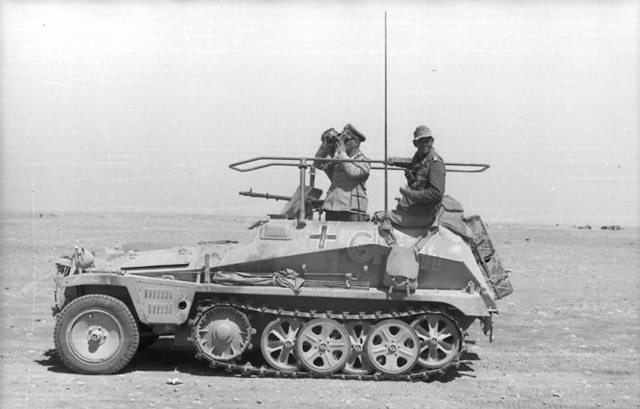
Rommel in North Africa worldwartwo.filminspector.com
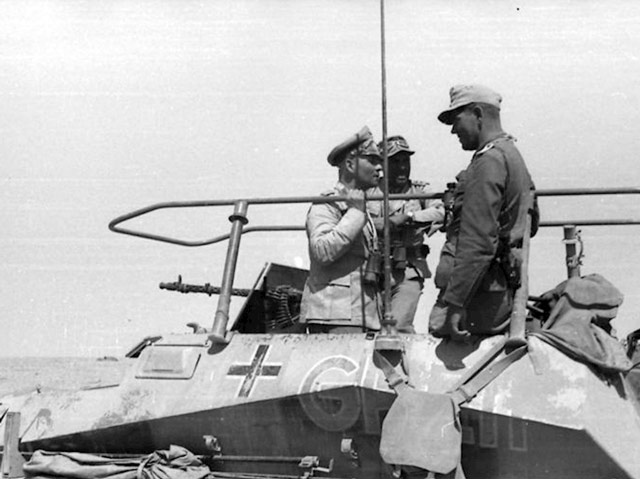
German General Erwin Rommel in his command vehicle in North Africa, 11 June 1942 (Zwilling, Ernst A., Federal Archive Image 101I-443-1589-08).

Eastern Front: General Erich von Manstein's 11th Army continues battering away at Red Army defenses outside Sevastopol, Crimea, on 11 June 1942. His troops of the LIV Corps are having the most success north of the port, where the heaviest German artillery is located. The Soviet 345th Division counterattacks on the borderline between the Wehrmacht 132nd and 50th Divisions, but quick Luftwaffe intervention (1070 sorties while dropping 1000 tons of bombs today) prevents a rupture. The Red Army and LIV Corps, however, continue taking heavy casualties.

While progress is still being made at Sevastopol, the local commanders are getting concerned at the high cost of the small local gains. Luftwaffe General Wolfram von Richthofen, in command at Fliegerkorps VIII, comments sourly in his war diary that his forces have "only enough left for 1.5 more days of bombing." His mood is black, and he adds that "the specter of failure now seriously looms." On the spur of the moment, Richthofen decides that his bombers are dispersing their efforts too widely. He thus changes bombing procedures to conserve resources. The new tactic of "column bombing" involves bomber attacks on only specifically designated targets while the aircraft fly one after another in narrow air corridors.

The Red Air Force also is proving to be a nuisance, though not to the Luftwaffe. Instead, the Soviets are making nightly raids on German positions in the "rear" to the east at places like Simferopol, Theodosiya, Eupatoria, and Yalta. The Luftwaffe can see the attacks coming on their radar but do not have any night fighters to intercept them. Fortunately for the Germans, the Red Air Force bombing runs are very inaccurate, so the raids for the most part are ineffective.

Off the Crimean coast, a mini-war at sea also is brewing. The Soviets are running fast convoys to Sevastopol every night, and early in the morning, the Kriegsmarine decides to do something about it. For the first time, Axis small craft (MTBs and motorboats) manned by Italians attack a Soviet convoy near Cape Khersones. It is believed, but not absolutely certain, that they sink a Soviet ship.  

Back at Fuhrer Headquarters in East Prussia, General Halder also is getting impatient with Manstein's progress. He notes that the Soviet artillery at Sevastapol "is quite troublesome." However, further north, "The Voshansk attack is making very satisfactory progress." Meanwhile, the situation at Ninth Army is "unclear," with the Soviets "unaccountably" abandoning territory. This new Red Army tactic of not fighting for every inch of ground but instead trading space for time and tactical regrouping will befuddle and mislead the German High Command throughout the summer.

Battle of the Black Sea: Soviet submarine A-5 torpedoes and sinks 5695-ton Romanian freighter Ardeal off Odessa. Ardeal's captain beaches the ship to avoid sinking but is later repaired and returned to service.

British POWs in North Africa worldwartwo.filminspector.com
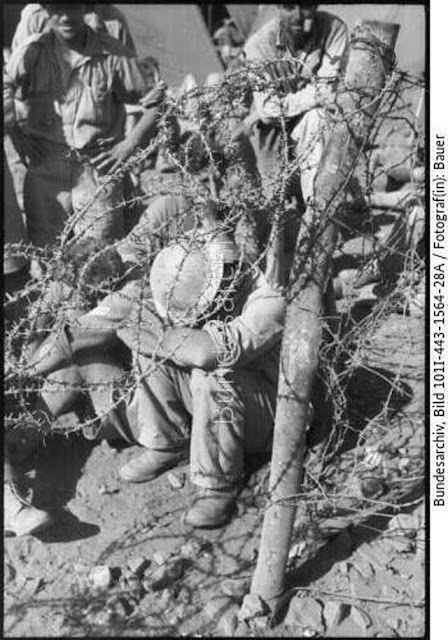
British POWs in North Africa, 11 June 1942 (Farmer, Federal Archive Image 101I-443-1564-28A).

Battle of the Pacific: USS Saratoga rendezvouses with fellow carriers Enterprise and Hornet. It transfers 19 SBD Dauntless, five TBD Devastator of VT-5, and 10 VT-8 Avenger planes to the two other carriers to replace their losses at the Battle of Midway. The ships then turn head to Pearl Harbor in foul weather.

Reinforcements for the Pacific Fleet are on the way. USS Wasp and battleship North Carolina, along with escorting destroyers, pass through the Panama Canal. Battleships just barely fit through the channel with mere feet (sometimes only inches) to spare on each side. The Japanese know the importance of the Canal and have plans to block it throughout the war.

The U.S. 11th Air Force make their first attack on the Japanese on Kiska Island in the Aleutian chain. The attack is made by five B-24 and five B-17 bombers flying from Cold Bay and loading their bomb racks at Umnak Island. PBY Catalinas also participate in the attack. on Kiska Harbor. The attack only scores some near misses on the Japanese ships while losing a B-24 (Captain Jack F. Todd) to anti-aircraft fire. This begins a 48-hour period during which the Catalinas make repeated attacks without much success.

British POWs in North Africa worldwartwo.filminspector.com
British and South African POWs in North Africa, 11 June 1942 (Zwilling, Ernst A., Image 101I-443-1589-34A).

Battle of the Indian Ocean: German raider Michel (HSK-9) uses its guns to sink 5186-ton British freighter Lylepark southeast of Cocos Islands (northwest of Perth, Australia). Michel is on her way from Japan for a hunting raid off the coast of South America.

Japanese submarine I-20 torpedoes and sinks 7926-ton British freighter Mahronda in the Mozambique Channel. There are two deaths and 40 survivors. The survivors are rescued by the Royal Indian Navy ship HMIS Orissa. This is an unusual situation where a German ship sinks a ship further west than a Japanese submarine in the Indian Ocean on the same day.

Australian corvette HMAS Wallaroo (J 222) sinks after colliding with a ship it is escorting, U.S. Liberty Ship Henry Gilbert Costin. The sinking ironically occurs because the ships are sailing without navigation lights in overcast weather to avoid detection by the enemy. Wallaroo sinks while trying to return to Fremantle, while the other ship makes it back. There are three deaths.

European Air Operations: The foul weather that has characterized the spring of 1942 continues today. It is 10/10ths clouds during the morning, but visibility clears a bit by noon. RAF fighters attack Koksijde and the Furnes Canal, sinking and damaging barges. The attacks are broken off after encountering heavy anti-aircraft fire at Nieuport. These attacks in low visibility are quite hazardous, and several planes narrowly avoid collisions or hitting ground obstructions.

Battle of the Baltic: German support ship MRS-11 Osnabruck hits a mine and sinks off Tallinn, Estonia. There are 84 deaths. The ship is later salvaged.

German cruiser Lutzow spotted by Allied air reconnaissance 11 June 1942 worldwartwo.filminspector.com
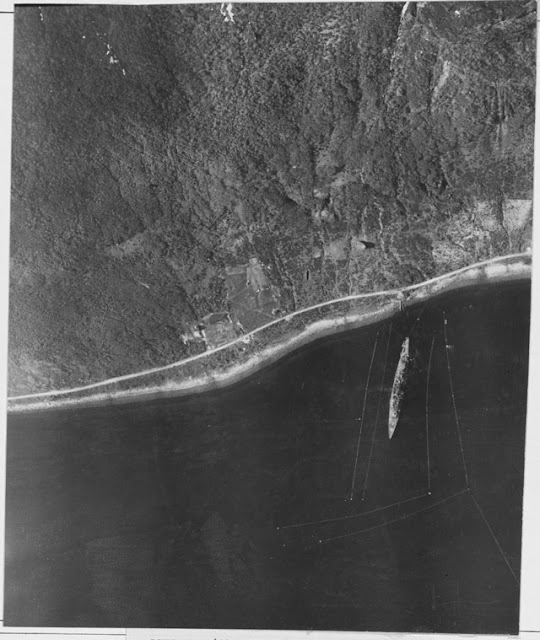
German heavy cruiser Lutzow photographed by Allied air reconnaissance, 11 June 1942 (Naval History and Heritage Command NH 110843).

Battle of the Atlantic: Italian submarine Leonardo da Vinci uses torpedoes and gunfire to sink 5483-ton Dutch freighter Alioth in the Atlantic Ocean near Freetown, Sierra Leone. Everyone survives.

U-504 (Kptlt. Hans-Georg Friedrich Poske), on its third patrol out of Lorient, torpedoes and sinks 4282-ton Dutch freighter Crijnssen 85 miles southwest of the Cayman Islands. There are one death and 93 survivors, who abandon the ship in four lifeboats and a gig. The sinking is especially traumatic for some on board because there are a dozen survivors of Sylvan Arrow (sunk by U-155 on 20 May 1942) and one from U.S. tanker T.C. McCobb (sunk by Italian submarine Pietro Calvi on 31 March 1942). The survivors in one lifeboat and the gig from Crijnssen are picked up by the U.S. freighter Lebore, which itself is sunk by U-172 a few days later. The other lifeboats make landfall in Mexico aside from four crewmembers on a raft who are picked up by the Panamanian tanker J.A. Mowinckel.

Freighter American sunk on 11 June 1942 worldwartwo.filminspector.com
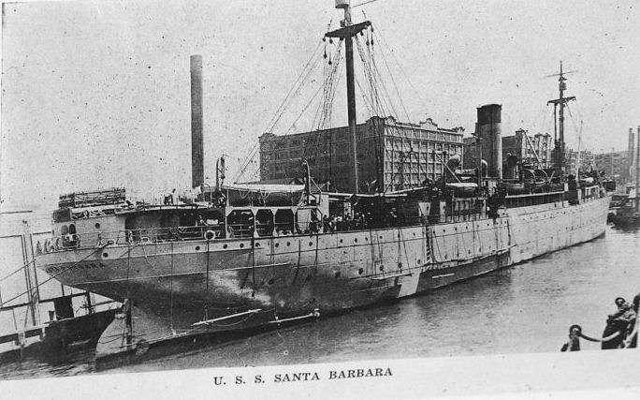
SS American, originally the Santa Barbara, was sunk by U-504 on 11 June 1942. 

Much later in the day, U-504 also torpedoes and sinks 4846-ton U.S. freighter American off Honduras. The ship is hit by two torpedoes and sinks within 25 minutes. There are four deaths and 34 survivors, who are picked up by British freighter Kent. One survivor perishes after being picked up.

U-159 (Kptlt. Helmut Friedrich Witte), on its second patrol out of Lorient, torpedoes and sinks 7130-ton British freighter Fort Good Hope northwest of Colon, Panama. Two torpedoes hit and sink the freighter (carrying wheat, timber, lead, and zinc) within half an hour. There are two deaths and 45 survivors, who are picked up by U.S. gunboat USS Erie (PG 50).

U-455 (Kptlt. Hans-Heinrich Giessler), on its third patrol out of St. Nazaire, torpedoes and sinks 6914-ton British tanker Geo H. Jones northeast of the Azores. The tanker is a straggler from Convoy SL-111 heading from Aruba to Freetown. There are two dead and 40 survivors, who are picked up by HMIS Orissa (J 200).

U-157 (KrvKpt. Wolf Henne), on its second patrol out of Lorient, torpedoes and sinks 6401-ton U.S. tanker Hagan five miles off the north coast of Cuba. Hagan is simply steaming a straight course independently and thus is an ideal target. Two torpedoes hit the engine room and fuel bunkers, sinking the ship, which is carrying 2,676 barrels of blackstrap molasses, fairly quickly. There are six dead and 38 survivors, who make landfall in Cuba in two lifeboats. This is the only victory for U-157 in its career, which ends a couple of days later when it is sunk.

U-94 (Oblt. Otto Ites), on its ninth patrol out of St. Nazaire, torpedoes and sinks 4458pton British freighter Pontypridd northeast of St. John's, Newfoundland. Pontypridd is a straggler from Convoy ONS-100. There are two dead and 46 survivors, who are picked up by HMCS Chambly (K 116).

U-158 (Kptlt. Erwin Rostin), on its second patrol out of Lorient, torpedoes and sinks 13,467-ton Panamanian tanker/transport Sheherazade 20 miles west of Ship Shoal Buoy, Louisiana. Sheherazade is a French ship turned over to the U.S. War Shipping Administration (WSA). There are one dead and 58 survivors, who are rescued by shrimp boat Midshipman and fishing vessel 40 Fathoms. The rescue happens quickly enough that nine men are found swimming after having jumped overboard.

Norwegian 6049-ton freighter Haugarland hits a mine and sinks off Terschelling, Netherlands. It appears that everyone survives.

U.S. 9310-ton tanker F.W. Abrams hits a U.S.  defensive mine and sinks east of Morehead City, North Carolina (near Cape Hatteras). The 36 men on board make it to shore near Morehead City. A tug ("Relief") attempts salvage of the floating wreck without success.

U-87 mines the waters off Boston, Massachusetts, while U-373 mines the area near Delaware Bay.

Rommel in North Africa worldwartwo.filminspector.com
General Rommel in his Sd.Kfz. 250 command truck, 11 June 1942 (Zwilling, Ernst A., Federal Archive Image 101I-443-1589-09).

Battle of the Mediterranean: German General Erwin Rommel's Afrika Korps occupies the fortress of Bir Hakeim, which has been a roadblock in his advance toward Tobruk. The Free French defenders have almost all escaped to British lines to the south save for a small rear guard left to delay the attackers. The French and British pull back from their advanced position outside the fortress to Gasr-el-Arid early in the morning, completing the breakout by 2700 men and women (there are some female nurses).

After finally clearing this obstacle, about which he later comments "seldom in Africa was I given such a hard-fought struggle," Rommel quickly resumes his offensive, sending the 15th Panzer and 90th Light Divisions toward El Adem. The British 201st Guard Brigade in the Knightbridge Box, which blocks the way to Tobruk to the east, comes under severe pressure. While the Allied defense of Bir Hakeim has seriously disrupted Rommel's overly ambitious timetable, his advance now regains momentum.

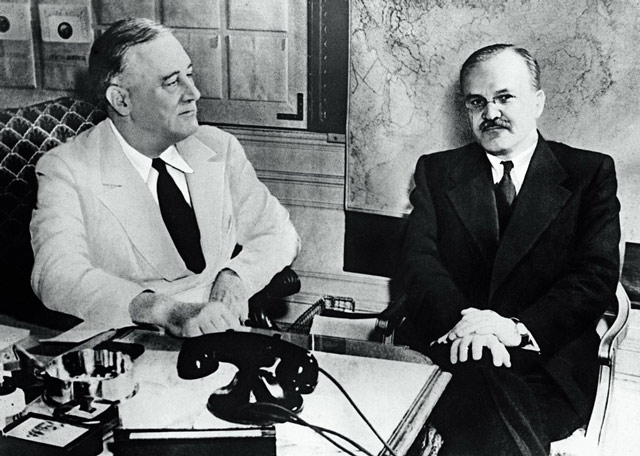
Molotov and FDR in Washington on 11 June 1942 worldwartwo.filminspector.com
Soviet Foreign Minister Vyacheslav Molotov and U.S. President Franklin D. Roosevelt meet in Washington, D.C., to finalize the lend-lease agreement, 11 June 1942 (Alliance.rusarchives.ru).

US/Soviet Relations: The United States and Soviet Union sign a lend-lease agreement. The agreement contemplates "mutually advantageous economic relations" between the two powers, with the agreement to continue in force "until a date to be agreed upon by the two governments." U.S. Secretary of State Cordell Hull and Soviet Ambassador Maxim Litvinov sign for their respective governments.

Article 1 sets out the main purpose of the agreement:
The Government of the United States of America will continue to supply the Government of the Union of Soviet Socialist Republics with such defense articles, defense services, and defense information as the President of the United States of America shall authorize to be transferred or provided.
This agreement, however, is not specific on certain key points. These become a lingering bone of contention during the post-war era. Significantly, the title to the equipment supplied by the U.S. is not transferred to the Soviet Union. The U.S. believes it still "owns" the items and retains rights to them, while the USSR believes it now owns them because they were freely given.

Technically, under the U.S. interpretation of the agreement, the Soviet Union is obligated to return any intact equipment or compensate the United States for it after the war. The USSR, perhaps understandably, has a vastly different interpretation. This leads to awkward exchanges between the two governments in the late 1940s in which the United States demands either the return of the intact equipment or payment for them, including limitations on the equipment's transfer to other countries. Ultimately, the United States simply demands payment for the "civilian-type articles remaining in existence."

Of course, the United States already has abandoned military equipment of its own at bases around the world because it is obsolete and considered too expensive to return to the homeland. Thus, there seem to be deeper reasons underlying the disagreement. It is entertaining to ponder the reactions of the Soviets when they receive these petty and abrasive demands for payment for goods they always assumed were given for free to win the war at the cost of Soviet blood. These pointless and unproductive "negotiations" help to poison the relations between the two nations and contribute to the growth of the Cold War, a hostile relationship that more or less continues to the present day.

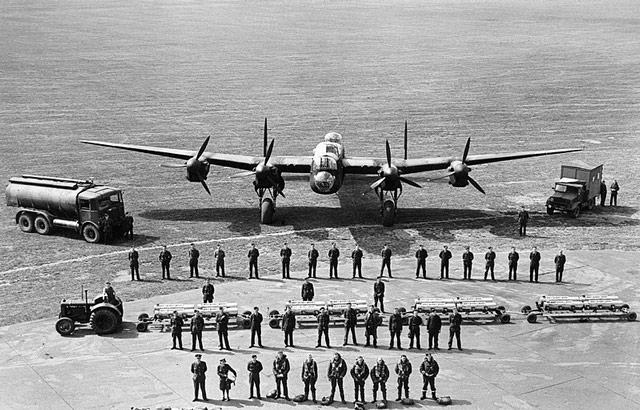
An Avro Lancaster and its crew on 11 June 1942 worldwartwo.filminspector.com
An Avro Lancaster and the personnel and equipment needed to keep it flying. This photograph was taken at Scampton, Lincolnshire, on 11 June 1942.  © IWM CH 15362.

German Military: Adolf Hitler issues Führer Directive 32. It sets out operations to be undertaken after the defeat of the Soviet Union, including the capture of Gibraltar with or without Spain's cooperation and resumption of the "siege of England." It is a curious mixture of far-sighted planning and mundane objectives such as the capture of Tobruk. It presupposes the quick defeat of the USSR in the coming Case Blue summer offensive and, like many of Hitler's grand strategies, assumes launch conditions that do not yet exist.

U.S. Military: With the threat to the U.S. west coast vastly reduced due to the Japanese defeat at Midway, the 97th Bombardment Group deployed for emergency purposes on the coast is transferred back to New England for eventual movement to join the Eighth Air Force in Great Britain.

Holocaust: Adolf Eichmann holds a meeting for his underlings controlling Jewish Affairs in France, Belgium, and Holland. This meeting sparks a systemic deportation scheme for Jewish residents of those areas to the extermination camps in the East that affects tens of thousands of people.

German Homefront: Michael Kitzelmann, 26, is executed at Orel Prison after being court-martialed and convicted of crimes against the state. Kitzelmann, a Wehrmacht lieutenant, was denounced by a sergeant for saying things that "undermined the military." He was in a hospital being treated for wounds when the allegations against him were made, but apparently, he made them previously while serving on the Eastern Front. The statements apparently concerned certain atrocities that Kitzelmann witnessed against the Russian population. While Kitzelmann became outspoken, he also had earned the Iron Cross Second Class and the Wound Badge in Gold.

TheGerman Bundestag rehabilitated Kitzelmann on 8 September 2009. A plaque in his memory is at the Johann-Michael-Sailer-school in Dillingen an der Donau.

American Homefront: The New England Journal of Medicine reports a case of "internal anthrax," which is considered quite novel because the vast majority of cases are of the cutaneous type. The patient died after showing progressively worse symptoms and a full autopsy was performed. Penicillin, still in its experimental phase, will become the accepted treatment for anthrax in 1944. 

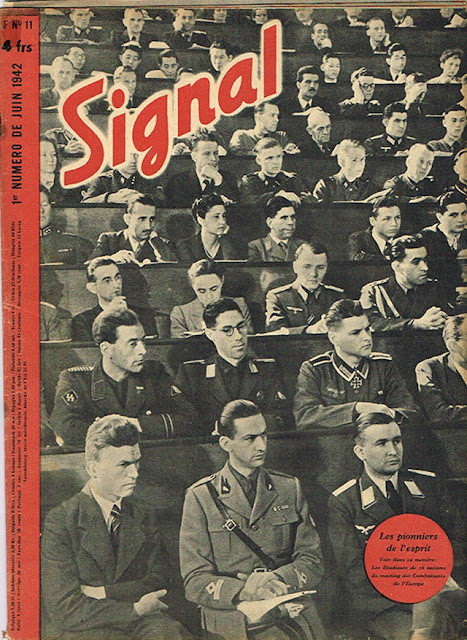
German Signal magazine from June 1942 worldwartwo.filminspector.com
Signal magazine, June 1942.

2021

Wednesday, August 26, 2020

April 8, 1942: US Bataan Defenses Collapse

Wednesday 8 April 1942

Japanese internees in San Diego, 8 April 1942 worldwartwo.filminspector.com
An MP watches local Japanese residents board trains at the Santa Fe Depot, San Diego, California, April 8, 1942. they are among 1150 Japanese-Americans boarding a train to the Santa Anita race track for processing. They are allowed no more than a single piece of luggage. (Clara Breed, San Diego Union-Tribune).
Battle of the Pacific:  The battle in Bataan turns decisively against the Allies on 9 April 1942 as the main defensive line cracks completely and the retreat becomes a rout. The two US Army corps lose contact with their units as everyone who can walks or rolls south. Major General Edward P. King bows to the inevitable and requests a parley with Japanese Major General Kameichiro Nagano. After dark, King orders equipment destroyed in preparation for surrender. The last US air units based in Bataan that can fly flee to Del Monte Field on Mindanao.

Only a very few lucky Allied soldiers evacuate aboard minesweeper/patrol boat YAG-4 from Mariveles Naval Base, where the navy scuttles massive floating drydock "Dewey." About 2000 men sail to fortified Corregidor Island in Manila Bay. Submarine USS Snapdragon delivers supplies to Corregidor and evacuated naval radio and communications intelligence experts.

San Francisco Chronicle, 8 April 1942 worldwartwo.filminspector.com
San Francisco Chronicle, 8 April 1942. The headline "Bataan's Peril Grows" could not be more accurate.
Japanese troops supported by light cruiser Tatsua, destroyer Mutsuki, and carried aboard Mishima Maru land on Lorengau, Manus Province, New Guinea, in the Admiralty Islands. As the soldiers of the 8th Special Base Force land at Lorengau harbor, the small group of Australian soldiers from the No. 4 Section, B Platoon, 1st Independent Company withdraw into the jungle. The Japanese quickly begin building an airstrip. Other Japanese troops occupy the town of Djailolo on Halmahera Island in the East Indies.

US Navy Admiral William "Bull" Halsey leads his Task Force 16, led by the aircraft carrier USS Enterprise, out of Pearl Harbor on 8 April 1942 on a top-secret mission. His orders are to rendezvous with the USS Hornet, already at sea, and support its mission to bomb Tokyo.

San Diego Union, 8 April 1942 worldwartwo.filminspector.com
The San Diego Union of 8 April 1942 touts glorious US victories at sea while less prominently noting that "Nippon Hordes Gain in New Bataan Attacks."
Battle of the Indian Ocean: Japanese Admiral Nagumo leads his massive Kido Butai strike force north to a point east of Ceylon (Sri Lanka). A Catalina patrol plane spots the Japanese force during the afternoon and orders are sent to clear Trincomalee harbor, including Royal Navy aircraft carrier HMS Hermes escorted by destroyer HMAS Vampire. The British fleet is far to the southwest and cannot intervene. Japanese submarine HIJMS I-3, operating about 300 miles west of Colombo, torpedoes and sinks 5051-ton British freighter Fultala. Dutch 2073-ton freighter Van der Capellen, hit during earlier raids, also sinks today.

Fighting in Burma has paused temporarily on the ground, but it remains ferocious in the air. The American Volunteer Group (Flying Tigers) sends its 1st and 3d Fighter Squadrons over Loiwing Aerodrome and they claim to shoot down a dozen Japanese fighters.
US Army Air Force Navigator who flies The Hump during WWII worldwartwo.filminspector.com
Undated photo of an unidentified US Army Air Force navigator who flies supplies to China across "The Hump" during World War II.
US Army Air Force 10 Air Force based in India sends its first supply flight over the Himalayas to China. This is the first of many dangerous flights (450+ planes lost) over the 22,000-foot peaks called "The Hump" during World War II. This route becomes an essential supply lifeline to the Chinese government that stretches the limits of aircraft of the day, primarily the Douglas C-47 Skytrain derived from the civilian Douglas DC-3 airliner.
Sevastopol, Crimea, aerial photo, 8 April 1942 worldwartwo.filminspector.com
Luftwaffe aerial reconnaissance photo of the Soviet pocket at Sevastopol, Crimea, 8 April 1942 (Federal Archive Image 168-278-030).
Eastern Front: In the Crimea, Soviet General Kozlov prepares his troops for his fourth offensive against the German line across the Parpach Narrow. The Soviets have about eight rifle divisions and 160 tanks. It is scheduled to start early on 9 April 1942.

European Air Operations: During the day, the RAF sends four Boston bombers on a sweep off the Dutch coast. After dark, RAF Bomber Command mounts a major raid on Hamburg. It sends 272 bombers - 177 Wellingtons, 41 Hampdens, 22 Stirlings, 13 Manchesters, 12 Halifaxes, and 7 Lancasters - but the weather is poor, with icing and electrical storms. Only a small fraction of aircraft actually bomb Hamburg, causing 8 fires and killing 17 people and injuring 119. One of the bombers bombs Bremen by mistake and causes more militarily significant damage to the Vulkan shipyard there than by the main force over Hamburg. There also are minor raids by 13 Wellingtons to Le Havre, 3 Blenheims over Holland (Eindhoven, Haamstede, Leeuwarden and Schipol Airfields), 24 minelayers off Heligoland, and 16 leaflet-droppers over Belgium and France. The RAF loses four Wellingtons and a Manchester on the Hamburg raid and one of the leaflet planes for a 1.8% loss rate.
US floating dry dock Dewey, scuttled on 8 April 1942 worldwartwo.filminspector.com
US floating dock "Dewey," scuttled on 8 April 1942 in Bataan, the Philipines to avoid capture by the Japanese.
Battle of the Atlantic: U-123 (Kptlt. Karl-Heinz Moehle), on its eighth patrol out of Lorient, continues a very successful patrol off the east coast of the United States. It sinks two US tankers, 9264-ton Oklahoma (19 dead and 8 survivors) and 7989-ton Esso Baton Rouge (3 dead and 65 survivors), about ten miles off St. Simon's Island, Georgia. Both ships sink in shallow water and later are refloated and returned to service in late 1942.

U-84 (Oblt. Horst Uphoff), on its fourth patrol out of Brest, gets its first victory of the war about 180 miles southeast of Cape Sable, Nova Scotia. It is 5226-ton Yugoslavian freighter Nemanja (13 dead and 34 survivors). This sinking occurs after a nine-hour chase during which U-84 missed with two torpedoes.

Italian submarine Pietro Calvi torpedoes and sinks US freighter Eugene V.R. Thayer off the coast of Brazil.

German 734-ton freighter Kurzesee hits a mine laid by Soviet submarine K-1(Captain 3rd class Avgustinovich) earlier in the day. It sinks off Kvaenangenfjord (Skjervøy), Norway. Swedish 2374-ton freighter Ara hits a mine and sinks off Terschelling, Friesland, the Netherlands.

Soviet submarine ShCh-421 hits a mine in the Barents Sea and is irreparably damaged. Everybody survives the sinking, which actually concludes on 9 April 1942.

The British Admiralty scuttles 3645-ton freighter Carolina Thornden as a blockship in Water sound, Scapa flow.

HMS Penelope, showing battle damage of 8 April 1942 worldwartwo.filminspector.com
HMS Penelope, showing battle damage sustained at Malta.
Battle of the Mediterranean: Luftwaffe Field Marshal Albert Kesselring's air offensive against Malta reaches its climax. Royal Navy cruiser HMS Penelope (three dead), under heavy attack, heads out of Grand Harbor at 20:00 to avoid destruction and fights off repeated air attacks on its way to Gibraltar. Mooring vessel Moor (767 tons) hits a contact mine dropped by the Luftwaffe and sinks (28 deaths, one survivor). Today's attacks become the worst one-day attack on Malta of World War II.

The Italian Regia Aeronautica also attacks shipping at Alexandria. The planes sink Royal Navy whalers HMT Thorgrim (307 tons, refloated in 1950) and Svana (268 tons).

Anglo/US Relations: Harry L. Hopkins, a close crony of President Roosevelt, and Army Chief of Staff General George C. Marshall arrive in London, England. They are there to discuss the arrival of US troops, naval units, and air formations.

US Military: The US Army Air Force activates the 9th Air Force with its headquarters at New Orleans. This formerly was the V Air Support Command.
Nurse Betty Evans at her station in Iceland, 8 April 1942 worldwartwo.filminspector.com
Army Nurse Betty Evans checks thermometers by the medication cabinet, 8 April 1942, Iceland. Female nurses are not allowed in active combat zones at this time. Notice that the cabinet is locked, and nurses were among the few allowed access (US Army Medical Department, Office of Medical History).
Canadian Government: The Canadian government creates the Park Steamship Company to build freighters specifically designed for wartime service. These become known as Park ships and sail alongside Liberty ships built in American shipyards and Fort ships built in Great Britain.

American Homefront: The War Production Board expands on earlier orders that have terminated the production of civilian automobiles and some other consumer goods. It orders a halt to all production deemed unnecessary to the war effort as of 31 May 1942. As workers shift to the military and war work, the unemployment rate begins edging down from a 14% rate in 1940.

Future History: Roger Maxwell Chapman is born in Leicester, England. He becomes the vocalist for the Farinas, who release their first single, "You'd Better Stop," in August 1964. He later fronts a succession of acts, most notably Family, as a distinctive singer and showman. Much of his career is in Germany, where he is awarded a Lifetime Achievement Award in 2004. After giving a "farewell performance" in 2010, Chapman appears to be retired as of 2020.

Leon A. Huff is born in Camden, New Jersey. He becomes a top songwriter, helping to develop the Philadelphia soul music genre along with partner Kenneth Gamble. As Gamble and Huff, they are inducted into the Rock and Roll Hall of Fame in the non-performer category in March 2008.
Thrilling Wonder Stories, April 1942 worldwartwo.filminspector.com
"Thrilling Wonder Stories," April 1942 (cover art by Earle K. Bergey).

April 1942

April 1, 1942: Convoys Come to the USA 
April 2, 1942: Doolittle Raiders Leave Port
April 3, 1942: Japanese Attack in Bataan
April 4, 1942: Luftwaffe Attacks Kronstadt
April 5, 1942: Japanese Easter Sunday Raid on Ceylon
April 6, 1942: Japanese Devastation In Bay of Bengal
April 7, 1942: Valletta, Malta, Destroyed
April 8, 1942: US Bataan Defenses Collapse
April 9, 1942: US Defeat in Bataan
April 10, 1942: The Bataan Death March
April 11, 1942: The Sea War Heats Up
April 12, 1942: Essen Raids Conclude Dismally
April 13, 1942: Convoy QP-10 Destruction
April 14, 1942: Demyansk Breakout Attempt
April 15, 1942: Sobibor Extermination Camp Opens
April 16, 1942: Oil Field Ablaze in Burma
April 17, 1942: The Disastrous Augsburg Raid
April 18, 1942: The Doolittle Raid bombs Japan
April 19, 1942: British in Burma Escape
April 20, 1942: The Operation Calendar Disaster
April 21, 1942: Germans Relieve Demyansk

2021