Showing posts with label Fletcher. Show all posts

Monday, November 8, 2021

June 7, 1942: Manstein Attacks Sevastopol in Crimea

Sunday 7 June 1942

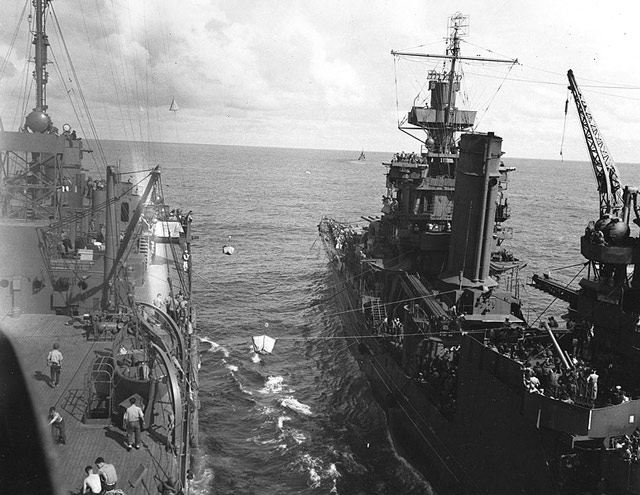
Transfer of Yorktown survivors at sea, 7 June 1942 worldwartwo.filminspector.com
"USS Portland (CA-33), at right, transfers USS Yorktown survivors to USS Fulton (AS-11) on 7 June 1942, following the battle of Midway. Fulton transported the men to Pearl Harbor." Naval History and Heritage Command 80-G-312028.

Battle of the Pacific: US aircraft carrier USS Yorktown (CV-5) sinks just after dawn on 7 June 1942, marking the definitive end of the Battle of Midway. Yorktown capsizes due to the combined effects of previous Japanese naval air strikes and torpedoes from I-168. The Battle of Midway has been a decisive American victory, with the Japanese losing four fleet aircraft carriers and a cruiser.

Continuing with their grand operational plan whose main component already has been thwarted at Midway, the Japanese occupy Attu Island in the Aleutians. There is no opposition to the 1143 men of the North Sea Detachment, and it is unclear if the US even knows about this latest invasion for a day or two. There are only 44 US civilians and 42 Aleut natives on Attu. One US civilian, Charles Jones, dies during the Attu invasion of unknown causes. The Japanese send everyone to camps in Japan, with only 25 of the 86 inhabitants surviving the war. The Japanese also capture nine of ten US Navy sailors manning a weather station on Kiska, with the tenth man (wearing a summer uniform) evading capture in the interior for 45 days.

The Japanese now occupy two islands at the extreme end of the Aleutian Island chain (Attu and Kiska). The Japanese high command anticipates that the US Navy will intervene and sends two light carriers to the vicinity in order to stage an ambush. In fact, Admiral Chester Nimitz does intend to send USS Enterprise and Hornet to the Aleutians, but he has not yet issued the necessary orders.

While Admiral Raymond A. Spruance has chosen not to pursue the retreating Japanese fleet - a decision for which he receives criticism - the US Army Air Force decides otherwise. Major General Clarence L. Tinker, Commander, 7th Air Force, personally leads a bomber strike from Hawaii. He perishes when his plane crashes near Midway.
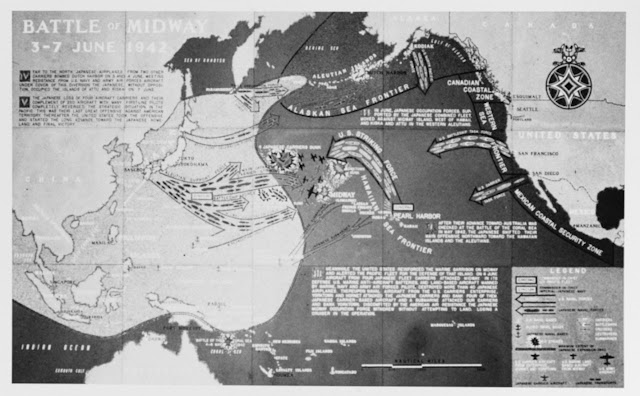
Map of Battle of Midway June 1942 worldwartwo.filminspector.com
"Located in the southeast room of the visitors building of Manila American Cemetery and Memorial. Map was designed by Margaret Bruton and fabricated by P. Grassi American Terrazzo Company of South Francisco." Naval History and Heritage Command NH 114452.

Admiral Frank Fletcher, who ceded command of US Task Force 18 around Midway Island due to the loss of his ship, the Yorktown, transfers his flag to aircraft carrier Saratoga, which has recently arrived from the US west coast. Saratoga departs Pearl Harbor today carrying replacement aircraft for the two remaining carriers involved in the battle. Fletcher thus is able to resume command of the task force on 8 June. He learns that Spruance has withdrawn to the east in order to refuel his ships and quickly orders search missions for the Japanese, who are heading back to Japan. However, the opportunity to continue the battle and "finish off the Japanese" has been lost.

While he has presided over the dramatic victory off Midway, Spruance manages to destroy much of the reputation he could have gained. This is due to his perceived lack of aggressiveness following the heat of the battle. Spruance's "discretion is the better part of valor" approach is controversial - then and now - and contrasts poorly with the aggressive tactics of Admiral "Bull" Halsey, who was unable to command the fleet at Midway due to health concerns. Now that Fletcher is back in command, Spruance is quickly reassigned from his field command to serve as Admiral Nimitz's chief of staff, though he does recover to have some important commands in 1943-1945.

Japanese submarine I-26 (Cdr Yokota) torpedoes and sinks 3545-ton US refrigerated freighter Coast Trader thirty miles off the Strait of Juan de Fuca on the US west coast. The ship is carrying refrigerated ammonia, which leaks due to the explosion and incapacitates some of the crew. There is one death. The remaining 56 men make it to a lifeboat, which local fishing vessel Virginia I tows to Neah Bay, and two rafts that Canadian corvette Edmunston (K-106) finds.

US submarine Grouper (SS-214) is mistakenly bombed by USAAF B-17 bombers looking for the Japanese fleet. It escapes undamaged, reflecting typical poor aim by level bombers against shipping in the Pacific.
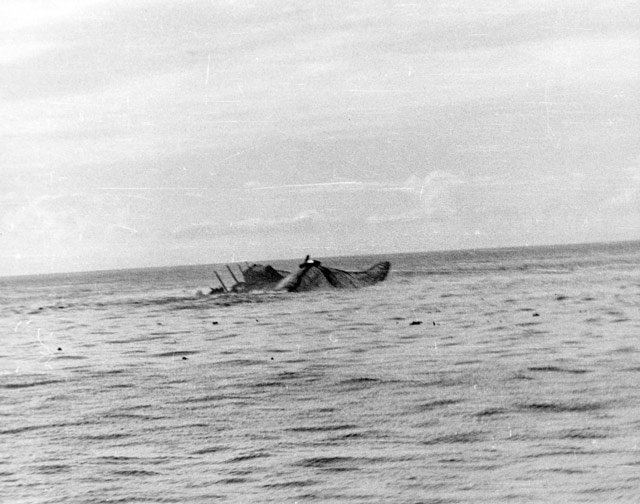
USS Yorktown sinks at Battle of Midway 7 June 1942 worldwartwo.filminspector.com
"USS Yorktown (CV-5) sinking, just after dawn on 7 June 1942, as seen from an accompanying destroyer." Naval History and Heritage Command NH 106000.

Battle of the Indian Ocean: Japanese submarine I-18 shells and sinks 2158-ton Norwegian freighter Wilford in the Indian Ocean off the Mozambique Coast. There are nine deaths and 34 survivors. All but two of the survivors, who are picked up by a Marinha Portuguesa gunboat, reach land in their lifeboats.

Eastern Front: In Crimea, German General Erich von Manstein begins Unternehmen Störfang (Operation Sturgeon Catch), the assault on Sevastopol. The port is well-defended, surrounded by rugged forests and bunkers that include 11 batteries and strong points north of Severnaya Bay.

The German 11th Army is weak, with many divisions seriously understrength. This is because Adolf Hitler is husbanding his fresh troops for the grand offensive, Case Blue, that he plans to launch in a few weeks. There are many fresh divisions and thousands of idle troops just north of the Crimea. It is an artificial manpower shortage, as opposed to the real one that are to come. Thus, Manstein must rely heavily on his artillery and airpower to make up for a weak thrust on land. Assisting the Germans are units of the Romanian Army, including the 1st Mountain Division and 18th Division, which are strong but lack their own artillery and air support.
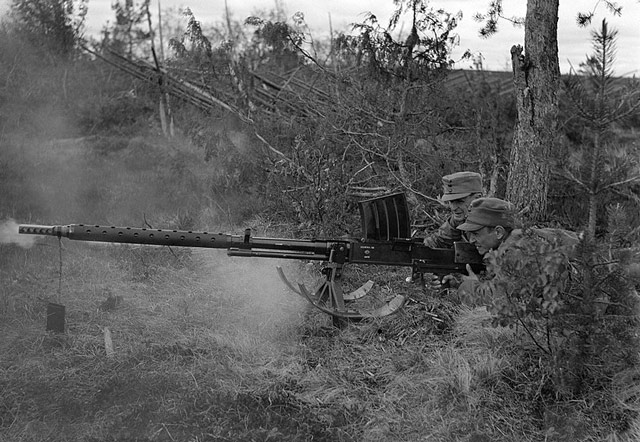
Finnish Lahti L-39 antitank gun in use, 7 June 1942 worldwartwo.filminspector.com
Lahti L-39 anti-tank gun in use, 7 June 1942 (Martin Persson, SA-kuva).

Aiding the assault are the Germans' heavy artillery that includes an 800 mm gun (Schwere Gustav), three 600 mm guns (Karl-Gerät self-propelled mortars), two 280 mm railway guns, two 420 mm guns, two 355 mm howitzers, and four 305 mm mortars. These massive artillery pieces have been firing at the Soviet defenses for days and have destroyed some key Soviet bunkers. The Luftwaffe's 8th Air Corps already has flown 3,069 sorties against the port, dropping 2,264 tons of high explosives and 23,800 incendiary bombs.

Following the massive preparatory bombardment, German 30 Corps attacks in the south while LIV Corps does so in the north. The southern attack stalls, but the LIV Corps makes good progress (this is the sector where the heaviest artillery has is located). The 132nd Infantry Division heads down the river while the 22nd Infantry Division attacks further east. The Soviets have planted numerous minefields that slow the Axis troops down. 

For Manstein, it is a mixed picture, with some advances in the north, few gains in the south, and failed attacks by the German 24th and 50th Infantry Divisions. In LIV Corps' four divisions alone there are 2,357 casualties, including 340 men killed. In addition, some of the units are running low on ammunition. However, the Germans take the key Red Army defensive position at Belbek, and Red Army casualties also have been severe. With his attempt at a quick victory a failure, Manstein now is looking at a depressing battle of attrition against the numerous enemy forces unless he can get the attack moving in the coming days.
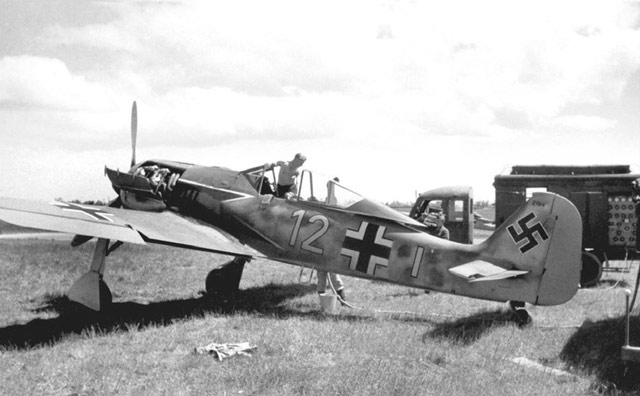
Fw-190 in France, June 1942 worldwartwo.filminspector.com
Focke-Wulf Fw-190A-2, 7./JG2, Theville, France, June 1942. The plane is still a bit of a mystery to Allied forces at this time.

European Air Operations: The weather is poor (10/10), with clouds down to 2000 feet. There are few operations during the day, typical during a relatively quiet spring 1942 on the Channel Front.

After dark, RAF Bomber Command attacks the German port of Emden. On the way back to base at 00:47, Luftwaffe pilot Oblt. Ludwig Becker of 6./NJG 2 in a Bf 110 shoots down a Wellington III (X3279) into the Waddenzee. All six crewmen perish.

Hptm. Johannes Seifert of I./JG 26 (KIA 25 November 1943) is awarded the Ritterkreuz (Knight's Cross of the Iron Cross) for 36 victories.
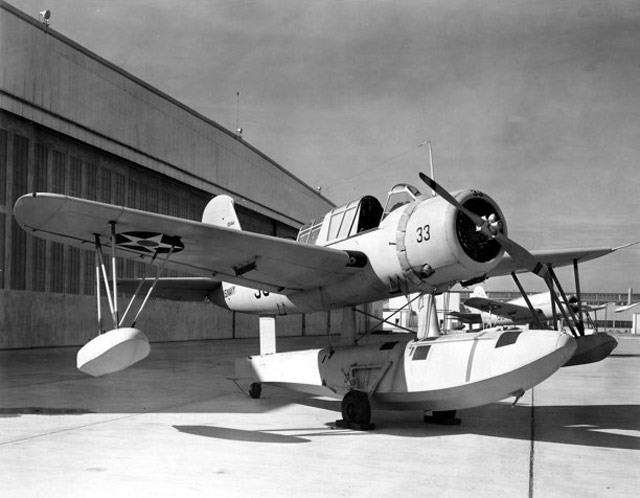
Kingfisher seaplane in Jacksonville, Florida, 7 June 1942 worldwartwo.filminspector.com
A US Navy Vought OS2U Kingfisher seaplane on the ramp at Naval Air Station Jacksonville, Florida, 7 June 1942 (US Navy). 

Battle of the Atlantic: U-653 (Kptlt. Gerhard Feiler), on its third patrol out of Brest, torpedoes and sinks seaplane tender USS Gannet (AVP-8) northwest of Bermuda. The ship sinks within four minutes. PBM Mariner seaplanes of VP-74 rescue 22 men, while USS Hamilton picks up 40 more. There are 16 deaths. 

U-159 (Kptlt. Helmut Friedrich Witte), on its second patrol out of Lorient, torpedoes and sinks 3382-ton US freighter Edith 200 miles southeast of Kingston, Jamaica. The ship sinks within twelve minutes. Witte surfaces after the attack to question the survivors and give them direction. He also, in an unusual move, scavenges various supplies that are bobbing in the water such as food, clothing, and even toys. The ship's survivors make it to Black River, Jamaica, in a week.

Italian submarine Leonardo da Vinci torpedoes and sinks 6956-ton British freighter Chile 350 miles southwest of Monrovia, Liberia. There are five deaths and 39 survivors.

U-107 (Kptlt. Harald Gelhaus), on its sixth patrol out of Lorient, torpedoes and sinks 3910-ton Honduran freighter Castilla near Jamaica. The ship sinks within minutes and no lifeboats can be launched. There are 24 dead and 35 survivors, who are picked up by USS Nike (WPC 112).

U-107 also torpedoes and sinks 3249-ton US freighter Sterling Steel Bridge (formerly Suwied) near Cozumel, Mexico. The ship sinks within three minutes, preventing any distress calls. There are six dead and 27 survivors. The survivors are picked up after 19 hours by USCGC Nemesis (WPC 111). This sinking, which occurs around midnight, is sometimes cited as occurring on 8 June.

U-158 (Kptlt. Erwin Rostin), on its second patrol out of Lorient, torpedoes and sinks 5234-ton Panamanian freighter Hermis due west of Havana, Cuba and due north of the extreme western tip of Cuba. Despite being hit by two torpedoes, the ship remains afloat and steaming in a circle, so Rostin surfaces and shells the freighter, setting it on fire, but it remains afloat for 12 more hours. There are one death and 46 survivors, who are picked up by US Army transport Toloa and taken to Kingston, Jamaica.

German 2967-ton freighter Joao Pessoa strikes rocks and sinks two miles from San Sebastian, Spain. Casualties are unknown.
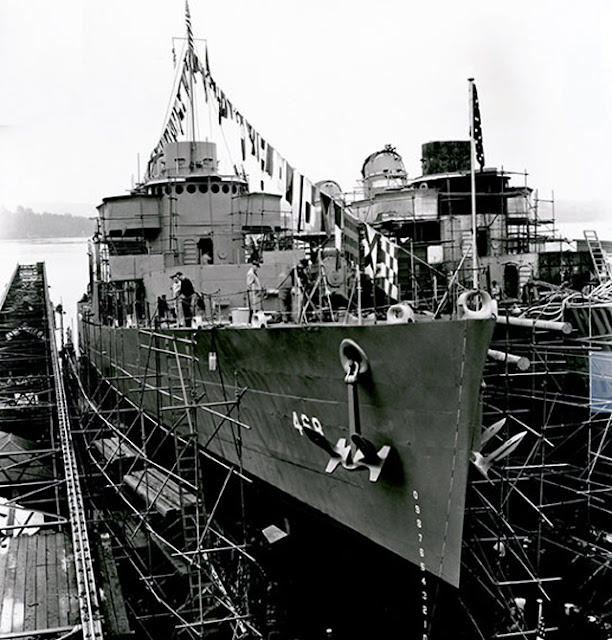
USS Taylor being launched in Maine, 7 June 1942 worldwartwo.filminspector.com
Launch of USS Taylor (DD-468) at the Bath Iron Works in Bath, Maine, on 7 June 1942. The ship is named after  Rear Admiral William Rogers Taylor (US Taylor Reunion Association).

Battle of the Mediterranean: The Axis forces around Bir Hakeim continue small-scale attacks. The 90th Light Division has managed to send pioneers through one minefield and into an interior minefield within about 800 meters (900 yards) of the fortress. The Free French garrison, while low on supplies, continues to hold out. During the day, the British Desert Air Force (DAF) launches several attacks against the exposed pioneers, while Luftwaffe Stukas pound the fort.

Much of the fighting at this stage of the battle revolves around supply lines, which are of vital concern in the desert. The British launch minor attacks by the 7th Motor Brigade and 29th Indian Infantry Brigade against Axis supply lines without much success. One last convoy manages to get through to Bir Hakeim in heavy fog after dark. Meanwhile, German General Erwin Rommel use the fog to reposition his forces for a determined assault on Bir Hakeim from the north on the 8th.

Besieged within Bir Hakeim, Brigadier General Marie-Pierre Koenig requests permission to withdraw due to his supply problems. Lieutenant-General Neil Ritchie, commanding the British Eighth Army, denies the request. Ritchie has his reasons - he anticipates the loss of Libya and needs to buy time while he builds a last-ditch defensive position at the little Egyptian town of El Alamein. Koenig, knowing that he can't hold out much longer, begins contemplating a breakout.

Italian submarine Sebastiano Veniero (Cdr Elio Zappetti) is lost due to two Catalina attacks of RAF No. 240 Squadron between the Balearic Islands and Sardinia around noontime. All 57-58 men on board perish.
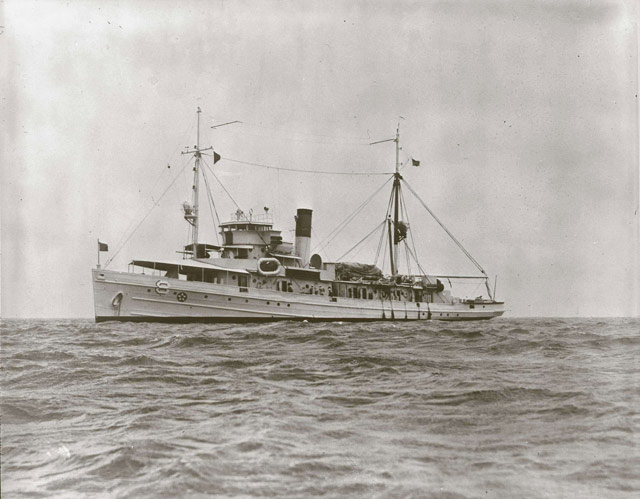
USS Gannet, sunk on 7 June 1942 worldwartwo.filminspector.com
USS Gannet, sunk by U-653 on 7 June 1942.

Special Operations: British Commandos execute Operation Albumen, another in a long sequence of overnight operations against Axis coastal targets. This one is on the Greek island of Crete, where Luftwaffe forces have been supporting the currently successful campaign of German General Erwin Rommel in Libya. Operation Albumen has several different coordinated sabotage operations.

Led by Captain G.I.A. Duncan of the Black Watch and assisted by local partisans, the Commandos destroy five aircraft and damage 29 others, along with several vehicles and stores, at Kastelli. At Heraklion, George Jellico leads members of the Free French Forces and Hellenic Army to plant Lewes bombs, destroying about 20 Junkers Ju 88 medium bombers. Similar attacks at Tympaki and Maleme do not accomplish anything because there were no aircraft at the former location and the latter was too well guarded. The Germans lose a dozen soldiers.

Aside from the damage caused directly by Operation Albumen, there are some lasting consequences. While the Commandos escape, the German authorities take and execute 50 local hostages. German Crete commander General Alexander Andrae ultimately is replaced by General Bruno Bräuer in November 1942 partly as a consequence of this raid.
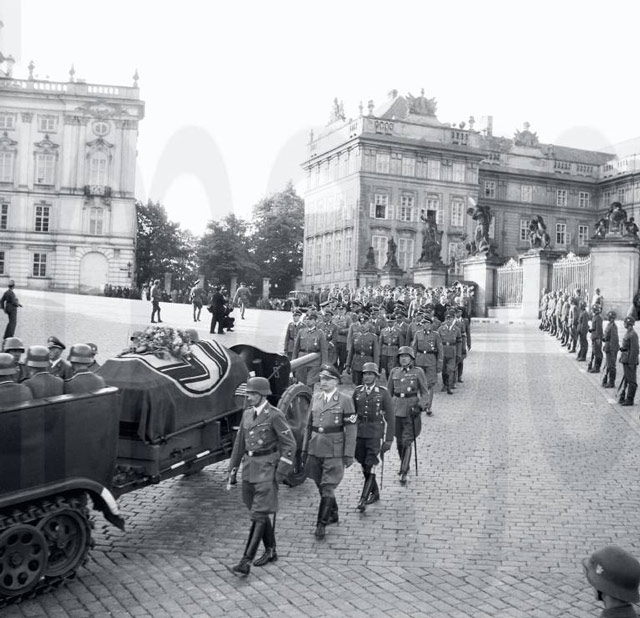
Funeral in Prague of Reinhard Heydrich, 7 June 1942 worldwartwo.filminspector.com
Funeral procession of Reinhard Heydrich in Prague, 7 June 1942. Note his flag-draped coffin on a caisson on the left.

German Homefront: The German authorities in Prague hold a massive, ostentatious funeral for assassinated Reichsprotektor Reinhard Heydrich. Afterward, the coffin is sent by train to Berlin for a second funeral to be held on 9 June. The second funeral is planned to be even more elaborate and ostentatious and is to be attended by the entire Reich leadership including Adolf Hitler. The Prague authorities continue to search for the assassins, who remain in the city moving between safe houses. Severe reprisals are in progress, with many more planned.

British Homefront: Scientist Alan Blumlein, the inventor of stereo sound recording among many other things, dies when a Halifax bomber in which he is testing H2S airborne radar crashes in Herefordshire. The crash apparently is due to improper aircraft maintenance. Due to Blumlein's importance to the war effect, the British government does not announce Blumlein's death until 1945. This delay leads to various conspiracy theories about the true cause of Blumlein's death. In 2017, the US Recording Academy posthumously awards Alan Blumlein a Technical Grammy for his contributions to the recording field.
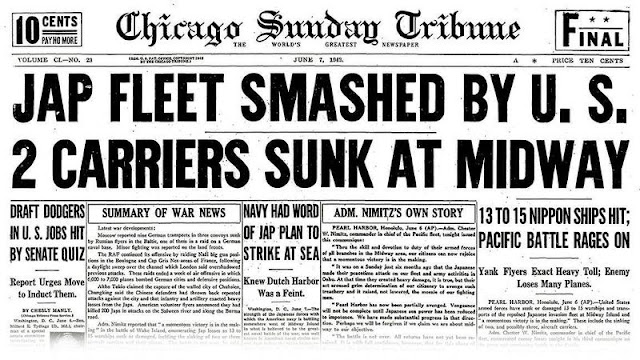
Chicago Sunday Tribune, 7 June 1942 worldwartwo.filminspector.com
The 7 June 1942 Chicago Sunday Tribune, featuring the article in the center "Navy Had Word of Japanese Plan to Strike at Sea" which almost got the reporter and newspaper in big trouble.

American Homefront: In a remarkable journalistic coup, the Chicago Tribune breaks the news of the codebreaking that contributed heavily to the US Navy victory in the Battle of Midway. Under the headline "Navy Had Word of Japanese Plan to Strike at Sea," the article describes how Naval Intelligence allowed Admiral Nimitz to pre-position his forces to ambush the Japanese fleet. While this article displays a clear breach of critical military security that might aid the Japanese, nothing comes of it. The Japanese military shows no signs of becoming aware that the Americans have broken their codes.

In Great Britain, Winston Churchill is known for having a short fuse with regard to sensitive press leaks like this. His government engages in many displays of censorship and attempted censorship. However, the US government ultimately lets the matter pass because events show that the disclosures do not interfere with the war effort.

Future History: Muammar Muhammad Abu Minyar al-Gaddafi is born in Qasr Abu Hadi, Sirte, Italian Libya. From a poor tribal family, he joins the Libyan military in 1963. In 1964, Muammar Gaddafi forms the "Central Committee of the Free Officers Movement," a revolutionary group styled after the teachings of a former Egyptian leader. In mid-1969, while Libyan King Idris is on vacation in Turkey and Greece, Gaddafi leads a bloodless coup and established the Libyan Arab Republic. Self-styled as the "Brotherly Leader and Guide of the Revolution of Libya," Muammar Gaddafi thereafter rules Libya as a dictator. He develops a cult of personality and remains in power until 20 October 2011, when Muammar Gaddafi perishes while trying to flee from an insurrection.
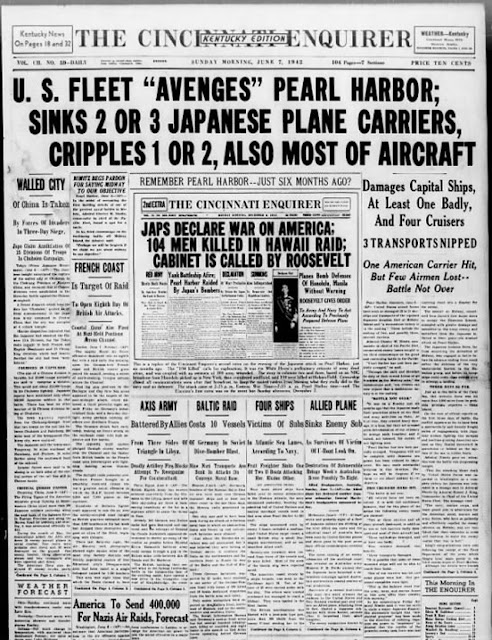
Cincinnati Enquirer, 7 June 1942 worldwartwo.filminspector.com
The 7 June 1942 Cincinnati Enquirer headlines the Battle of Midway as "Avenging" Pearl Harbor. It even reprints its front page from the Pearl Harbor report on this front page to hammer home that point. Unusually for this stage of the war, the report actually underplays the American victory, claiming only "2 or 3" Japanese carriers sunk when actually four were sunk. Still, this is very accurate reporting this close to the actual battle.

2021

Sunday, April 18, 2021

May 9, 1942: Manstein on the Attack in Crimea

Saturday 9 May 1942

Captured U-352 crewman, 9 May 1942 worldwartwo.filminspector.com
"German U-boat, U-352, May 1942. 33 German prisoners were brought ashore at the Navy Yard, Charleston, South Carolina, by US Coast Guard cutter Icarus (WPC-110) after the sinking of the German submarine, U-352, off the Atlantic coast on 9 May 1942. The Executive Officer of the German submarine repeats in German the instructions given to him by US Navy officers as the crew eat “chow.”" Naval History and Heritage Command 80-G-41304.
Battle of the Pacific: Rear Admiral Frank Jack Fletcher takes Task Force 17 out of the Coral Sea on 9 May 1942, ending the Battle of the Coral Sea. With only one fleet carrier, USS Yorktown left, Fletcher proceeds south of New New Caledonia and proceeds toward Tongatabu to refuel. Australian Rear Admiral John Crace, in charge of Task Force 44, keeps his cruiser force in the area throughout the day to guard Port Moresby.

The Japanese fleet is short of fuel, so Vice Admiral Takeo Takagi's Carrier Strike Force, also down to one carrier (Zuikaku), spends the day refueling. Admiral Isoroku Yamamoto has ordered him to pursue and engage the Allied warships again. In the evening, Takagi heads southeast with his refueled ships, then turns southwest toward the Coral Sea. The invasion of Port Moresby remains on hold unless and until Takagi can eliminate the Allied forces.

The Japanese recently set up a seaplane base in the Deboyne Islands during the opening stages of Operation Mo in order to assist with the invasion of Port Moresby. Today, the Allies begin a series of air raids on the base that damage seaplane tender Kamikawa Maru and eventually force the Japanese to leave.

Having taken the US island fortress of Corregidor, the Japanese seek complete control of the Philippines by taking Dalirig on Mindanao.
Manila under Japanese occupation, 9 May 1942 worldwartwo.filminspector.com
Manila, the Philippines during the Japanese occupation, 9 May 1942.
Battle of the Indian Ocean: The Burma Corps continues withdrawing west across the Chindwin River. Today, the divisional headquarters and the 13th Indian Infantry Brigade makes the crossing. Their destination is the border town of Tamu, which is not that far but will require traversing some rough, roadless terrain
USS Albacore, 9 May 1942 worldwartwo.filminspector.com
USS Albacore in Measure 9 camouflage (dull black) off Groton, 9 May 1942.
Eastern Front: It is day two of the German offensive in Crimea and everything is going the Wehrmacht's way. General Franz Halder's war diary entry is short and succinct: "Breakthrough on the southern wing. The attack is making good progress. All quiet on the rest of the front."

General Erich von Manstein's attempt to clear the Kerch peninsula, Operation Trappenjagd ("Bustard Hunt"), continues on 9 May with great success. In some ways, the operation resembles the opening days of Operation Barbarossa in June 1941, with crushing German domination sweeping aside all opposition. Where the Germans attack, the Red Army gives way, and casualties are light.

German engineers have successfully created an opening through the Soviet anti-tank ditch in the south. Manstein uses it to commit the 22nd Panzer Division in a move east, then north to the Sea of Azov coast. This maneuver eventually traps the Soviet 51st Army in a pocket, isolating about one-third of the Soviet strength. The 44th Army in the south is in disarray, and the 47th Army in reserve at Kerch is slow to react, hampered by Luftwaffe attacks on the roads.
Manstein and Richtofen, 9 May 1942 worldwartwo.filminspector.com
Colonel-General Erich von Manstein, left, and Luftwaffe commander Wolfram von Richthofen in Crimea, May 1942 (Cherry, Federal Archive Image 183-B18908).
The Red Army counterattacks with its armor, but the Luftwaffe has complete aerial superiority and, with little tree cover, an open field of fire on the roads. Luftwaffe General Wolfram von Richthofen has assembled overwhelming power from units that have returned from the Reich after being refurbished over the winter. German planes down 25 Soviet planes over the breakthrough point and wreak havoc on the counterattacking Red Army tanks. The Luftwaffe launches 1700 sorties during the day, not far under the 2100 sorties on the first day of the offensive. Overall, the Luftwaffe claims 52 Soviet planes shot down during the day for only two losses. A rainstorm during the evening effectively ends operations for the day.

General Hans Zorn, the commander of the breakout attempt from the Demyansk pocket that ultimately led to its relief (in conjunction with Seydlitz's advance to Ramushevo), visits Fuhrer Headquarters in East Prussia. Halder writes that he looks "Quite worn!"

European Air Operations: After 12 Boston bombers attack Bruges oil storage tanks and Hazebrouck railway yards, it is a quiet night. The only activity by either side is a mission by 20 RAF bombers to lay mines off Denmark and Germany. There are no losses.
Captured crew of U-352, 9 May 1942 worldwartwo.filminspector.com
German U-boat, U-352, May 1942. 33 German prisoners were brought ashore at the Navy Yard, Charleston, South Carolina, by US Coast Guard cutter Icarus (WPC-110) after the sinking of the German submarine, U-352, off the Atlantic coast on 9 May 1942. US Marines, with fixed bayonets, stand guard as prisoners are lined up in front of the Coast Guard cutter (Naval History and Heritage Command 80-G-41302).
Battle of the Atlantic: U-352 (Kptlt. Hellmut Rathke), on its send patrol out of St. Nazaire, is depth-charged and sunk near Morehead City, North Carolina by US Coast Guard ship Icarus. There are 15 deaths and 33 survivors. The submarine ends its career with no victories.

U-162 (FrgKpt. Jürgen Wattenberg), on its second patrol out of Lorient, torpedoes and sinks 1905-ton Canadian freighter Mount Louis south of Trinidad. There are 13 deaths and 8 survivors, who are rescued by Canadian freighter Mona Marie.

U-564 (Kptlt. Reinhard Suhren), on its fifth patrol out of Brest, torpedoes and sinks 7138-ton Panamanian tanker Lubrafol three nautical miles off Delray Beach, Florida. There are 13 deaths and 31 survivors, who are rescued by US Coast Guard ships. Lubrafol does not actually sink today, but it is a burning wreck with no hope of salvage until it finally does go under on 11 May.
German soldier in North Africa, 9 May 1942 worldwartwo.filminspector.com
Near Bir Hacheim in North Africa, a German soldier wearing a pith helmet mans a 7.92mm machine gun MG15 with tripod on a motor vehicle, May 1942 (Zwilling, Ernst A., Federal Archive Image 101I-443-1551-06A)
U-69 (Oblt. Ulrich Gräf), on its eighth patrol out of St. Nazaire, torpedoes and sinks 6825-ton Norwegian tanker Lise northeast of Aruba. There are 12 deaths and 33 survivors, many of whom are rescued by two Dutch ships while others make it to shore in lifeboats. Some sources place this sinking on 12 May.

U-125 (Kptlt. Ulrich Folkers), on its fourth patrol out of Lorient, torpedoes and sinks 11,941-ton Canadian tanker Calgarolite 50 nautical miles (93 km) southwest of Grand Cayman Island. Folkers surfaces when the tanker does not sink right away and uses his deck gun to finish the job. All 45 crewmen survive.

The Luftwaffe bombs and sinks 928-ton Norwegian freighter Douro midway between Iceland and Scotland. There are ten deaths and ten survivors, who are rescued by Icelandic trawler Gyllir.

German 125-ton minesweeper R-45 collides with a minesweeper tender off Dunkirk, France, and sinks. Also sunk in the collision is 508-ton M-533.
USS Wasp, 9 May 1942 worldwartwo.filminspector.com
British Spitfire V fighter taking off from carrier USS Wasp for Malta, 9 May 1942 (US National Archives).
Battle of the Mediterranean: The US Navy and Royal Navy mount another carrier ferry mission to Malta today. This is Operation Bowery. USS Wasp and HMS Eagle launch 64 Supermarine Spitfires, with 58 actually making it to the island. Despite the losses, this is much more successful than Operation Calendar, when a similar ferrying mission resulted in disaster when the fighters were quickly attacked and mostly destroyed by the Luftwaffe. Operation Bowery is a successful mission that builds on the learning experience of Operation Calendar. 

This mission leads Prime Minister Winston Churchill to comment, "Who said a Wasp couldn't sting twice?" The presence of the Spitfires essentially ends the daylight bombing campaign against Malta.
Internee waits for the evacuation bus, 9 May 1942 worldwartwo.filminspector.com
An internee awaiting the evacuation bus, 9 May 1942.
American Homefront: "Tangerine" by Jimmy Dorsey and His Orchestra with Bob Eberly and Helen O'Connell becomes the No. 1 song on the Billboard chart. It knocks off "Moonlight Cocktail" by Glenn Miller and His Orchestra with Ray Eberle and the Modernaires after ten weeks. Ray Eberle and Bob Eberly are brothers despite the slight differences in their last names, Bob just changed his for professional purposes.

Thoroughbred Alsab wins the Preakness, spoiling the chance of Shut Out to win the Triple Crown.

Future History: John David Ashcroft is born in Chicago, Illinois. He becomes a politician from Missouri who becomes Governor of that state, a US Senator, and the US Attorney General from 2001-2005.
Saturday Evening Post, 9 May 1942 worldwartwo.filminspector.com

May 1942


2021

Thursday, April 15, 2021

May 7, 1942: Scratch One Flattop!

Thursday 7 May 1942

Japanese aircraft carrier Shoho burning, 7 May 1942 worldwartwo.filminspector.com
U.S. Navy planes bomb Japanese aircraft carrier Shōhō in the Coral Sea on 7 May 1942. 
Battle of the Pacific: At daybreak on 7 May 1942, Admiral Frank Jack Fletcher decides to split his forces. He sends Australian Rear Admiral John Crace and his Task Force 44 (now redesignated Task Group 17.3), led by Cruisers HMAS Australia, Hobart, and USS Chicago, to block the Jomard Passage. Fletcher knows that the Japanese invasion force would have to traverse this channel to invade Port Moresby. With this "back door" secured, Fletcher feels free to engage the Japanese carrier force.

Fletcher's problem, however, is that he doesn't know where Vice Admiral Takeo Takagi's two fleet carriers, Shōkaku and Zuikaku, are. He sends 10 Douglas SBD Dauntless dive bombers to look for the carriers to the north, but they find nothing. The Japanese, on the other hand, figure the US carriers are to the south. Takagi sends out a dozen Nakajima B5N "Kate" torpedo bombers and four Kawanishi E7K2 Type 94 floatplanes to find Fletcher's carriers.

Takagi gets good news first when his Kate bombers report, beginning at 07:22, that they have spotted a carrier to the southwest. Seizing the moment, Takagi orders a full-scale attack by 18 Zero fighters, 36 Aichi D3A dive bombers, and 24 Kate torpedo bombers. Altogether, 78 Japanese planes set out at 08:15 to destroy the sighted US carrier. It is an impressive feat of instantaneous reaction and leaping into action with a true warlike spirit.

There's only one problem: the Kate scout planes have misidentified the US oiler Neosho and destroyer Sims for much larger ships. At 8:20, with the attacking planes in the air, Takagi learns from headquarters at Rabaul that another scout, a floatplane from cruiser Kinugasa, has sighted the carriers to the west, not to the southwest.

Takagi thus must reconcile completely contradictory sightings. He decides to believe the first sighting, confirmed by two scout planes, rather than the second sighting by only one plane. He allows the 78 attacking planes led by Lieutenant Commander Kakuichi Takahashi to continue southward rather than turn west.
Japanese aircraft carrier Shoho burning, 7 May 1942 worldwartwo.filminspector.com
U.S. Navy planes bomb Japanese aircraft carrier Shōhō in the Coral Sea on 7 May 1942. Naval History and Heritage Command 80-G-17024.
Meanwhile, on the American side, Fletcher receives word from one of Yorktown's SBD pilots, John L. Nielsen, that he has spotted advanced elements of the Japanese Port Moresby Invasion Force to the northwest. Due to errors in Nielsen's coded message, Fletcher concludes that he has located the Japanese carriers, not the invasion transports and escorts. He launches 93 planes - 53 Douglas SBD Dauntless dive bombers, 22 Douglas TBD Devastator torpedo bombers, and 18 Grumman F4F Wildcats. The planes are on their way by 10:13. Fletcher then gets another report of the carriers being 30 nautical miles (35 miles, 56 km) south of Nielsen's sighting, i.e., still to the west but not as much to the north.. Unlike Takagi, Fletcher decides to accept the second report and redirects his attackers.

This all becomes an illustration of the fog of war. Takagi's planes heading south, and Fletcher's planes heading northwest, are all heading in the wrong directions. Though there are targets in those directions, they are not the ones the admirals want to attack at this time. In fact, the Japanese carriers are 300 nautical miles (350 miles, 560 km) east of Fletcher's carriers, and both sides are looking in the wrong directions.

When Takagi's planes reach their destination, all they find is the 7470-ton fleet tanker Neosho and its destroyer escort Sims. Unable to find the desired US carriers (which are far to the northwest), the Japanese pilots basically shrug and decide the targets they do have. This results in the cataclysmic obliteration of the Sims, which breaks in half and sinks immediately (177 dead, 15 survivors), and the Neosho. Not only is the Neosho hit by seven bombs, but one of the dive bombers is hit by anti-aircraft fire and the pilot decides to crash into it. This is an early example of an unplanned kamikaze strike. Due to its watertight, compartmentalized construction, Neosho does not sink right away, but it loses power and is headed for the bottom. Neosho's radio operation, however, is able to get off a quick message to Fletcher that lacks any detail. While the Neosho stays afloat for several days, it is a wreck and is scuttled by USS Henley on 11 May.

At 10:40, Fletcher's planes also sight an unintended target, but it is more appetizing than a tanker and destroyer. It is Shōhō, a light aircraft carrier, not a large fleet carrier. Unfortunately for the Japanese carrier's crew, they only have a light combat air patrol aloft while they prepare other planes for a strike on the US carriers. The US planes score quick hits that disable the carrier, and after that, it is relatively easy to destroy the stationary ship. It sinks at 11:35 just northeast of Misma Island, with 631 deaths and 202 survivors.
Japanese aircraft carrier Shoho burning, 7 May 1942 worldwartwo.filminspector.com
"Japanese aircraft carrier Shoho under attack by U.S. Navy carrier aircraft in the late morning of 7 May 1942. Photographed from a USS Yorktown (CV 5) torpedo plane. Official U.S. Navy Photograph, now in the collections of the National Archives." Naval History and Heritage Command 80-G-17046.
Lieutenant Commander Robert Ellington Dixon, a Yorktown squadron commander, radios the news in eloquent fashion:

Scratch one flat top.

This prearranged signal (meaning, Dixon was told to send it) becomes a catchphrase for the war in the Pacific. Dixon wins his second Navy Cross for leading his squadron in one of the attacks that sank the Shoto. It pays to go viral during World War II.

After his planes land, Fletcher decides one "flat top" is enough for the day. He adopts a defensive posture for the rest of the day and turns to the southwest, unknowingly heading away from Takagi's carriers.

Takagi, however, thirsts for revenge of the sunken Shōhō. He orders the invasion convoy to withdraw to the north while he finds and defeats the enemy carrier. Instead of the carriers, though, he gets a report at 12:40 of the cruisers that Fletcher has sent to guard the Jomard Passage. Once again, the message suggests that the ships are carriers when they are not. These ships, though, are too far away for Takagi's planes to reach. Instead, he radios the base at Rabaul to attack them. This attack proceeds, but without result. The US cruisers then withdraw to the southeast.
Japanese aircraft carrier Shoho burning, 7 May 1942 worldwartwo.filminspector.com
 "Japanese aircraft carrier Shoho under attack by U.S. Navy carrier aircraft in the late morning of 7 May 1942. A TBD Devastator is visible in the lower right center, and another plane can be seen in the top center. Photographed from a USS Yorktown (CV 5) torpedo plane. Official U.S. Navy Photograph, now in the collections of the National Archives." Naval History and Heritage Command 80-G-17047.
Takagi sends out one more attack late in the afternoon, once again going on faulty reports about the US carriers' location. By sheer chance, this is close to the actual direction. Fletcher's crew spots the incoming planes on the radar and launches 11 Wildcats to intercept them. The Japanese quickly lose seven torpedo bombers and a dive bomber while the US loses three Wildcats. After the Japanese strike leaders call off the attack, their planes get lost and find the US carriers and, mistaking them for their own carriers, attempt to land. Only 18 of the original 27 planes make it back to the Japanese carriers.

After dark, Fletcher decides to head west, away from the Japanese carriers. Takagi, on the other hand, receives orders to destroy the US carriers on the 8th. Pending that, the Port Moresby invasion is postponed. Takagi then heads north in order to cover the invasion convoy. 

Basically, both sides are determined to destroy the other but all of their actions on 7 May 1942 are a confused mess based on over-aggressiveness, false sitings and reports, and wishful thinking. At times, the main carrier forces are only 70 miles apart but keep searching for their opponents in the wrong directions. It is one of the most confused sequences by both sides of the war.

Japanese submarine I-21 shells and sinks 4641-ton Greek freighter Chloe 20 miles (32 km) west of Nouméa, New Caledonia.
General Wainwright broadcasting surrender, 7 May 1942 worldwartwo.filminspector.com
General Jonathan M. Wainwright, in captivity, broadcasts over Station KZRH on 7 May 1942 telling all forces in the Philippines to surrender.
Battle of the Indian Ocean: The British executing Operation Ironclad decisively crack Vichy French resistance in northern Madagascar. The deadlock at the Vichy French port of Antisarane is broken in the early hours of the morning of 7 May 1942 when British troops swarm into the city. They take the Governor's House around 01:00, though Governor-General Annett is nowhere to be found. By 02:00, Welsh Fusiliers enter the French Defense Headquarters and arrest army commander Colonel Pierre Clarebout and navy commander Paul Maerten. Other men of the Fusiliers link up with Captain Martin Price's marines holding a perimeter at the docks after being landed late on 6 May by destroyer HMS Anthony.

At daybreak, British ground commander Major General Robert Sturges, Royal Marines, enters Antisarane and negotiates a cease-fire with the two French commanders. Clarebout and Maerten also order nearby coastal batteries and Forts Caimans and Bellevue to surrender. Later in the morning, Royal Navy Rear Admiral Edward N. Syfret accepts the surrender of all Vichy forces in Northern Madagascar.

 In other action, RAF Martlets shoot down three French Moranes at the cost of their own, mean 12 Moranes and five Potez 63 fighters have been eliminated out of the 35 aircraft the French began with. Swordfish torpedo bombers attack the 1547-ton French submarine Le Héros and force its crew to abandon ship. After today's events, the British effectively control the sea, the northern part of Madagascar, and the air.
Senegalese prisoners at Diego Suarez, Madagascar, 7 May 1942 worldwartwo.filminspector.com
French troops, mainly Senegalese, marching into captivity after surrendering to British troops at Diego Suarez on 7 May 1942. © IWM A 8872.
While French Governor-General Annet continues French resistance to the south, Operation Ironclad concludes today as a smashing success. While there will be more fighting, British victory is assured. During the three-day campaign, the British had 105 dead, four missing, and 284 wounded, while the French lost 145 men and 336 wounded.

In Burma, the British evacuate their main base in the north at Myitkyina. Japanese troops advancing up the road from Bhamo and are meeting little opposition. The British are beginning to find making a stand anywhere in Burma is difficult and perhaps impossible. Anyone associated with the Allies is escaping either to India or China. There are many suspension bridges in this area and the retreating soldiers make sure to blow up every suspension bridge to slow the Japanese down. 

Ranging far into the Indian Ocean, Japanese submarine I-30 launches its reconnaissance seaplane and flies over Aden, Yemen.
USS Neosho burning after a Japanese raid, 7 May 1942 worldwartwo.filminspector.com
US Fleet tanker Neosho on fire after the 7 May 1942 Japanese attack.
Eastern Front: In Crimea, German General Erich von Manstein makes his final dispositions for his offensive to clear the Kerch peninsula of Soviet troops. Operation Trappenjagd ("Bustard Hunt") depends on surprise and heavy Luftwaffe support. The Front is short, heavily defended, and carefully watched, with few opportunities for finesse, so Manstein needs to catch the Red Army off guard. He chooses a swampy area that seems an unlikely place to launch a major offensive. the plan is for infantry to breach the Red Army lines at the swamp and open a breach for the 22nd Panzer Division to blast through. Operation Trappenjagd is scheduled to begin before dawn on 8 May.

General Franz Halder's war diary begins taking a different tone than in recent weeks as the spring thaw ("Rasputitsa") fades and the ground hardens, allowing for more troop movements. The Red Army is beginning to stir in select areas, and Halder notes that these attacks have been "repelled." General Italo Gariboldi, the Italian commander in chief, visits the Fuhrer Headquarters to discuss Italian participation in the projected summer offensive in the south, Case Blau. Mussolini promised Hitler at their recent summit meeting in Salzburg that he would commit troops to the Eastern Front.

Pursuant to Joseph Stalin's order of 6 May, the Red Army officially turns to the defensive today, thus ending the winter offensive that began on 6 December 1941. However, the Soviets are still developing plans for operations that are more in the nature of spoiling attacks than true offensives.
A Spitfire at RAF Hornchurch, 7 May 1942 worldwartwo.filminspector.com
"This image is part of a sequence of five photographs taken on 7 May 1942 at Hornchurch, and later released by the Ministry of Information to illustrate a typical offensive operation. In the bright spring sunshine, a No 64 Squadron Spitfire VB is readied for another sortie." © IWM CH 5772.
European Air Operations: During the day, RAF Bomber Command sends a dozen Boston bombers to attack Zeebrugge coke ovens and the Ostend power station. All of the planes return.

After dark, the RAF sends 81 bombers from Nos. 3 and 5 Groups for minelaying from Copenhagen to Heligoland. Two bombers, a Hampden and Wellington, are lost. In other operations, five bombers attack the St. Nazaire U-boat pens and a Halifax droops leaflets, all without loss.
USS Sims, sunk on 7 May 1942 worldwartwo.filminspector.com
USS Sims (DD-409), sunk by Japanese planes on 7 May 1942.
Battle of the Atlantic: U-162 (FrgKpt. Jürgen Wattenberg), on its second patrol out of Lorient, torpedoes and sinks 4271-ton Norwegian freighter Frank Seamans north of Suriname. Everyone on board is picked up by Dutch freighter Koningin Emma.

U-507 (KrvKpt. Harro Schacht), on its second patrol out of Lorient, torpedoes and sinks 3099-ton Honduran freighter Ontario in the Gulf of Mexico south of Pensacola. Everyone on board is rescued by the patrol yacht USS Onyx (PYc-5).

RAF Coastal Command planes bomb and sink 3622-ton Swedish freighter Ruth at Den Helder, North Holland.

Battle of the Mediterranean: At Malta, there is a change of command. Governor and Commander in Chief Sir William Dobbie is replaced by General Lord Gort, who arrives in the evening aboard a Lockheed Lodestar. There is minimal ceremony or celebration as explosions interrupt the change in command. After quickly briefing Lord Gort, General Dobbie gets on the same plane with his wife and daughter and flies away en route to England.

There are scattered air attacks throughout the day. Around sunset, Beaufighters and Hurricanes arrive from Egypt to bolster the defense.
US 82nd Infantry assembled on 7 May 1942 worldwartwo.filminspector.com
The first assembly of the 82nd Infantry Division at Camp Claiborne, Louisiana, 7 May 1942 (Library of Congress 2007664556).
US Military: At Camp Claiborne, Louisiana, the 82nd Infantry Division has its first assembly of the division since its reactivation. World War I hero Sergeant Alvin C. York addresses the assembled men.

New Zealand Homefront: Lockheed 10A Electra ZK-AFE, far off course, crashes into Mount Richmond about 13 miles from Nelson, New Zealand. All five people on board perish.

American Homefront: In her syndicated "My Day" column today, First Lady Eleanor Roosevelt complains that recent cuts at the National Youth Administration mean that "No aid is being given to young people going to college or high school." She argues for a "real democratization of education in this country" so that "good students" are not denied entry to professional fields due to lack of funds. Not providing student aid, she warns, will "cost us dear in the future."
RAF pilots relaxing at RAF Hornchurch on 7 May 1942 worldwartwo.filminspector.com
"Groundcrew from No. 122 Squadron RAF play a game of draughts while waiting for their aircraft to return from an operation over France, Hornchurch, 7 May 1942." © IWM CH 5767.

May 1942


2021

Wednesday, April 14, 2021

May 6, 1942: Corregidor Falls to Japan

Wednesday 6 May 1942

Fall of Corregidor 6 May 1942 worldwartwo.filminspector.com
Japanese soldiers celebrate their final victory (for now) in the Philippines atop a US coastal defense gun on 6 May 1942 (Naval History and Heritage Command NH 73222).
Battle of the Pacific: At 13:30 local time on 6 May 1942, US Lieutenant General Jonathan M. Wainwright surrenders the 10,000 Allied soldiers on Corregidor Island in Manila Bay to the Japanese forces of Lieutenant General Masaharu Homma. The surrender follows a vicious battle throughout the night and the landing of three Japanese tanks at 09:30.

While Wainwright knows that he could hold out longer militarily, his troops are almost out of potable water and he knows there is no hope of relief. It is a difficult decision, but holding out would only lead to more needless deaths and the end result would be the same.

Before he surrenders, Wainwright sends one last radio message to General Franklin Roosevelt. It says, "There is a limit of human endurance, and that point has long been passed." He then orders that remaining gunboats Luzon (later raised and repaired by the Japanese), Oahu, and Quail be scuttled to prevent their falling into enemy hands.  Colonel Samuel L. Howard, commander of the 4th Marine Regiment that conducted the defense, burns the regimental flag as well as the national colors. At about 11:00, Wainwright sends two officers carrying a large white flag out of the entrance to Malinta Tunnel, watched by grinning Japanese soldiers posing for the camera.
Fall of Corregidor 6 May 1942 worldwartwo.filminspector.com
Surrender of Corregidor, the Philippines, 6 May 1942 (National Archives at College Park 535553).
That afternoon, Wainwright and three aides drive to the Japanese line in a battered Chevrolet staff car. After taking a boat to the mainland, they then are made to wait in a small frame house in the stifling heat for hours until Homma sees them. He and his aides note that Japanese shore artillery is still firing at Corregidor.

General Homma presses Wainwright to order all Allied forces in the Philippines to surrender (the Visayan-Mindanao Force has not surrendered), but Wainwright responds that he only controls troops on Corregidor. After that, Homma gets up to leave and refuses to talk further. The approximately 11,000 Allied troops are sent to various locations after the surrender. The US Army and Navy nurses remain on Corregidor for a few weeks to care for sick patients before being sent to the Santo Tomas prison camp. About 4,000 of the other troops are marched through the streets of Manila to the Fort Santiago and Bilibid Prison camps, with the vast majority of the remainder being sent to other Japanese camps. Wainwright is sent to confinement in Manchuria.

A very few Allied troops become guerilla fighters. In the most unique reaction to the Japanese success, 18 men from gunboat Quail (AM-15) led by their commander, Lt. Cmdr. John H. Morrill, sail a 36-foot motor launch from their ship away from the island (without orders or Wainwright's knowledge). The outcome of that voyage is described below.
General Homma worldwartwo.filminspector.com
General Homma speaks fluent English and is broadly sympathetic to the plight of the captured soldiers. However, he does nothing effective to stop atrocities by his own soldiers beyond issuing vague orders (which are ignored) that they should be treated properly. While the victor, Homma has fallen out of favor with his superiors due to the length of time the victory took and his lack of aggressiveness and harshness. Homma soon loses his command and, in 1943, retires (likely involuntarily) from the military entirely.
Fall of Corregidor 6 May 1942 worldwartwo.filminspector.com
Victorious Japanese soldiers lower the US flag flying over Corregidor, 6 May 1942 (Naval History and Heritage Command NH 73223).
Far to the south of Guadalcanal, Rear Admiral Frank Jack Fletcher combines his Task Force 17 (USS Yorktown) with TF 11 (Lexington) and TF 44. The Japanese carrier force commanded by Vice Admiral Takeo Takagi is slowly steaming south while refueling toward him, but Fletcher is unaware of this and also spends time refueling. At 10:50, Takagi receives a report from a Kawanishi reconnaissance flying boat that the US fleet is 300 nautical miles (350 miles, 560 km) to the south. He detaches his two fleet carriers, Shōkaku and Zuikaku, to head toward the US fleet in order to attack at first light on the 7th.

Meanwhile, USAAF B-17 bombers based in Australia attack the Japanese Port Moresby invasion convoy throughout the day. However, they have no success, illustrating the difficulties level bombers have in hitting moving warships. Late in the day, the Japanese seaplane tender Kamikawa Maru sets up a seaplane base in the Deboyne Islands to provide air support for the invasion.

At 18:00, informed of the location of the Japanese invasion forces (but not the carriers) by General MacArthur, Fletcher completes his refueling and heads northwest. This closes the gap between the two carrier forces to 70 nautical miles (130 km) as darkness falls. The stage is set for a major battle on 7 May if the two sides discover each other's position.
Fall of Corregidor 6 May 1942 worldwartwo.filminspector.com
General Homma, right, dictates terms to General Wainwright, left.
At Tulagi, the new Japanese occupants put into operation their seaplane base. Nearby in the Florida Islands, 264-ton minesweeper Tama Maru, damaged during the 4 May US Navy air attacks, finally sinks. There are four dead and seven wounded.

RAAF PBY Catalina A24-20 is shot down while on a daylight reconnaissance mission east of its Port Moresby Seaplane Base over the Coral Sea. The crew had just reported spotting two Japanese destroyers (likely of the Operation Mo invasion force) when contact was lost. The crew later is declared dead, but pilot Geoff E. Hemsworth is known to have been taken as a prisoner. However, nothing more is known about his fate and likely the Japanese execute Hemsworth on some unknown date. The crew is memorialized at the Port Moresby Memorial.

In the East China Sea northeast of Keelung, Formosa (Taiwan), US Navy submarine USS Triton torpedoes and sinks 5664-ton Japanese freighter Taigen Maru (alternately Taiei Maru). There are 31 dead.

US Navy submarine Skipjack (SS-184) torpedoes and sinks 2567-ton Japanese freighter Kanan Maru 26 miles northeast of Cam Ranh Bay, French Indochina (Vietnam).

Japanese forces sink 58-ton US freighter Laida 30 nautical miles (56 km, 35 miles) northeast of Port Moller, Alaska, in the Aleutian Islands. The Japanese have designs on the Aleutians and are scouting it for their upcoming invasion.
Portsmouth Times, Fall of Corregidor 6 May 1942 worldwartwo.filminspector.com
The fall of Corregidor is worldwide headline news, as in the 6 May 1942 Portsmouth, Ohio, Times.
Battle of the Indian Ocean: The British invasion of Madagascar (Operation Ironclad) continues on 6 May 1942 against erratic Vichy French resistance. While the initial lodgement phase and capture of the port of Diego-Suarez happened quickly on 5 May, the next British objective, the French naval base at Antisarane, proves much more troublesome. The port is defended by trenches, two redoubts, pillboxes, and flanked on both sides by impenetrable swamps. The British also have had to march 21 miles to reach it and are far from their supplies.

The British, though, have several advantages. These include air and sea superiority and a dozen tanks. French 1969-ton aviso (sloop) D'Entrecasteaux temporarily escapes to open water because its draft is so shallow that torpedoes pass under it, but the ship is tracked down and heavily damaged by British naval and air power. The ship is beached with the loss of 16 crewmen.

Lt. Colonel Michael West, commander of the South Lancashires' 2nd Battalion, sets out at 02:00 to flank the French defenses at Antisarane. However, the swamps prove impenetrable. They have some successes but are eventually forced to withdraw after losing communication with the other units. At 05:00 the RAF bombs the French defenses, and the frontal assault begins at 05:30. It fails due to accurate French 75mm artillery and machinegun fire, leaving the British force scattered and demoralized. 
Admiral Syfret on Madagascar, 6 May 1942 worldwartwo.filminspector.com
Rear Admiral (later Admiral/Sir) Edward Neville Syfret, commander of Royal Navy forces (Force H, Eastern Fleet) at Madagascar, in recently captured Diego-Suarez, ca. 6 May 1942.
The British make a second frontal assault at 20:30, after darkness has fallen. This attack has more success. By 23:00 the British capture the forward line of French trenches that front the "Joffre Line." In conjunction with this attack, the destroyer HMS Anthony makes a daring dash to the Antisarane docks and lands 50 Marines before quickly scampering to safety. The Marines, under Captain Martin Price, enter the town and cause chaos, firing their guns and throwing grenades. Price frees some British prisoners and then withdraws to the docks to form a defensive perimeter for the night. Around midnight, the troops from the frontal assault break into Antirasane as well and capture the French headquarters.

In Burma, Japanese forces based in the recently captured Bhamo regional center, approach the British base at Myitkyina in northern Burma. The British have no intention of holding there and prepare to evacuate to the west.

US Lieutenant General Joseph Stilwell, known as "Vinegar Joe," begins his "walkout" from Burma to Assam, India. Accompanying him are the 117 men and women of his staff. The Assam route is used by many other retreating Allied and Chinese troops. Stilwell's case is different than most because he is a senior Allied commander and technically is second-in-command of all Chinese forces under Generalissimo Chiang Kai-shek, though in reality the Chinese generals ignore Stilwell and do what they want.
General Stilwell begins his walkout, 6 May 1942 worldwartwo.filminspector.com
General Stilwell, right, during his "walkout" from Burma, ca. 6 May 1942 (Ibiblio).
Eastern Front: For months, Joseph Stalin has clung to his belief that his forces on the Kerch peninsula can break through to relieve the Red Army garrison bottled up in Sevastopol to the west. However, today he changes his mind and issues Order No. 170357, which orders all forces to turn to the defensive. Typically for Stalin, he blames the troops in the field for their failure to defeat the enemy and refuses to send reinforcements or allow a withdrawal. However, while the overall gist of the order is to adopt a defensive posture, it also stipulates that the troops first launch local operations to improve their positions. This keeps the Red Army troops from digging in just as General Erich von Manstein, commander of the German 11th Army, is preparing a major assault to breach the Soviet lines.

At Kholm, General Franz Halder notes briefly that the breakthrough to the Kholm pocket is "further improved" and that wounded who have been trapped in the pocket now can be evacuated. Otherwise, he notes, "Remainder of the front very quiet due to the weather and road conditions." Curiously, he makes no mention of Crimea, where Manstein is preparing a major offensive. Manstein, known to be one of Hitler's favorites, has few other fans at Fuhrer headquarters.
Luftwaffe BV 141 reconnaissance plane, 6 May 1942 worldwartwo.filminspector.com
A Blohm and Voss BV 141 reconnaissance aircraft. Photographed on 6 May 1942 (Federal Archive Image 183-B21073).
European Air Operations: A Luftwaffe intruder bombs and sinks the Fairmile B motor launch HMS ML 160 at Brixton in Greater London.

During the day, the RAF sends 18 Boston bombers to Boulogne (docks), Calais (parachute factory), and Caen (power station). After dark, the target for the third night in a row is Stuttgart. It is another moderately sized attack of 97 bombers (55 Wellingtons, 15 Stirlings, 10 Hampdens, 10 Lancasters, and 7 Halifaxes) with the primary target once again the Robert Bosch factory, which so far has not been touched. This mission also is a failure, and the people of Stuttgart don't see any bombs fall at all. Instead, the Lauffen decoy site once again draws off many bombers, which mistakenly bomb the city of Heilbronn only five miles from the decoy site. Seven people die in Heilbronn and over 150 buildings are destroyed, but Stuttgart suffers no damage.

In subsidiary operations, 19 bombers attack Nantes, there are four Blenheim bombers on Intruder missions (one lost), and 9 bombers drop leaflets.
Empire Buffalo, sunk on 6 May 1942 worldwartwo.filminspector.com
British freighter Empire Buffalo, sunk by U-125 on 6 May 1942.
Battle of the Atlantic: U-125 (Kptlt. Ulrich Folkers), on its fourth patrol out of Lorient, torpedoes and sinks 6404-ton British freighter Empire Buffalo west of the Cayman Islands. The freighter was en route from Kingston, Jamaica, to New Orleans, USA. There are 13 deaths and 29 survivors, who are rescued by the US ship Caique. Empire Buffalo escaped the same fate on 18 September 1939 when, as US freighter Eglantine, a U-boat stopped it but then allowed it to proceed.

U-125 also torpedoes and sinks 1946-ton US freighter Green Island about 80 nautical miles (150 km) south of Grand Cayman Island. All 22 crewmen are picked up by British ship Fort Qu'Appelle.

U-507 (KrvKpt. Harro Schacht), on its second patrol out of Lorient, torpedoes and sinks US freighter Alcoa Puritan in the Gulf of Mexico 15 miles (28 km) off the mouth of the Mississippi River. All 54 people on board are rescued by Coast Guard cutter USCGC Boutwell.

U-108 (KrvKpt. Klaus Scholtz), on its seventh patrol out of Lorient, torpedoes and sinks 4422-ton Latvian freighter Abgara southeast of Great Inagua Island, the Bahamas. All 34 crewmen reach land in their lifeboats.
Dutch freighter Amazone, sunk on 6 May 1942 worldwartwo.filminspector.com
Dutch freighter Amazone, sunk by U-333 on 6 May 1942.
U-333 (Kptlt. Peter-Erich Cremer), on its second patrol out of La Pallice, torpedoes and sinks 1294-ton Dutch freighter Amazone near Fort Pierce, Florida. There are 14 deaths, while 11 survivors are picked up by US Navy submarine chaser USS PC-484.

U-333 also torpedoes and sinks 7088-ton US tanker Halsey off St. Lucie Inlet, Florida. The 33-man crew takes to the boats and is almost rescued by submarine chaser USS PC-451, but it spots U-333 and embarks on a pursuit. Shortly after they leave, the tanker explodes and breaks in two. The men in the boats ultimately are rescued by local fishing boats.

U-333 also torpedoes and damages 8327-ton US tanker Java Arrow about eight miles off Vero Beach, Florida. The crew abandons ships, but the tanker does not sink. A US Coast Guard officer boards the tanker and determines it can be towed to show, so the master, Sigvard J. Hennichen, and four crewmen board the tanker, which ultimately is towed to Port Everglades and repaired. There are two dead and 45 survivors.

Royal Navy 913-ton armed trawler HMT Senateur Duhamel sinks after colliding near Cape Lookout, North Carolina with auxiliary ship USS Semmes (AG-24). 
DuUSS Quail, sunk on 6 May 1942 worldwartwo.filminspector.com
The USS Quail, scuttled at Corregidor on 6 May 1942. Several members of her crew refused to surrender to the Japanese and instead rode a motorboat out into the Pacific.
Battle of the Mediterranean: Residents of Malta expect an Axis invasion, and those fears are exacerbated on 6 May 1942 when a naval battle erupts within sight of shore off Grand Harbour. The twenty-minute battle is between a Royal Navy motor launch, ML-130, on its normal patrol, and German E-boats laying mines. The British vessel is blown up, with four deaths and nine men taken prisoner. Otherwise, it is a normal day on Malta during the recent Blitz, with attacks beginning a little before 10:00 and lasting throughout the day. There is some good news at 19:20 when five Hurricanes Mk 2C arrive from Egypt to bolster the defense.

Battle of the Black Sea: Soviet 2782-ton transport Vostok hits a mine and sinks at the entrance to the Kerch Strait. There are ten dead and 47 survivors, who are picked up by an escort.

US Military: The US Army Air Force requisitions all but 200 civilian Douglas DC-3s passenger planes into military service. These will become C-47 Skytrain (or Dakota) military cargo planes, many used to carry supplies to China over "The Hump" by the 10th Air Force.

The US Navy opens a Naval Auxiliary Air Facility, Nawiliwili, Kauai, Hawaii.

The 4th Marine Regiment is captured on Corregidor on 6 May 1942 and is deactivated on 18 June 1942. It is reactivated on 1 February 1944 on Guadalcanal.

The First Battalion of the Fourth Marine Regiment is captured on Corregidor and temporarily ceases to exist. It will be reactivated on 1 February 1944 on Guadalcanal by redesignation of the 1st Raider Battalion, 1st Raider Regiment.
Douglas C-47 Skytrain, sunk on 6 May 1942 worldwartwo.filminspector.com
A Douglas C-47 Skytrain in flight (USAF).
British Homefront: The first American Red Cross Service Club in the UK opens at Northern Counties Hotel in Londonderry, Northern Ireland.

American Homefront: A student at Washington State, Carl Ronning, writes an "open letter" to Governor of Idaho Chase A. Clark. After noting that Clark recently forbade out-of-state Japanese-Americans from enrolling in any state college, Ronning writes:

I am certain, Mr. Governor, that the majority of the people of Moscow [Idaho, location of the state university] and the students of the University do not approve of your actions. I myself am soon slated for the army, but if I thought that I was going to fight to defend any of the actions such as you have committed, I would hang my head in shame.

Of course, it would be difficult for many such students to attend college while they are in internment camps as ordered by President Roosevelt.

Future History: General Wainwright survives the war in Japanese captivity. After being released, he plays a prominent role in the official Japanese surrender ceremony held on the USS Missouri on 2 September 1942. President Harry Truman awards Wainwright the Medal of Honor upon his return to the United States.

General Homma also survives the war. He is tried as a war criminal for the Bataan Death March and other atrocities, found guilty, and is executed by firing squad on 3 April 1946.

Lt. Cmdr. John H. Morrill of USS Quail and his 17 men set out from Corregidor in their motor launch at 10:15 on 6 May, shortly before the surrender. Morrill has prepared adequate supplies for the trip (after all, his scuttled ship no longer needs them), but the outboard engine is old and cranky. They experience engine troubles on their ride out of Manila Bay but make it past the Japanese patrol vessels nearby. The men land in the small village of Digas, where they are welcomed by the local inhabitants and are given the opportunity to fix the engine. Then, after numerous other stops, they finally reach Darwin, Australia (a distance of 3200 km) on 6 June 1942. Without any ceremony, the US Navy then sends the men on new assignments.
The Road to Mandalay Bar in San Francisco on 6 May 1942 worldwartwo.filminspector.com
The Road to Mandalay Bar in West Portal, San Francisco, 6 May 1942.

May 1942


2021