Showing posts with label Battle of Suursari. Show all posts

Tuesday, August 4, 2020

April 2, 1942: Doolittle Raiders Leave Port

Thursday 2 April 1942

Soviet soldiers attacking in southern Russia, 2 April 1942 worldwartwo.filminspector.com
Soviet troops attacking along the southern front, 2 April 1942.
Battle of the Pacific: A major confrontation in the Indian Ocean is looming on 2 April 1942 as Kido Butai (1st Air Fleet), the Japanese task force that attacked Pearl Harbor, steams deep into the Indian Ocean on Operation C. This will become known as the Indian Ocean Raid. The British under Vice-Admiral Sir James Somerville has concentrated their Force A and Force B about 100 miles (160 km) south of Ceylon (Sri Lanka). Late in the day, Somerville withdraws his forces to the southwest near Addu Atoll to refuel. Somerville also disperses his forces, detaching cruiser HMS Dorset to Colombo, Ceylon, to continue a refit, sending cruiser Cornwall to escort convoy SU-4 to Aden, and sending aircraft carrier Hermes and Australian destroyer HMAS Vampire back to Trincomalee, Ceylon.

The Japanese continue attacking in Burma. Today, they force the British to abandon Prome.

B-25s on the deck of USS Hornet as it leaves San Francisco Bay, 2 April 1942 worldwartwo.filminspector.com
B-25s parked on USS Hornet as it leaves port, 2 April 1942 (US National Archives).
After dark, the US 10th Air Force flies its first combat mission. This is over the recently occupied Andaman Islands south of Burma. Major General Lewis H Brereton, Commanding General 10th Air Force, personally leads the mission. The small force of two B-17 Flying Fortresses and an LB-30 Liberator claim hits on Japanese shipping. While the two B-17s are damaged, all of the bombers make it back to base. Another mission to attack Rangoon, Burma, is aborted when one of the two B-17s crashes on takeoff, killing the crew, and the other has mechanical issues.

Imperial Japanese Navy submarine I-6 torpedoes and sinks British 5971-ton freighter Clan Ross in the Arabian Sea about 300 miles southwest of Bombay. There are 11 deaths. Clan Ross had survived a torpedo strike in May 1918 from U-boat UB-48 (Kapitänleutnant Wolfgang Steinbauer).

US Navy aircraft carrier USS Hornet departs at 08:48 from Naval Station Alameda (San Francisco Bay) along with naval Task Force 18. On the Hornet's flight deck are 16 modified B-25 Mitchell bombers, an unusual sight. The mission is unknown to all but a select few people. This is the first step of the Doolittle Raid on Tokyo.
Battleship Kirishima in Kido Butai, 2 April 1942 worldwartwo.filminspector.com
Japanese battleship Kirishima on or about 2 April 1942. This photograph was taken aboard battleship Hiei as Kido Butai steamed into the Indian Ocean. At the left are cruiser Abukuma and a fleet oiler (background).
Eastern Front: The Finnish Army, with German support, captures the island of Bolshoy Tyuters (75 km south of Kotka, Finland) in the Gulf of Finland from Soviet holdouts. The Axis forces quickly reinforce the island and nearby Gogland. While the Soviets mount another attack across the frozen ice on 8 April 1942, it fails. This ends the Battle of Suursaari that began on 27 March 1942. The Finns then turn the island over to German forces, who maintain control until 1944. Incidentally, these islands remain strategically important in the 21st Century, with the Russian military building a helicopter base on Gogland, which is 35 miles south of Kotka.

The Luftwaffe has been reinforced in the Crimea region to aid General Manstein's 11th Army. The planes continue their raids throughout the Black Sea region. Today, they sink 4629-ton Soviet tanker MV Valerian Kuybyshev at Novorossisk, which is fully loaded with gasoline and diesel fuel. There are 24 dead and 32 survivors. The Luftwaffe also bombs the Soviet port and supply base at Kerch. The Soviet supply situation is in chaos because of these attacks and temporarily ceases offensive operations on the Crimea.
Newsstand in Hollywood, California, ca. 2 April 1942 worldwartwo.filminspector.com
A newsstand in Hollywood, California, ca. 2 April 1942 (Pantages Theater in the background).
European Air Operations: RAF Bomber Command sends 40 Wellingtons and 10 Stirlings to bomb the Ford motor factory at Paris/Poissy. One Wellington fails to return. Another 49 aircraft bomb Le Havre with no losses. In minelaying operations, 23 Hampdens and 7 Wellingtons drop mines in Quiberon Bay. They lose one Hampden and one Wellington.

During the raid on Le Havre, the RAF planes sink German trawler V 1515 Rothienbaum, which is being used as a Vorpostenboot (outpost/Flak ship). The trawler later is raised and repaired and returned to service as M 3857 Rothienbaum.
British invasion barge 2 April 1942 worldwartwo.filminspector.com
"An invasion barge (R-boat) at high speed." This photo was taken on 2 April 1942 aboard HMS Iris off Toward Point, Strathclyde, Scotland (© IWM A 8328).
Battle of the Atlantic: There is some disagreement among the sources as to whether U-552 sinks US freighter David H. Atwater late on 2 April or early on 3 April. We'll cover that sinking on 3 April. This is a common problem when sinkings occur around midnight and has to do with what time zone the person doing the calculating is located in as much as anything else.

Belgian 68-ton fishing trawler FV Marie Roberts suffers an explosion when it picks up a mine in its fishing nets. The crew abandons ship in good order before the ship sinks.

US fishing trawler Osceola sinks off Cape Cod, apparently due to the weather or mechanical issues.

Battle of the Mediterranean: Heavy Luftwaffe air raids on Malta continue. At around 10:10, Junkers Ju 88s hit the Dockyard and Submarine Base. Seven men are killed at the Army Pay Office at Villa Rosa, St. George's Bay.
SS Tiger sinking in Chesapeake Bay, 2 April 1942 worldwartwo.filminspector.com
Tanker SS Tiger sinking in the Chesapeake Bay after being torpedoed on 1 April and taken under tow, 2 April 1942 (US Naval History and Heritage Command 80-G-177202) (see 1 April 1942 for details).
Anglo/US Relations: President Roosevelt informs Prime Minister Churchill that he is sending his personal emissary, Harry Hopkins, along with US Chief of Staff George S. Marshall to London. FDR notes that "They will submit to you a plan which I hope will be received with enthusiasm by Russia." Hopkins is carrying the first plan prepared by Chief of the War Plans Division Major General Dwight D. Eisenhower for the invasion of northwestern Europe.

US/Chinese Relations: Chinese leader Chiang Kai-Shek appoints General Lo Cho-Ying as US Lieutenant General Joseph Stillwell's executive officer. Stillwell has been complaining to Chiang that Chinese generals in Burma have not been following his orders even though Stillwell officially is Chief of Staff of the Chinese Army. Stillwell and Cho-Ying then head back to the Burma front where Chinese troops have become the heart of the Allied defense. 

US Military: Task Force 39 (TF 39) arrives in Scapa Flow, Orkney Islands. This large force includes battleship USS Washington (BB 56), the aircraft carrier Wasp (CV-7), and heavy cruisers Tuscaloosa and Wichita along with eight destroyers. This is the first major US naval presence in Europe.
Japanese-Peruvians in the Panama Canal Zone 2 April 1942 worldwartwo.filminspector.com
Japanese-Peruvians being taken from the Panama Canal Zone to the United States for internment, 2 April 1942.
Chile: The new President of Chile is Juan Antonio Rios.

American Homefront: Paramount Pictures releases "My Favorite Blonde," a comedy directed by Sidney Lanfield and starring Bob Hope and Madeleine Carroll. Bing Crosby also makes a cameo appearance.

Future History: Claude Russell Bridges is born in Lawton, Oklahoma. He develops an interest in music and forms a group, the Fencemen. Because he is underage, Claude adopts the name Leon Russell to get into nightclubs and perform, and the name sticks. He becomes a top session musician during the 1960s and later a renowned songwriter and recording artist. Leon Russell passes away on 13 November 2016.
Cumberland Evening Times, 2 April 1942 worldwartwo.filminspector.com
The 2 April 1942 Cumberland (Maryland) Evening Times headlines that a "big ordnance plant" will be built there shortly. Similar headlines are seen across the country during 1942.

April 1942

April 1, 1942: Convoys Come to the USA 
April 2, 1942: Doolittle Raiders Leave Port
April 3, 1942: Japanese Attack in Bataan
April 4, 1942: Luftwaffe Attacks Kronstadt
April 5, 1942: Japanese Easter Sunday Raid on Ceylon
April 6, 1942: Japanese Devastation In Bay of Bengal
April 7, 1942: Valletta, Malta, Destroyed
April 8, 1942: US Bataan Defenses Collapse
April 9, 1942: US Defeat in Bataan
April 10, 1942: The Bataan Death March
April 11, 1942: The Sea War Heats Up
April 12, 1942: Essen Raids Conclude Dismally
April 13, 1942: Convoy QP-10 Destruction
April 14, 1942: Demyansk Breakout Attempt
April 15, 1942: Sobibor Extermination Camp Opens
April 16, 1942: Oil Field Ablaze in Burma
April 17, 1942: The Disastrous Augsburg Raid
April 18, 1942: The Doolittle Raid bombs Japan
April 19, 1942: British in Burma Escape
April 20, 1942: The Operation Calendar Disaster
April 21, 1942: Germans Relieve Demyansk

2021

Tuesday, July 28, 2020

March 29, 1942: The Free Republic of Nias

Sunday 29 March 1942

U-160 worldwartwo.filminspector.com
U-160 in a photo taken from U-177 on 19 April 1943. U-160 sank US passenger ship City of New York on 29 March 1942, causing the deaths of 26 men.

Battle of the Pacific:  In one of the weirder incidents of the war, 67 freed German prisoners (missionaries, doctors, and other random Germans arrested by the Dutch) from the bombed prison ship SS Van Imhoff make it to shore on the Indonesian island of Nias. There, they observe a vacuum of power because the Dutch have left and the Japanese have not arrived in force yet. So, on 29 March 1942, they decide to fill the power vacuum and form their own government - the Free Republic of Nias. This they do in the name of Adolf Hitler. Ernst Leo Fischer becomes the first prime minister, with Albert Vehring as the foreign minister.

The Germans scavenge the island for weapons, form armed patrols, and attempt to contact their allies the Japanese. After many adventures, including the "capture" of two Dutch ships in Japanese service, the Germans peacefully turn the island over to arriving Japanese troops on 17 April 1942, greeting them from shore with Hitler salutes. One could say that this is the Reich's wartime possession that is further east - or west - from Berlin.

In Burma, Reinforced Japanese troops of the 55th Divison push back Chinese troops of the 200th Division at the city of Toungoo. After nightfall, the Chinese begin withdrawing east across the Sittang River. The withdrawal continues through the night.
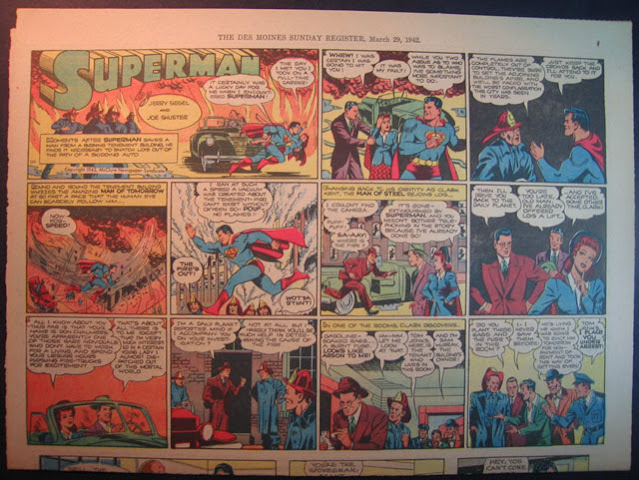
Superman Comics, 29 March 1942 worldwartwo.filminspector.com
Superman Comics, 29 March 1942.
Eastern Front: The Soviet Stavka, alarmed at the progress of the German relief force toward the Demyansk pocket, reorganizes its command in the area. It removes Politburo member N.A. Bulganin from any military authority and places the entire area around the pocket under the sole command of General Leytenant N.F. Vatutin. The Northwest Front commander, General Kurochkin, who is nominally Vatutin's boss, is reduced to being responsible solely for the defense against the German relief operation. In addition, the Stavka sends Kurochkin five regiments of antitank guns and the equivalent of four divisions of light antiaircraft artillery. Vatutin has been Kurchkin's chief of staff but now solely controls the area of highest interest to Stalin.

This command rearrangement at Northwest Front shows some understanding at the highest levels of the Soviet command that political commanders like Bulganin are a liability during important operations. The USSR is unique in having a dual command track at this point, with political operatives such as Bulganin being able to meddle in military operations. It is not a system that is beneficial to the conduct of military operations because the political apparatchiks don't have military training and like to throw their weight around just because they can. Eventually, the Stavka strips them of all military authority, but at this point, they remain a constant irritant for the generals who must seek their input and approval prior to any big operations.

The Germans, meanwhile, are having more difficulty with the weather than with the Soviet defense. The Rasputitsa, or spring thaw, is in growing in intensity. General Seydlitz knows his troops are exhausted from their advance to the Redya River and needs to regroup.

At the Battle of Suursari, Finnish troops capture the last Soviet holdouts on the island of Gogland. Some Soviet troops make a desperate march across the ice to the nearby Moshchny Island to escape capture and are strafed on the way by Finnish Air Force fighters. This completes the Axis capture of Gogland.
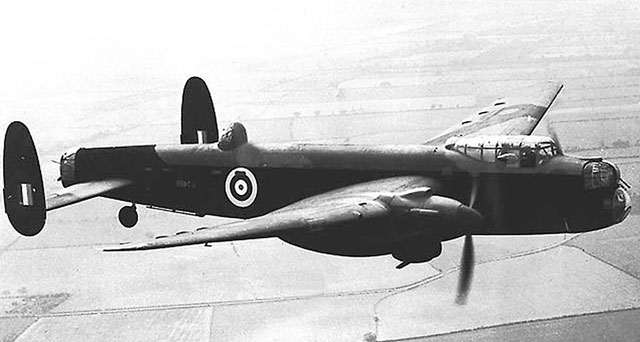
Lubeck Raid of 29 March 1942 worldwartwo.filminspector.com
A type 1 Manchester bomber of RAF No. 83 Squadron embarking from Scampton on the Lubeck raid of 28-29 March 1942. This photo was taken at about 19:30 on Saturday as the plane departed.
European Air Operations: Bombers stream back to England in the early morning hours from the most devastating raid on the Reich of the war to date. Incensed at this devastating attack on the port city of Lubeck on the night of 28 March 1942, Adolf Hitler orders reprisal raids. These are duly launched against mid-sized British cities and become known as the "Baedeker Raids" because they hit cities that feature in the famous tourist guidebooks. The British jokingly conclude that is how they are picked as targets.

After several consecutive nights of heavy attacks against Lubeck, Essen, and St. Nazaire, RAF Bomber Command gives the crews and planes an easy night. The only activities are minelaying by 18 Hampdens and 8 Manchesters in the Frisian Islands and off Denmark, and half a dozen bombers on leaflet missions over France. Two Manchester bombers fail to return.
Broken church bells from the Lubeck Raid of 28-29 March 1942 worldwartwo.filminspector.com
Broken bells from St. Mary's Church in Lubeck, destroyed during the 28-29 March 1942 RAF air raid. These remain as a monument to the highly destructive raid.
Battle of the Atlantic: Three German destroyers - Z24, Z25, and Z26 - that are attacking Arctic Convoy PQ-13 already have sunk the freighter Bateau on the 28th. However, doing so brought them to the attention of the convoy's escorts. In the early hours of the 29th, Royal Navy cruiser HMS Trinidad and destroyer Fury track them down and badly damage Z26 (it later sinks). Trinidad is damaged when one of its own torpedoes fired at the destroyers fails to generate normal speed and Trinidad, zig-zagging, runs into it, killing 32 men  - misfires are a common problem with torpedoes at the northern latitudes in this part of World War II. The remaining ships all survive the action unscathed. Trinidad, towed clear, regains power and makes it to port at Kola Inlet for temporary repairs on 30 March after surviving another attack by U-378.

This is the end of the battle around PQ-13, and fourteen ships (of the original 19) make it to Murmansk and Archangel. However, more members of this convoy will be bombed in port.

U-571 (Kptlt. Helmut Möhlmann), on its fourth patrol out of La Pallice, torpedoes and sinks 10,923-ton British refrigerated freighter Hertford about 200 miles south of Halifax. The ship sinks after being hit by three torpedoes at 21:35. There are four dead and 58 survivors.
Hampton Auxiliary Police Hampton 29 March 1942 worldwartwo.filminspector.com
Members of the Hampton (New Hampshire, US) Auxiliary Police, 29 March 1942.
U-160 (Oblt. Georg Lassen), on its first patrol out of Helgoland, torpedoes 8272-ton US passenger ship City of New York at 19:36 about 50 miles east of Cape Hatteras. This does not immediately sink the ship. The ship's crew spot the U-boat's periscope and get off a dozen shots with the 4-inch gun on the poop deck but score no hits. After taking another torpedo hit, the ship finally sinks at about 20:15. The armed guard continues firing the deck gun until the decks are awash and several of them perish. The ship's crew and passengers have enough time to take to the boats, so 106 men survive while 26 perish, almost half of them from exposure in the bitter and rough weather. This incident is unique in that a Yugoslav passenger gives birth to a son in a lifeboat. She names it Jesse Roper after the destroyer, USS Roper, that finds them. 

Italian submarine Pietro Calvi, operating out of Bordeaux, France, torpedoes and sinks 4589-ton British freighter Tredinnick between the Canary and Azores islands. All 46 men on board perish.

Battle of the Mediterranean: A major German objective is to take Tobruk, and the Luftwaffe begins softening it up with an air attack.

Royal Navy MTB-215, missing in action somewhere in the Mediterranean, is written off today. This is one of those mystery ships with no records of the sinking and no survivors.
Japanese evacuating San Francisco, 29 March 1942 worldwartwo.filminspector.com
 Evidence of the Forthcoming Evacuation of Residents of Japanese Ancestry, San Francisco, March 29, 1942. Clem Albers (Photographer), Courtesy The Bancroft Library.
US/Australian Relations: General MacArthur, known for maintaining a somewhat reclusive lifestyle for a top general despite his prominence in Allied propaganda, takes rooms on the top floor of the Menzies Hotel in Melbourne. For the first time, he meets with General Sir Thomas Blamey, Commander-in-Chief of Australian Military Forces. 

Anglo/Indian Relations: A day after publication of the proposed settlement with the Indian nationalists in both London and India, Sir Stafford Cripps meets with leader Mahatma Gandhi. They discuss the plan that promises nothing now, but Dominion status after the war. This means virtual independence "under the Crown."

US Military: The 22nd BG (Medium), 19th Bombardment Squadron, 5th Air Force, transfers its B-26 bombers from Ipswich to Townsville. The 19th BG (Heavy transfers its B-17s from Melbourne to Cloncurry, Australia.
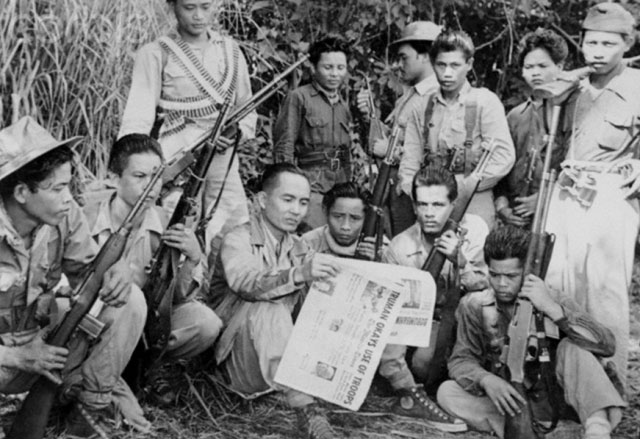
Hukbalahap 29 March 1942 worldwartwo.filminspector.com
Formation of the Hukbalahap on 29 March 1942. Holding the newspaper is El Supremo Ka Luis Taruc. Notice that he appears to be wearing Converse sneakers.
Philippines:  A group of 300 Filipino peasant leaders forms a peasant army that they call the Hukbalahap, or Huks for short. The Huks organization grows quickly and there are plentiful weapons to collect from depots and dead soldiers from both sides. The Huks become a popular fixture in local villages and protect them from the Japanese occupiers. After the occupation, they turn against all forms of central authority - including the Filipino government and the United States military - and remain a factor in Filipino life until 1954.

American Homefront: The Palm Sunday Blizzard hits the mid-Atlantic region of the United States. Areas around Baltimore, Maryland, receive up to 32 inches of snow in total accumulation and 22 inches in 24 hours. The snow is heavy and wet and falls on trees and crops that are already blossoming, causing major losses. It is a freak late-winter storm, and temperatures almost immediately return to spring-like conditions afterward, melting the snow quickly. The event is long-remembered, particularly due to its association with the holiday, and is not matched until 1958.

The San Francisco Chronicle reports that "for the first time in 81 years, not a single Japanese is walking the streets of San Francisco." While not completely accurate, that sums up the accelerating progress of the evacuation of persons of Japanese ancestry from the Western Defense Region.
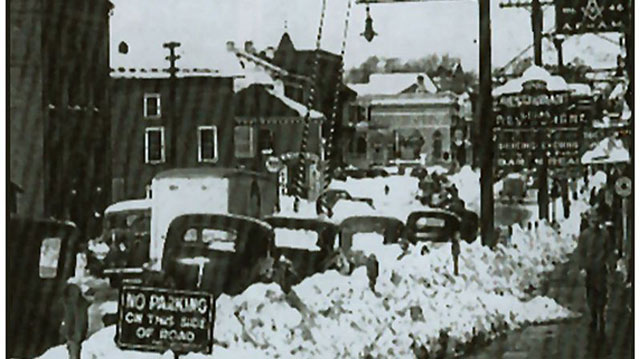
Baltimore, Maryland, on 29 March 1942 worldwartwo.filminspector.com
Palm Sunday Snowstorm" of March 29-30, 1942: Main Street Westminster MD after a heavy and historic 32-inch snowfall March 29-30, 1942. The photo has been attributed to renowned Westminster photographer Charles Magee. (Courtesy Kevin Dayhoff via The Baltimore Sun).

March 1942

March 1, 1942: Second Battle of Java Sea
March 2, 1942: Huge Allied Shipping Losses at Java
March 3, 1942: Japan Raids Western Australia
March 4, 1942: Second Raid On Hawaii
March 5, 1942: Japan Takes Batavia
March 6, 1942: Churchill Assaults Free Speech
March 7, 1942: British Defeat in Burma
March 8, 1942: Rangoon Falls to Japan
March 9, 1942: Japanese Conquest of Dutch East Indies
March 10, 1942:US Navy attacks Japanese Landings at Lae
March 11, 1942: Warren Buffett's First Stock Trade
March 12, 1942: Japan Takes Java
March 13, 1942: Soviets Attack In Crimea Again 
March 14, 1942: The US Leans Toward Europe
March 15, 1942: Operation Raubtier Begins
March 16, 1942: General MacArthur Gets His Ride
March 17, 1942: MacArthur Arrives in Australia
March 18, 1942: Japan Attacks In Burma
March 19, 1942: Soviets Encircled on the Volkhov
March 20, 1942: "I Shall Return," Says MacArthur
March 21, 1942: Germans Attack Toward Demyansk
March 22, 1942: Second Battle of Sirte
March 23, 1942: Hitler's Insecurity Builds
March 24, 1942: Bataan Bombarded
March 25, 1942: Chinese Under Pressure in Burma
March 26, 1942: Win Or Die, Vows MacArthur
March 27, 1942: The Battle of Suusari
March 28, 1942: The St. Nazaire Commando Raid
March 29, 1942: The Free Republic of Nias
March 30, 1942: Japanese-Americans Off Bainbridge Island
March 31, 1942: Japanese Seize Christmas Island

2020

Sunday, July 26, 2020

March 28, 1942: The St. Nazaire Commando Raid

Saturday 28 March 1942

Dry dock at St. Nazaire, March 1942 worldwartwo.filminspector.com
The dry dock at St. Nazaire was the target of the 28 March 1942 raid by British Commandos.
Special Operations: In Operation Chariot, British Commandos land in the early morning hours of 28 March 1942 at the French port of St. Nazaire, a major U-boat base. They almost experience disaster when key vessel HMS Campbelltown scrapes the bottom twice along the way but works its way loose. At about 01:30, the German defenders open fire with every weapon within range. Two assault teams, five demolition teams, and a mortar group disembark and help to silence some of the German fire. The navy then rams the Campbelltown into the large 'Tirpitz" dry dock that is the attack's main objective. It is packed with explosives controlled by a timer set to explode just after the British leave. As dawn approaches, the Commandos and navy withdraw as best they can. At noon, Campbelltown explodes (over seven hours late), destroying the dry dock, some nearby ships, and killing 360 men, including a large party of German officers on board to inspect the "captured" Royal Navy ship.

The St. Nazaire raid is a huge success for the British Commandos despite the force losing 394 of 622 men (169 killed, 215 taken prisoner). The dry dock is obliterated and 89 decorations including five Victoria Crosses (two posthumously). Adolf Hitler fires Generaloberst Carl Hilpert, chief-of-staff to the OB West (Commander in Chief West) and reinforces Hitler's growing insecurity (as evidenced by the 23 March 1942 Fuhrer Directive No. 40 entitled (somewhat prophetically) "Competence of Commanders in Coastal Areas") about the so-called Atlantic Wall.
Collier's 28 March 1942 worldwartwo.filminspector.com
Collier's of 28 March 1942 features a classic depiction of Adolf Hitler by artist Arthur Szyk.
European Air Operations: Tonight's RAF Bomber Command target is Lübeck. While the RAF bombed Essen twice in the last three days, the bombers mostly missed that Ruhr Valley city and caused minimal damage. Lübeck, however, is a major port that is easier to locate. The 234 bombers (146 Wellingtons, 41 Hampdens, 26 Stirlings, and 21 Manchesters) have good visibility, including reflected moonlight off of ice near the city. Defenses at the city are light, allowing the bombers to drop to 2,000 feet, which greatly improves accuracy.

Attacking in three waves, the bombers drop over 400 tons of bombs aimed at the Altstadt central section of the town. The raid is an outstanding success for Bomber Command and causes the first firestorm in a German city. The medieval section of Lübeck is destroyed and many buildings of cultural significance are consumed by flames. There are about 320 deaths, 136 people seriously and 648 moderately injured, and 62% of the buildings in Lübeck are either destroyed or damaged. The RAF loses a dozen aircraft (7 Wellingtons, 3 Stirlings, 1 Hampden, and one Manchester).

There is only one consolation for the people of Lübeck, which is that the RAF never again sends a full-scale raid against the city. This is at least partly due to the port's use for the shipment of Red Cross supplies. As Joseph Goebbels writes in his diary:

The damage is really enormous. I have been shown a newsreel of the destruction. It is horrible. One can well imagine how such a bombardment affects the population.

It is clear to everyone that Lübeck Raid marks an ominous turn in the air war for the Reich.

In subsidiary air raids, two Blenheims attack targets in Holland (Schipol and Soesterburg), seven Hampdens lay mines in the Frisian Islands, and 14 bombers drop leaflets over France (9 over Paris, 5 over Lens) without loss.
HMS Campbelltown at St. Nazaire, 28 March 1942 worldwartwo.filminspector.com
HMS Campbelltown sometime before noon on 28 March 1942 after it crashed into the dry dock at St. Nazaire. Unbeknownst to the German officers standing on it to the left, the Campbelltown was loaded with 24 depth charges (4.5 tons of explosives total) packed inside Campbeltown's bows - right where they are standing. The explosives detonated shortly after this photograph was taken.
Battle of the Pacific: The Japanese Imperial Guard completes Operation T (the occupation of Sumatra) when Dutch Major-General R.T. Overakker surrenders his 2,000 men near Kutatjane in North Sumatra. Tentative plans for a guerilla war collapse due to hostility from the native population and a Muslim uprising. The conquest of Sumatra has been a great victory for the Empire of Japan Vice-Admiral Jisaburō Ozawa, Rear-Admiral Shintarō Hashimoto, Rear-Admiral Kakaji Kakuta, Lt-Gen. Tomoyuki Yamashita, and Lt-Gen. Hitoshi Imamura.

General Overakker is one of the tragic figures of World War II. He does not survive the war because the Japanese shoot him and other Dutch officers in 1945 as defeat approaches. The Japanese force the captured Royal Netherlands East Indies Army (KNIL) soldiers to work on the construction of a railway line between Pekanbaru and Moera. This finds echoes in "The Bridge Over the River Kwai" (1957).

In Burma, the Japanese beef up their attacks against the Chinese defending Toungoo. The 3rd Heavy Field Artillery Regiment arrives and helps to break up Chinese resistance in various strongpoints. The Chinese are helped by heavy fog, however, that grounds Japanese bombers until after 15:00. The Japanese have sent for more reinforcements who arrive around noontime. These new troops attack from the east, which is the rear of the Chinese defenses, and a vicious fight takes place within the city itself. Ultimately, though, the Chinese defenders - who have nowhere to retreat - hold their ground. The Japanese forces are worn out by these failed attacks but continue attacking with declining force.

The British attempt to take some of the pressure off the Chinese at Toungoo by launching a relief attack that takes Paungde. Japanese troops consolidate nearby, however, placing the future of the attack in jeopardy.

Japanese bombers attack Darwin as they have several times already, but Allied air defenses are firming up. The P-40s of the 9th Pursuit Squadron, USAAF, shoot down three of the twin-engine bombers.

In the Philippines, the Japanese continue to bombard Allied forces in the Bataan Peninsula as they prepare for a final assault. The Japanese have reinforced the 14th Imperial Army under General Homma with heavy artillery that is focusing on Mount Samat in the center of the line.
Liberty ship SS William C.C. Claiborne launched on 28 March 1942 worldwartwo.filminspector.com
Liberty ship SS William C.C. Claiborne launched on 28 March 1942 at the Delta Shipbuilding Co. in New Orleans, Louisiana. This was the first of 187 Liberty ships launched by this shipyard during World War II out of a total of 2710 built by US industry.
Eastern Front: Two Finnish infantry battalions mop up Soviet holdouts on the island of Gogland in the frozen Gulf of Finland. In the very early morning hours, many of the remaining Soviet troops retreat back across the frozen ice. Some Soviet troops resist fiercely and force the Finns to use satchel charges to blast them out of their positions. The Finnish Air Force assists with the operation, proving especially handy at strafing Soviet soldiers attempting to retreat across the ice during daylight hours.

Fierce fighting continues northwest of Moscow at two separate pockets, one German and the other Soviet. General Seydlitz continues to grind toward the Demyansk pocket, while the German 18th Army is desperately trying to prevent the Red Army from opening a supply lane to the trapped men in the Volkhov pocket. The ongoing spring thaw is complicating both situations, turning the marshy ground into mush that slows all movement. Seydlitz regroups along the Redya River, while the Soviets use tanks to reopen a small supply corridor to their pocket. At the moment, it looks as if the Soviets are in a better position in both places, but the situation is precarious for both sides.
Freighter Howick Hall, sunk south of Bear Island on 28 March 1942 worldwartwo.filminspector.com
US Freighter Howick Hall, sunk south of Bear Island by the Luftwaffe on 28 March 1942.
Battle of the Atlantic: German aircraft and U-boats begin attacking the Arctic Convoys with great ferocity recently as the hours of daylight increase. Many convoys have gotten through unscathed during the short winter days, but that is about to change. At sea is Convoy PQ-13. Luftwaffe aircraft spot the convoy today south of Bear Island and soon attack. The planes sink two freighters, 4815-ton Panamanian-flagged Raceland, 8097-ton US freighter Howick Hall, and 7008-ton British freighter Empire Ranger. Survivors of these ships sometimes have to row to shore, a brutal ordeal suffered by the men of the Howick Hall

The Kriegsmarine also gets into the fray with surface ships, a rarity even in the Arctic. Three German destroyers (Z24, Z25, and Z26) sortie from Kirkenes under the command of KzA G. Ponitz. The destroyers sink 4687-ton Panamanian-flagged freighter Bateau around midnight, but Royal Navy escorts spot them and set off in hot pursuit.

Battle of the Mediterranean: An Italian convoy from North Africa to Italy carrying a battalion of soldiers ordered to join the Italian Army in Russia runs into Royal Navy submarine Proteus (Lt Cdr Philip Stewart Francis) near Cape Ducali. The Proteus sinks 8040-ton Italian transport SS Galilea. There are 991 deaths and 284 survivors, the deaths including some Greek prisoners of war. 
Pix Magazine, 28 March 1942 worldwartwo.filminspector.com
Pix Magazine, 28 March 1942.
German/Japanese Relations: Despite the commitment of Japanese forces to the south against the British, United States, and the Netherlands, the Germans continue to hold out hope that they will assist in conquering the Soviet Union. Foreign Minister Joachim Ribbentrop asks Japanese Ambassador Oshima, considered a stalwart supporter of the Reich, to have his government commit forces to an attack north toward Vladivostok in conjunction with the Wehrmacht's upcoming "crushing blow" on the Eastern Front. Nothing comes of this, as Japanese ambitions currently extend not north into the Soviet Union, but west into the Indian Ocean.

Anglo/Indian Relations: The British publish a "Draft Declaration of Discussion, with Indian Leaders" simultaneously in Great Britain and India. This is the culmination of Sir Stafford Cripps' mission. The draft Declaration promises Dominion status to India that will provide equal status to India with "common allegiance to the Crown." The Indian nationalists, however, want something to happen immediately, not at some undetermined point after the war that may take quite some time to realize.
Pix Magazine 28 March 1942 worldwartwo.filminspector.com
Pix magazine for 28 March 1942 includes a gripping story about the crew of a down Short Sunderland - with many photos, of course.
US Military: Commander, Eastern Sea Frontier, US Navy acquires operational control of US Army Air Force bombers engaged in anti-submarine patrols off the East Coast of the United States.

The 4th Defense Battalion of the Marines arrives at Vila on Efate Island, New Hebrides. Their mission is to build an airstrip.

The USAAF 28th Bombardment Squadron (Heavy) transfers from Melbourne to Cloncurry, Queensland, Australia. Some operate out of Perth. The ground echelon remains trapped in the Philippines. Meanwhile, the 63rd and 65th Bombardment Squadrons complete their transit across the Pacific and arrive at Sydney, Australia. The 80th Pursuit Squadron, 8th Pursuit Group, transfers its P-39s from Brisbane to Lowood, Australia.
National Free Browder Congress, 28 March 1942
The National Browder Congress of 28 March 1942 sought the release of Earl Browder, General Secretary of the Communist Party USA, from prison. Browder had been convicted of passport fraud in early 1940 and the US Supreme Court upheld his conviction around this time in 1942. Browder served 14 months (of a four-year sentence) in federal prison and was released in 1943 in a gesture of wartime unity. However, he lost his position of leadership in the CPUSA after the war due to changing views of communism.  
American Homefront: Stanford defeats Dartmouth 53-38 in the NCAA Basketball Tournament Final.

Future History: Neil Kinnock is born in Tredegar, Monmouthshire, Wales. He becomes a leader of the Labour Party. Among his top positions is serving as the Vice-President of the European Commission from 1999 through 2004. He also was Leader of the Labour Party from 1983 until mid-1992 and was introduced to the House of Lords on 31 January 2005. Neil Kinnock remains interested in politics as of this writing, including being strongly opposed to Brexit.

Gerald Eugene Sloan is born in McLeansboro, Illinois. He excels as a college basketball player and is picked by the Baltimore Bullets with the fourth pick overall of the 1965 NBA draft. Jerry Sloan ultimately plays most of his career with the Chicago Bulls before retiring in 1976 (and having his number retired). Sloan then goes on to an outstanding career as an NBA coach, compiling a 1221-803 record as a coach and leading the Utah Jazz to the playoffs to 15 consecutive playoff appearances from 1989 to 2003 before retiring in 2011. Jerry Sloan passes away on 22 May 2020.
Saturday Evening Post, 28 March 1942 worldwartwo.filminspector.com
The Saturday Evening Post for 28 March 1942 features the provocative article, "The Case Against the Jew" by Milton Mayer.

March 1942

March 1, 1942: Second Battle of Java Sea
March 2, 1942: Huge Allied Shipping Losses at Java
March 3, 1942: Japan Raids Western Australia
March 4, 1942: Second Raid On Hawaii
March 5, 1942: Japan Takes Batavia
March 6, 1942: Churchill Assaults Free Speech
March 7, 1942: British Defeat in Burma
March 8, 1942: Rangoon Falls to Japan
March 9, 1942: Japanese Conquest of Dutch East Indies
March 10, 1942:US Navy attacks Japanese Landings at Lae
March 11, 1942: Warren Buffett's First Stock Trade
March 12, 1942: Japan Takes Java
March 13, 1942: Soviets Attack In Crimea Again 
March 14, 1942: The US Leans Toward Europe
March 15, 1942: Operation Raubtier Begins
March 16, 1942: General MacArthur Gets His Ride
March 17, 1942: MacArthur Arrives in Australia
March 18, 1942: Japan Attacks In Burma
March 19, 1942: Soviets Encircled on the Volkhov
March 20, 1942: "I Shall Return," Says MacArthur
March 21, 1942: Germans Attack Toward Demyansk
March 22, 1942: Second Battle of Sirte
March 23, 1942: Hitler's Insecurity Builds
March 24, 1942: Bataan Bombarded
March 25, 1942: Chinese Under Pressure in Burma
March 26, 1942: Win Or Die, Vows MacArthur
March 27, 1942: The Battle of Suusari
March 28, 1942: The St. Nazaire Commando Raid
March 29, 1942: The Free Republic of Nias
March 30, 1942: Japanese-Americans Off Bainbridge Island
March 31, 1942: Japanese Seize Christmas Island

2020