Showing posts with label Mexico. Show all posts

Sunday, July 31, 2022

June 14, 1942: British Withdraw Toward Tobruk

Sunday 14 June 1942

Hitler and Eva Braun, Berghof, 14 June 1942 worldwartwo.filminspector.com
Adolf Hitler and Eva Braun relaxing with their dogs at the Berghof, Berchtesgaden, 114 June 1942. Hitler is taking a break from the war before the beginning of "Case Blue," the summer offensive in the Soviet Union that he thinks will end the war. (Federal Archive B 145 Bild-F051673-0059).

Eastern Front: General Erich von Manstein's 11th Army troops have scored a deep penetration into Soviet lines on the northern front of the Sevastopol perimeter on 14 June 1942. Manstein's forces have captured Fort Stalin, opening a wedge into the Soviet lines. The German 24th, 50th, and Romanian 4th Mountain Division advance through the central valley. The first objective is the Maxim Gorky fortress, defended by the greatly weakened Soviet 95th Rifle Division and 7th Naval Brigade.

The German also make some progress in the south, where the German 72nd and 170th Infantry Divisions advance along north the coast. The Romanian 18th Mountain Division attacks the Soviet 386th Rifle Division to keep pressure off their flank. The Luftwaffe is flying from fields just behind the front, averaging 780 sorties a day, many against Sevastopol itself.

At Fuhrer headquarters in East Prussia, General Franz Halder receives an updated casualty list for Operation Barbarossa through 10 June 1942. It shows total Heer (army) losses of 1,268,434 soldiers (39.58% of the army's establishment strength of 3.2 million). There have been 9,915 offices and 256,302 of other ranks killed, 27,282 officers and 915,575 of other ranks wounded, and 38,084 officers and 230,350 of other ranks missing. While things appear to be going well on the battlefield, the Wehrmacht in the USSR is shrinking fast.

Halder also has a conference with supply chief General Wagner. He writes: "On the whole quite satisfactory. Situation difficult in fuel and tank and AT [antitank] ammunition." Ammunition shortages plagued the Wehrmacht throughout Operation Barbarossa.

USS Wakefield arrives in New Zealand, 14 June 1942 worldwartwo.filminspector.com.
 USS Wakefield arrives at King's Wharf in Wellington, New Zealand, carrying U.S. troops of the 1st Marine Division, on 14 June 1942.

Battle of the Pacific: Following its devastating losses at the Battle of Midway, the remaining Japanese fleet arrives at Hashirajima. This completes the events directly related to the battle and this date is sometimes given as the end of the Battle of Midway.

Wounded sailors are immediately taken to naval hospitals, placed in isolation, and classified as "secret patients" so word of the disaster will not get out. The men on the ships are quickly transferred to other postings, many in remote locations in the South Pacific, without being able to see their families or give accounts of the battle. The flag officers retain their positions and are not disciplined, with Admiral Nabumo given command of the new carrier force, as his old one was completely sunk, and he begins implementing new policies such as refueling aircraft on the flight deck and not taking the extra time to bring them down to the hangar.

On the American side, of course, it is quite different. They cannot talk enough about the battle. Admiral Chester Nimitz begins drawing up an offensive campaign in the southern Solomon Islands to protect supply lines to Australia.

The Japanese public is kept completely in the dark about the epic loss. Emperor Hirohito is one of the few people outside of the military who receives accurate information.

In the Aleutians, the USAAF 11th Air Force sends four B-17s and three B-24 Liberators to attack Japanese shipping in Kiska Harbor. To B-17s are heavily damaged, and a scout seaplane is shot down - the attackers claim hits on Japanese cruisers that are not verified. A long USN PBY Catalina attacks shipping southwest of Kiska, but only scores a near-miss on light cruiser HIJMS Tama. Japanese bombers bomb Nazan Bay on Atka Island, and the Japanese send the light cruiser Abukuma accompanied by four destroyers to investigate Amchitka Island.

Battle of the Indian Ocean: German raider Thor shells and sinks 6307-ton Dutch tanker Olivia midway between Madagascar and Perth, Australia (far south of India). There are 41 deaths, with one crewman taken captive and four crewmen making landfall in Madagascar.

LA Times 14 June 1942 worldwartwo.filminspector.com
The Society Section of the 14 June 1942 LA Times is full of bathing beauties.

European Air Operations: It is a quiet day on the Channel Front with no major operations.

Battle of the Atlantic: U-172 (Kptlt. Carl Emmermann), on its second patrol out of Lorient, torpedoes and sinks 8289-ton U.S. bulk carrier Lebore 200 nautical miles (370 km) north of Cristóbal, Panama. There are one death and 93 survivors, rescued by USS Erie and Tattnall.

U-504 (KrvKpt. Hans-Georg Friedrich Poske), on its third patrol out of Lorient, torpedoes and sinks 3280-ton Latvian freighter Regent 200 nautical miles (370 km) southwest of the Cayman Islands. There are 11 deaths and 14 survivors.

Norwegian 1942-ton freighter Gunvor hits a mine and sinks 25 nautical miles (46 km) north of Key West Lighthouse, Florida. There are two deaths and 20 survivors.

While forming up for Convoy HX 194 at Halifax, Nova Scotia, Swedish 3386-ton freighter Kaaparen collides with Norwegian freighter Tungsha and sinks. All 36 crew survive.

Arizona Daily Star, 14 June 1942 worldwartwo.filminspector.com
The Arizona Daily Star of Tucson, Arizona, 14 June 1942. The Battle of Midway is still being celebrated. 

Battle of the Mediterranean: German General Erwin Rommel continues his breakout from "the Cauldron," sending his panzers north to the Libyan coast. The British command reacts quickly, with Auchinleck authorizing General Ritchie, 8th Army commander, to withdraw his forces from the Gazala line west of the German advance. The retreat is not easy, as the remnants of the 50th (Northumbrian) Division must break through Italian forces (27th "Brescia" and 17th "Pavia" Divisions) to the south to make their escape. Auchinleck, under pressure from London, orders Ritchie to hold a new line. The defensive position is to run to the west of Tobruk, running southeast from Acroma through El Adem to Bir El Gubi. 

It is a day of heavy and continuous Axis air and naval attacks against British convoys that are quite successful. Italian Savoia-Marchetti SM.79 bombers attack Operation Harpoon, heading east from Gibraltar (part of Operation Julius, a Malta resupply effort from both ends of the Mediterranean simultaneously). They torpedo the Royal Navy cruiser HMS Liverpool, which is part of Force W escorting convoy WS.19. The torpedo hits the starboard side at the engine room, reducing her speed to 4 knots. The Italian attacks then focus on Liverpool, and while it survives, it is further damaged by near-misses. There are 15 dead and 22 wounded

Liverpool must be towed to Gibraltar, then on to Rosyth, Scotland, for repairs and is out of service until October 945. This is despite the actual battle damage being repaired by July 1943 - there just are not enough crew available to staff her. Liverpool has had several instances of heavy battle damage, including a torpedoing on 14 October 1940 that also was done by an SM.79 and numerous bombings.

Also sunk during the SM.79 attacks is the 8169-ton Dutch freighter Tanimbar, which is part of the Gibraltar convoy, sunk south of Sardinia. In a separate action, A German motor torpedo boat (S-55) torpedoes the Royal Navy destroyer HMS Hasty off Sirte and damages her so badly that the ship must be scuttled on 15 June. Also destroyed by Luftwaffe air attacks is 6811-ton Dutch freighter Aagtekirk, which is hit after it develops engine trouble, runs aground, and burns out, with several freighters badly damaged. British 6104-ton freighter Bhutan also is sunk by the Luftwaffe. Near Malta, air attacks sink HM MTB 259 as it is being towed to Alexandria. The Italians only lose about five bombers.

The Axis attacks could have been worse, but the Luftwaffe in North Africa is grounded for most of the day by dust storms. In an illustration of the wide scope of operations, British land forces are hampered when the RAF must divert its Hawker Hurricanes and Kittyhawks to protect the convoys.

After dark, Admiral Harwood, after receiving an update from Admiral Vian sailing with the convoy, orders Operation Vigorous to be abandoned. The ships head back toward Alexandria but are harassed along the way by both Italian aircraft and the Italian surface fleet, with the battleship Littorio receiving a minor torpedo hit. Operation Harpoon, the convoy heading east from Gibraltar, continues on toward Malta, but the covering force retires to Gibraltar today, leaving the freighters on their own.

FDR and representatives of Mexico and The Philippines sign the United Nations Declaration, 14 June 1942
President Roosevelt, Manuel Quezon, and the Mexican Ambassador sign the United Nations Declaration. FDR Library Photograph Collection. NPx 48-22:3868(473).

Spy Stuff: German spy George John Dasch calls the New York Office of the FBI and gives details of his sabotage mission - how he and several others landed on a Long Island beach a couple of days ago and are saboteurs. He identifies himself as "Pastorius" (After the codename for his mission) and states that he will travel down to FBI headquarters in Washington, D.C., to turn himself in.

Allied Diplomacy: Mexico and the Philippines government in exile sign the "Declaration by United Nations," begun during the Arcadia Conference in January 1942. This binds them to employ all resources against the Axis powers and forbids a separate peace. President Quezon is particularly pleased because he interprets this as the U.S. recognizing the Philippines as a separate nation and no longer a U.S. colony.

U.S. Miltary: General Electric Corporation in Bridgeport, Connecticut, finalizes the development of the M1 bazooka anti-tank rocket launcher. This is the equivalent of the Wehrmacht Panzerschreck (but not the more famous Panzerfaust), which is apparently based on a captured bazooka in North Africa in November 1942.

The U.S. 1st Marine Division begins arriving at Wellington, New Zealand.

M1A1 Bazooka replica worldwartwo.filminspector.com.
An M1A1 Bazooka replica at the Evergreen Aviation & Space Museum in McMinnville, Oregon. 

Holocaust: In Amsterdam, Anne Frank makes her first entry in the diary she received for her 13th birthday on 12 June.

Italian Homefront: Roma beats Modena 2-0 to become Scudetto champions of Italy (Serie A). Roma will not repeat the feat until 1983.

Japanese Homeland: There is a magnitude 7.0 earthquake at a depth of 15.0 km 231 km (144 miles) east southeast of Saipan. There are no reports of anyone noticing it.

American Homefront: Today is Flag Day, and President Roosevelt gives a national radio address to commemorate the occasion. He says that "The four freedoms of common humanity are as much elements of man's needs as air and sunlight, bread and salt. Deprive him of all these freedoms and he dies—deprive him of a part of them and a part of him withers."

Kenosha, Wisconsin, Block Bros Store, 14 June 1942 worldwartwo.filminspector.com
Block Brothers Store in Kenosha, Wisconsin, southeast corner of Sixth Avenue and 58th Street, Sunday morning, 14 June 1942 (UW-Madison Libraries).


2022

Thursday, June 3, 2021

May 22, 1942: AF Is Midway!

Friday 22 May 1942

Stjepan Filipović about to be hanged, 22 May 1942 worldwartwo.filminspector.com
Stjepan Filipović shouting "Death to fascism, freedom to the People!" seconds before his execution on May 22 1942. Filipović was declared a National Hero of Yugoslavia on 14 December 1949.

Battle of the Pacific: In one of the most significant intelligence coups of World War II, US Navy cryptanalysts on 22 May 1942 decode a Japanese message from 20 May confirming that Midway is their next invasion target. Because of what it leads to, the decryption is the turning point of the war in the Pacific.

For weeks, American naval intelligence has known that a place codenamed "AF" by the Japanese is the next objective. Falling for a classic ruse in which US forces on Midway sent messages pretending to have a water shortage, the Japanese unknowingly blundered into the trap and gave the entire game away. The analysts today decode a routine Japanese message from later the same day as the phony radio messages from Midway were sent (20 May) from a low-level Japanese bureaucrat stating that "AF is short of water" so the invasion fleet should bring additional water supplies. This confirms growing US suspicions about Japanese intentions and helps the US Navy plan a strategy to defend the isolated island and turn the tables on the overly aggressive Japanese.

That's not all. The cryptanalysts today also decode portions of a lengthy message sent by Japanese Admiral Yamamoto (subject line "Operational Order 14") also sent on 20 May. The message details the invasion plans in great detail. Based on these interceptions, Commander Joseph Rochefort and his team at Station HYPO (also known as Fleet Radio Unit Pacific, or FRUPAC) in Hawaii are able to provide Admiral Chester Nimitz with precise details about the projected date of the invasion (4 or 5 June 1942). This information includes the Imperial Japanese Navy order of battle. Based on previous intelligence, Nimitz already has ordered Admiral "Bull" Halsey to bring his aircraft carriers USS Enterprise and Yorktown back to Pearl Harbor from the Southwest Pacific to prepare for the battle. Now, everyone can plan a trap at Midway when otherwise the US Navy might not even have had any ships in the area.
Ted Williams being sworn in, 22 May 1942 worldwartwo.filminspector.com
Baseball star Ted Williams is sworn in to the US Navy on 22 May 1942.

Meanwhile, the Japanese continue their methodical preparations for the upcoming battle. Cruiser Division 8 and the battleships Kongo and Kirishima depart the Inland Sea of Japan today. Other ships under Admiral Nagumo already are at sea.

US submarine Silversides (SS-236) torpedoes and damages 4550-ton Japanese Navy freighter Asahisan Maru in the Kii Strait. The ship loses its bow but the captain manages to beach it to prevent sinking. The Japanese refloat Asahisan Maru on 27 May 1942 and return it to service on 15 July 1943.

US submarine Tautog (SS-199) torpedoes and damages Japanese freighter Sanko Maru southwest of the large Japanese base at Truk.

The USAAF continues its attacks on Japanese bases in New Guinea. B-17s of the 5th Air Force attacks Lakunai Airfield, while B-25 and B-26 bombers attack shipping and the airfield at Lae. Two B-25s fail to return.
Roseburg, Oregon, News-Review, 22 May 1942 worldwartwo.filminspector.com
Like many other US newspapers, the 22 May 1942 Roseburg (Oregon) News-Review celebrates US Navy submarine successes.

Eastern Front: By now thoroughly aware of the peril facing his advanced units south of Kharkov in Army Group Kotenko, Soviet Marshal Timoshenko orders those troops to begin an orderly withdrawal to the east. He plans their departure for 23 May by the 9th and 57th Soviet armies through the narrow corridor to the east still held by Red Army troops.

The Wehrmacht forces attempting to cut Soviet Army Group Kotenko off, meanwhile, complete their encirclement late in the day. The 14th Panzer Division, advancing from Petrovskoye, lunges north and completes the final eight miles to make contact with Sixth Army units at Balakleya. At the same time, the 16th Panzer Division and 60th Motorized Divisions broaden the slender corridor the panzers have established between the massive Red Army forces to both east and west. They drive northwestward from Petrovskoye to meet other German troops ten miles west of Balakleya.

At Fuhrer Headquarters, General Franz Halder notes "The Izyum pocket has been weakly sealed on its eastern periphery." He notes disapprovingly that Field Marshal Fedor von Bock's plan to strengthen the encirclement:
is not well-conceived; it calls for an attack ... from the constricted bridgehead at Andreyyevka. To my mind, this is a very ineffectual solution. The right thing to do would be to have the armor now becoming available east of Kharkov strike for Savintai, on the north bank of the Donets. Bock had a talk with the Fuehrer and secured approval for his plan. I think it is wrong.
It is interesting that Halder, from his lofty position at the top of the military chain of command, feels so free to criticize decisions made by both a field marshal and Hitler in his official war diary. It probably helps that Hitler is in Berlin today (and for the next couple of days), giving Halder a sense of freedom from the oppressive twice-daily situation conferences. This incident also shows that Hitler was not always wrong and the generals right about military strategy, as the approved strategy turns out to be far from "ineffectual" and in fact leads to one of the greatest German victories of World War II.

Far to the north, German troops remain committed to the siege of Leningrad. Artillery fire sinks two Soviet Navy torpedo boats, TKA-103 and TKA-123. With the ice melting in the spring thaw, the Germans fear a Soviet naval breakout into the Baltic.

European Air Operations: Continuing a major lull in operations that lasts throughout May 1942, neither side launches any major attacks. The only significant activity is a mission by 27 Halifax bombers to attack the U-boat pens at St. Nazaire. Poor weather prevents all but three bombers from dropping their bombs. An additional 31 bombers lay mines off St. Nazaire and the German Baltic ports. No aircraft are lost.
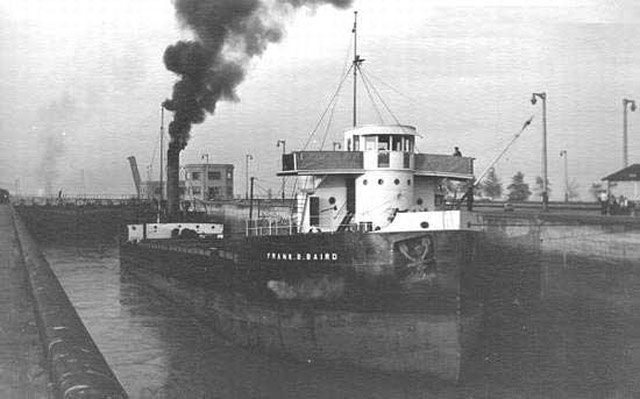
Canadian freighter Frank B. Baird, sunk on 22 May 1942 worldwartwo.filminspector.com
Canadian freighter Frank B. Baird, sunk by U-158 on 22 May 1942.

Battle of the Atlantic: U-753 (KrvKpt. Alfred Manhardt von Mannstein), on its fourth patrol out of La Pallice, surfaces and stops 326-ton British three-masted schooner E.P. Theriault in the Gulf of Mexico 55 miles west of Dry Tortuga. The Germans allow an orderly evacuation of the ship and then attempt to scuttle it, but they fail and it drifts ashore in the Bay of Cardenes, Cuba, on 27 May. The ship is refloated, repaired, and sold to Cuba, where it sails as the Ofelia Gancedo. The crew survives and makes landfall in Cuba in their lifeboats.

U-158 (Kptlt. Erwin Rostin), on its second patrol out of Lorient, surfaces and sinks 1748-ton Canadian freighter Frank B. Baird far south of Bermuda. Rostin uses his deck gun to sink the freighter. Norwegian freighter Talisman rescues the 23 crewmen and takes them to Point Noire, French Equatorial Africa.

U-588 (Kptlt. Victor Vogel), on its third patrol out of St. Nazaire, torpedoes and sinks 3282-ton US freighter Plow City 200 nautical miles (370 km) east of Cape May, New Jersey. There are one death and 30 survivors, who are picked up by USS Sapphire.

Battle of the Mediterranean: It is a quiet day at Malta, perhaps the first such day in months. There are a couple of Luftwaffe patrols near the island, but no bombing attacks and no fighter interceptions. RAF forces have been built up to previously unheard of strength recently.

Partisans: Serbian security forces hang partisan Stjepan Filipović, 26, at Valjevo, Yugoslavia (Serbia). Filipović, a communist and ethnic Croat, was commander of the Partisans' Tamnavsko-Kolubarski unit in Valjevo. A photo of him (top of this page) becomes famous worldwide as a symbol of resistance to tyrrany. There is a statue to Filipović in Valjevo. Both of his brothers also perish in the partisan operations.
El Paso, Texas, Herald-Post, 22 May 1942 worldwartwo.filminspector.com
As the 22 May 1942 El Paso Herald-Post headlines, Mexico takes a dim view of U-boat sinkings of Mexican ships.

Mexican/Axis Relations: As a consequence of U-boat sinkings of Mexican ships, including one on 20 May 1942 by U-106, Mexico declares war on Germany, Italy, and Japan.

US Military: The 19th Fighter Squadron, 18th Fighter Group, 7th Air Force transfers its P-40s from Bellows Field in Waimanalo to the new nearby Kualoa Field at Kualoa Ranch, Hawaii, while the 73rd Fighter Squadron transfers from Wheeler Field to Bellows Field to replace it. Kualoa is a satellite field used for training. Among its typical characteristics are that it is made of perforated high strength steel (Marston mats) and that the runway crosses a road (Kamehameha Highway) to the north shore.

Under General Orders 25, the US 1st Armored Division in Northern Ireland is divided into three units for training, discipline, and administration.

Former Ambassador to France Admiral William D. Leahy boards Swedish liner Drottningholm at Lisbon, Portugal, for his voyage home to New York. 

German Military: General Halder records that he has a meeting with Count Claus von Stauffenberg and Lt. Colonel Mueller-Hillebrand about staffing and "other current organization matters."

Halder also notes in his diary, "Preparation for chemical warfare." This is in reference to a meeting with Genera Wilhelm-Francis Ochsner. This is one of several oblique references in Halder's diary to the possible use of poison gas. There are allegations that the Wehrmacht used gas against Soviet partisans using catacombs south of Kerch, Crimea, around this time. To be fair, both sides make contingency preparations (including the production of large quantities of poison gas) for the possible use of chemical weapons throughout the war.
Adolf Hitler at the Carl Rover funeral, 22 May 1942 worldwartwo.filminspector.com
Adolf Hitler and Hermann Goering attend the funeral of Gauleiter Carl Röver in Berlin on 22 May 1942. It appears the widow is sitting next to Hitler in the place of honor. Also visible in the second row are Joseph Goebbels and Heinrich Himmler (mostly obscured).

German Government: In Berlin for a couple of days, Adolf Hitler attends the funeral of Gauleiter Carl Röver (Reichsstatthalter for the states of both Oldenburg and Bremen) in the mosaics room at the Chancellery. Röver, 53, officially died of either pneumonia or heart failure.

Why Obergruppenführer Röver, a relatively minor party functionary but longtime NSDAP member since 1924, merits Hitler's attention and lavish ceremony at the Chancellery is a bit unclear. Some historians, including David Irving, have claimed that Röver was assassinated on orders from Martin Bormann - ostensibly Röver's friend and sponsor - because Röver was proving to be an embarrassment to the NSDAP due to progressive dementia caused by advanced syphilis.

But there may be more to it. For years, Röver successfully has resisted Hermann Goering's (who also attends the funeral) attempts to incorporate Bremen into Prussia (Goering is Minister of the Interior for Prussia). Hitler consistently took Röver's side, and Goering could not have been too happy about that. This ceremony may be an oblique way for Hitler to signal that he still agrees with the deceased Röver and opposes Goering's empire-building plans.
The Carl Rover funeral, 22 May 1942 worldwartwo.filminspector.com
Reich Minister Alfred Rosenberg speaks during the Carl Röver funeral ceremony at the Chancellery, Berlin, on 22 May 1942.

Australian Homefront: In Townsville, Australia, about 600 African-American servicemen (laborers) of the 96th Battalion, US Army Corps of Engineers, mutiny. They do so after hearing a rumor that a white office had struck or murdered a black sergeant. The mutineers already had been banned from Townsville due to previous incidents. The mutineers fire machine guns at the tents of white officers, with at least one death and dozens injured (a contemporary report says that 19 men are killed). The mutiny lasts for eight hours. A Texas congressman visiting Australia, Lyndon B. Johnson, arranges to suppress news of the mutiny, which does not become public until 2012. The mutiny is put down with the assistance of Australian infantry units armed with live ammunition. This is considered one of the worst mutinies in United States military history and it is the first of several similar incidents during World War II (Port of Chicago in July 1944, Agana, Guam, in December 1944, Freeman Air Force Field in Indiana in 1945).
Adolf Hitler at the Carl Rover funeral, 22 May 1942 worldwartwo.filminspector.com
Adolf Hitler (center) attends the funeral of Gauleiter Carl Röver on 22 May 1942.

Holocaust: Transport trains arrive at Auschwitz carrying 1000 Slovak Jewish citizens transferred from Majadanek Concentration Camp at Lublin. Another nine previously arrested by the state security services (Sipo and SD) arrive from Helcl Prison in Krakow. Almost all of the new arrivals are dead by mid-August.

American Homefront: Baseball star Ted Williams enlists in the Navy Reserve after initially petitioning to be exempt from the draft as the sole source of support for his mother (Class 3-A). Pushback from sponsors and fans have contributed to his change of heart.

The Navy allows Williams to finish out the season. Williams will become a second lieutenant in the United States Marine Corps as a Naval Aviator. Having batted .406 in 1941 (the last player to best .400 to date), Williams is having another outstanding year and is on his way to the American League Triple Crown (leading in batting average, runs batted in, and home runs). After being called to duty in November 1942, Williams will miss the 1943, 1944, and 1945 baseball seasons.

The United Steel Workers of America is formed as a combination of smaller unions.
Poster celebrating Mexico's entry into the war on 22 May 1942 worldwartwo.filminspector.com
A poster celebrating the entry of Mexico in the war on 22 May 1942.

Future History: Theodore John Kaczynski is born in Chicago, Illinois. In high school, he shows a strong interest in mathematics and develops a reputation as a "walking brain." After participating in mind control experiments that may be part of the CIA's Project MKUlttra, he graduates from Harvard in 1962. He becomes a doctor of mathematics in 1967 but resigns from a teaching position abruptly in 1969. In the 1970s, he moves to a remote cabin in Lincoln, Montana, attempting to become self-sufficient. He develops obsessive views against development and begins acting violently, including setting booby traps and committing arson. This develops into his mailing or hand-delivering bombs to individuals he associates with trees and forests, including at least two individuals who apparently are targeted simply because their last names are "Wood."

For these violent acts, the as-yet-unidentified Kacynski becomes commonly known as the "Unabomber." This continues intermittently until 1995, when the Washington Post accedes to his demands and publishes his crazed manifesto condemning the Industrial Revolution. After a massive investigation, the FBI arrests Kaczynski on 3 April 1996. As of mid-2021, Ted Kaczynski is serving eight life sentences without the possibility of parole at a supermax prison in Florence, Colorado.

Barbara Parkins is born in Vancouver, British Columbia, Canada. At the age of 16, she moves with her mother to Los Angeles, California, where she studies acting. She makes her film debut in "20,000 Eyes" (1961). Later in the decade, she stars in ABC primetime soap opera "Peyton Place" and the film adaptation of Jacqueline Susann's novel "Valley of the Dolls." This begins an extensive acting career that lasts through the 1990s. As of mid-2021, Barbara Parkins is a photographer.  

Richard Raul "Richie" Garcia is born in Key West, Florida. After serving in the US Marine Corps as a combat engineer in the early 1960s, Garcia becomes a baseball umpire in 1970. He goes on to a prominent and popular career as a leading American League umpire that has several high-profile controversies, including his participation in the 1999 Major League Umpires Association mass resignation (which ends his umpiring career, though he returns to baseball in other capacities). As of mid-2021, Richie Garcia is retired in Florida.
Loyola college coeds support the war effort, 22 May 1942 worldwartwo.filminspector.com
College co-eds pitch in to help with the war effort. Skyscraper, 22 May 1942, Mundelein College Records, Loyola University Chicago Digital Special Collections, accessed June 3, 2021.

May 1942


2021

Friday, May 28, 2021

May 21, 1942: U-106 Sinks the Wrong Tanker

Thursday 21 May 1942

P-36C that ran off the runway in Connecticut, 21 May 1942 worldwartwo.filminspector.com
P-36C Ser. No. 38-204, 61st Pursuit Squadron, skids off the runway after mechanical failure at Bridgeport Airport in Connecticut, 21 May 1942. The pilot, Lt. George D. Hobbs, is uninjured.
Battle of the Pacific: Japanese Admiral Nagumo sails his Kido Butai carrier force out of the inland sea port of Sasebo on 21 May 1942. His crews spend the day practicing fleet maneuvers as they head through the Bungo Strait. Badly damaged at the Battle of the Coral Sea, aircraft carrier Zuikaku limps into Kure today. It is unavailable for the upcoming attack on Midway.

The Americans remain in doubt about the next target of Japanese aggression, though many officers in naval intelligence suspect it is Midway. Seeking definitive proof, decryption teams in Washington, D.C., Honolulu, and Melbourne, Australia spend the day working on a stack of intercepted Japanese radio messages. These include one long message that has been flagged for priority processing. Japanese radio intelligence operators, meanwhile, also notice an increase in American radio traffic out of Hawaii. They intercept 180 messages and note that 72 are marked as urgent.

The Japanese continue their gradual occupation of the Philippines. After landings in the Leyte Gulf, they enter the city of Bacolod, Leyte, and Samar. Organized Allied resistance ended with the fall of Corregidor, so the Japanese only have to contend with occasional guerrillas.

US Army Air Force B-26 bombers attack Lae, New Guinea.
I-10 in port at Penang, 1942 worldwartwo.filminspector.com
I-10 at Penang sometime in 1942.
Battle of the Indian Ocean: Japanese submarine I-10, part of A Detachment which is scouting the Indian Ocean for targets, surfaces off Durban, South Africa. The crew launches its E14Y1 floatplane to perform reconnaissance. The pilot spots no targets and quickly flies back to the submarine when challenged by Allied forces over the radio. This is the first Japanese venture to Africa during the war.

Eastern Front: Marshal Timoshenko, belatedly concerned about the mortal danger to his forces south of Kharkov posed by German counterattacks, spends the day regrouping his forces. The Luftwaffe has complete aerial supremacy and wrecked Red Army vehicles block many roads. 

At Fuhrer Headquarters, General Franz Halder notes that "The situation at Kharkov continues to develop to our satisfaction." After writing that an encircled German force at Ternovaya (northeast of Kharkov) has been relieved, he continues that "We can now take out forces from this sector [north of Kharkov] and get them ready to meet Kleist, converging from the north." He concludes that Kleist's advance is taking "a gratifying course" and "we are now recapturing the initiative." Throughout the middle years of the war, "having the initiative" is a major aim of both sides, sometimes to their detriment.
German magazine Illustrierter Beobachter, 21 May 1942 worldwartwo.filminspector.com
Supply difficulties on the Eastern Front are shown on the cover of the 21 May 1942 Illustrierter Beobachter. 
Southeast of Kharkov, Kleist's panzers of the 14th Panzer Division advance another four miles. This reduces the Soviet breakout point through which all of their supplies flow to Timoshenko's troops to the west from 12 to 8 miles. The Germans remain puzzled that the Red Army on either side still has not attempted to pierce the thin line that the Wehrmacht is establishing east of Timoshenko's armies.

Halder sums up Manstein's victory in Operation Trappenjagd: "Kerch operation concluded. Regrouping at Sevastopol, where the enemy is evidently making preparations against our impending attack."

There is an oblique but telling reference in Halder's diary to the German high command's condescending attitude toward its allies. He writes that the Hungarian military attache visited during the day and requested information about the Kharkov battle. Halder notes simply, "I politely refuse." This is a peculiar attitude considering the key role that the allied troops are projected to play in the upcoming "decisive" summer offensive, Case Blau. However, it also is quite common in the Wehrmacht.

European Air Operations: An extended spring lull continues for both sides over the Channel Front. The only major action is the RAF sending 33 Wellington and 15 Stirling bombers of No. 3 Group to lay mines at the Biscay ports. However, poor weather permits only 18 bombers to complete the mission. No aircraft are lost.
U-106 worldwartwo.filminspector.com
U-106. Its sinking of a Mexican oil tanker on 21 May 1942 leads to a declaration of war.
Battle of the Atlantic: U-106 (Kptlt. Hermann Rasch), on its sixth patrol out of Lorient, torpedoes and sinks 6067-ton Mexican oil tanker Faja de Oro. There are ten deaths and 21 survivors. This sinking, along with other events, leads Mexico to declare war on Germany.

It isn't really Rasch's fault that this leads to war, of course. He is just doing the job asked of him and the sinking of neutral ships is quite common by 21 May 1942. In fact, if U-106 didn't sink Faja de Oro, another U-boat was in a position to do so. U-754 was stalking Faja de Oro and watched as U-106 torpedoed it. Two U-boats were ready to do the deed. So, the tanker was doomed and Mexico was fated to declare war.

U-103 (Kptlt. Werner Winter), on its seventh patrol out of Lorient, torpedoes and sinks 3372-ton US freighter Clare 40 nautical miles (74 km) south of easternmost Cuba. All 40 crewmen survive, either reaching land in their lifeboats or picking up by a Cuban naval vessel.

U-103 also torpedoes and sinks 4727-ton US freighter Elizabeth about 30 nautical miles (56 km) south of Cape Corrientes, Cuba. There are six deaths and 36 survivors.
U-201 entering port at Brest, France, 21 May 1942 worldwartwo.filminspector.com
U-201 returning to Brest, 21 May 1942. the crew has the binoculars out to see what is in port (Leskin, Federal Archive Image 101II-MW-4939-22).
U-159 (Kptlt. Helmut Friedrich Witte), on its second patrol out of Lorient, gets its first two victories of the war today. It torpedoes and damages 2646-ton Royal Fleet Auxiliary RFA Montenol 140 nautical miles (260 km) southeast of Santa Maria Island, Azores. RFA Montenol is with convoy OS 28. There are three deaths and 61 survivors, who are rescued by HMS Woodruff. RFA Montenol is deemed unsalvageable and is scuttled by HMS Wellington.

U-159 also torpedoes and sinks 6529-ton British freighter New Brunswick 140 nautical miles (260 km) southeast of Santa Maria Island, Azores. New Brunswick is part of Convoy OS 28. There are three dead and 59 survivors, who are rescued by British freighter Inchaga, HMS Totland, HMS Weston, and HMS Woodruff.
Canadian freighter Troisdoc, sunk on 21 May 1942 worldwartwo.filminspector.com
Canadian freighter Troisdoc, sunk by U-558 on 21 May 1942.
U-558 (Kptlt. Günther Krech), on its seventh patrol out of Brest, torpedoes and sinks 1925-ton Canadian freighter Troisdoc west of Jamaica. All 18 crewmen survive and are rescued by USCGC Mohawk.

U-156 (Kptlt. Werner Hartenstein), on its third patrol out of Lorient, torpedoes and sinks 1738-ton Dominican Republic freighter Presidente Trujillo off Fort-de-France, Martinique. There are 24 dead and 15 survivors.

U-69 (Oblt. Ulrich Gräf), on its eighth patrol out of St. Nazaire, torpedoes and sinks 1927-ton Canadian freighter Torondoc 60 nautical miles (110 km) northwest of Martinique. All 22 crewmen perish.

After two weeks at sea, four survivors of Neosho (AO-23) are rescued by the destroyer USS Helm (DD-338).

Convoy PQ 16 departs Iceland, bound for Murmansk.
German magazine Beobachter Illustrierter, 21 May 1942 worldwartwo.filminspector.com
An article about expressive dance in the 21 May 1942 Illustrierter Beobachter.
Battle of the Mediterranean: British troops in Malta find a man in bad condition in a cave beneath the Dingli cliffs and bring him to Imtarfa military hospital for treatment. He identifies himself under a phony name, Caio Borghi. By chance, he is recognized at the hospital by a boyhood neighbor who now is a captain in the British Army. The man, Carmelo Borg Pisani, then admits to being an Axis spy sent to report on conditions on Malta.

The Luftwaffe continues its recent pattern of sending Bf 109 fighter-bombers on sweeps over Malta. The RAF attempts to intervene, but is usually too slow to arrive. On one of these attacks over Hal Far aerodrome, they kill two men and wound three others. One of the deaths is Sgt. Dewhurst, recently awarded the Military Medal.
Postcard commemorating the laying of the keel of USS Pargo on 21 May 1942 worldwartwo.filminspector.com
A postcard commemorating the laying of the keel of USS Pargo on 21 May 1942.
US Military: Having been greatly reinforced in recent days by troops brought over to Northern Ireland by liner Queen Mary and other transport ships,  US Army medical battalions begin taking over some facilities. These include hospitals at Musgrave Park on the outskirts of Belfast and at Irvinestown.

North Pacific Force is established in Alaska. It controls all US and Canadian forces in the region. Its first commander is Rear Admiral Robert A. Theobald.

Holocaust: German forces deport 4300 Jewish residents of Chelm to the death camp at Sobibor. All are gassed to death.

German firm IG Farben establishes a factory outside the Auschwitz extermination camp in order to profit from slave labor.
Deportation of Slovak Jews from Czechoslovakia on 21 May 1942 worldwartwo.filminspector.com
Deportation of Slovak Jews. Stropkov, Czechoslovakia, May 21, 1942.
American Homefront: MGM releases "Tortilla Flat," directed by Victor Fleming and starring Spencer Tracy, Hedy Lamarr, John Garfield, Frank Morgan, and Akim Tamiroff. Morgan is nominated for the Academy Award for Best Supporting Actor.

In her 'My Day" syndicated column, First Lady Eleanor Roosevelt notes that many women in New Mexico have volunteered and been trained as nurses. They now are "being used in all clinics and hospitals throughout the state." This frees up trained nurses and doctors for other tasks.

Ted Williams goes 3-5 with a home run and four RBIs in an 8-3 Boston Red Sox victory over Cleveland. This is his last game before joining the U.S. Navy on 22 May. After being sworn in, Williams returns to the Red Sox and finishes out the season, coming in second in MVP voting to NY Yankees second baseman Joe Gordon.

Future History: Danny Ongais is born in Kahului, Hawaii. He serves in the US Army in Europe in the late 1950s as a paratrooper, then returns to Hawaii and enters motor racing. He becomes a top drag racer, winning the AA Gas Dragster Championship in 1963 and 1964, and in the National Hot Rod Association AA Dragster championship title in 1965. He enters Championship Auto Racing Teams (CART) in 1979 and races in several Indianapolis 500 races. To date, Ongais, who becomes known as the "Flyin' Hawaiian" due to his flamboyant personality, is the native Hawaiian to race in the Indianapolis 500. Danny Ongais is inducted into the Motorsports Hall of Fame of America in 2000 and retires from racing in the late 1980s, though he returns for a final race in 1996 and remains associated with the sport for years afterward.
Internees in Arizona making mattresses with straw on 21 May 1942 worldwartwo.filminspector.com
Internees at the Poston internment camp in Arizona filling mattresses with straw, 21 May 1942 (Fred Clark, National Archives and Records Administration, Ctrl. #: NWDNS-210-G-A145, NARA ARC #: 536112).

May 1942


2021