Showing posts with label U-588. Show all posts

Wednesday, August 11, 2021

May 23, 1942: German Forces Surround Soviet Armies at Kharkov

Saturday 23 May 1942

Jewish deportees in Stropkov, Slovakia, 23 May 1942 worldwartwo.filminspector.com
Jewish residents of Stropkov, Slovakia, being deported to concentration camps (Majdanek and Auschwitz) on 23 May 1942. Yad Vashem Photo Archives 3132/1.

Battle of the Pacific: Following US Naval Intelligence descriptions of Japanese communications, both sides on 23 May 1942 know that a major confrontation soon will occur at Midway Island. The key difference is that the Japanese don't know that the Allies know about their invasion plans. In fact, the Japanese believe that they sunk two US Navy carriers, USS Lexington and Yorktown, at the Battle of the Coral Sea and that the Midway operation will be fairly routine. In fact, only the Lexington sank and the Yorktown has joined up with USS Enterprise to return to Pearl Harbor at high speed in preparation for the battle.

There is still some Allied resistance in the occupied Philippines, though it is gradually dying out. During one of these incidents, Lt. Comdr. Ryland Dillard Tisdale, 47 (who had retired in the 1930s but returned to service in July 1940 due to the contingency of war) perishes at Tamparan. He dies in an action against the Moros, who are collaborating with the Japanese. He receives the Silver Star posthumously. The citation notes that Tisdale was offered passage out of Corregidor on the last plane out but offered up his seat to another. Tisdale escaped from the island along with a few others shortly before the surrender. Tisdale falls today in a "last stand" near Dansalan (Marawi, Lanao del Sur, Philippines, since 1956) along with a small group of officers and enlisted men, including civilians, that includes Lieutenant Colonel Vesy of the Philippine Army.

Five B-25 bombers of the 3rd Bomber Group attack Lae, New Guinea. They damage the airfield and buildings there. Two bombers fail to return.

US Navy patrol boat USS YP-277 hits a mine and sinks at the French Frigate Shoals in the Northwestern Hawaiian Islands. The US Navy is keeping a close eye on this area due to Japanese attempts to use them to bomb Hawaii.

Japanese submarine I-29 launches its Yokosuka "Glen" seaplane for an uneventful reconnaissance mission over Sydney, Australia. This is one of a continuing series of Japanese reconnaissance flights over Allied areas in the southwest Pacific that are rarely noticed.

P-40 of the Flying Tigers in Kunming, China, 23 May 1942 worldwartwo.filmisnpector.com
Curtiss Hawk P-40 Tomahawk with pilot Robert T. Smith at the controls in Kunming, China, 23 May 1942. Photo: akg-images / Robert T. Smith.

Battle of the Indian Ocean: Japanese and Chinese troops clash in inconclusive fighting along the Hsipaw-Mogok road in northern Burma. The Japanese have no intention of invading China from this direction, though the Chinese do not know this. The Japanese in Burma already have achieved their main objectives of closing the Burma Road and establishing a defensive front along the Indian border.

Eastern Front: A carefully laid German trap south of Kharkov springs shut as the Soviet 6th and 57th Armies desperately try to avoid being surrounded near Izyum. Early in the morning, the 16th Panzer Division (Hube) and the 23rd Panzer Division meet ten miles west of Balakleya. This forms a ten-mile wide German corridor from north to south to the east of the Soviet offensive forces. This is generally considered to be the activity that surrounds the Soviets and traps them, though technically the 14th Panzer Division already has formed a thin line to the east.

Soviet Marshal Timoshenko has staked everything on a breakout attempt by these two armies today south of Kharkov, but it fails. At Fuhrer Headquarters, General Franz Halder writes confidently in his diary that "The Izyum pocket is firmly closed." However, things are still a bit more tentative than that.

The Soviets outnumber the Wehrmacht troops at the key points, but the Red Army breakout effort is dissipated today in multiple counterattacks to relieve surrounded formations to consolidate their overall defensive position. In addition, the German forces may be relatively small, but they include elite panzer units hemming the Soviets in on a narrow corridor to the east. The Soviets have by no means given up and are preparing more breakout attempts during the coming days. Halder notes that "Pressure from within [the Izyum] pocket seems to be preparing and will be felt from 24 May onwards." 

German soldiers on the scene remain puzzled that the Red Army forces to the east haven't tried a strong relief effort. Stalin does not like to retreat, especially from such a massive offensive operation. Plus, he tacitly is putting the onus on Timoshenko to prove his worth and regain the initiative - or suffer the consequences personally.

Meanwhile, the other prong of the Soviet offensive north of Kharkov has ground to a complete halt. Halder notes that "the enemy has withdrawn his tanks behind the Donets, but is still holding the western bank with its strong forces." The Soviets are only mounting local thrusts in this area that the Wehrmacht easily parries. Halder concludes this diary entry with a rare dash of emotion, writing, "The bulges shrink!" 

The overriding Wehrmacht concern remains the preparation for the upcoming "decisive" summer offensive on the southern third of the front, Operation Blau. Halder confers with Luftwaffe Colonel Meister about air preparations for this today and with others (including Colonel Balck, a top field commander) about training and personnel issues. All is calm and serene in East Prussia.

Soviet flak on the southern front downs three Henschel Hs 129B-1 ground attack planes belonging to II./SchG 1. The Hs 129B-1 have only arrived in Crimea within the past two weeks and each is equipped with a 30 mm (1.2 inch) MK 101 cannon.

Following a dramatic run of victories during the Crimea campaign, Major Gordon "Mac" Gollob, Geschwaderkommodore of JG 77, receives his reward. He is awarded the Knights Cross (no. 17). Gollob continues to shoot down Red Army planes seemingly at will from his base near Kerch and now has 107 victories.

European Air Operations: Luftwaffe experimental unit Erg.u.Lehr. Kdo 17 (formerly Erg.u.Lehr. Kdo 100) mounts an afternoon daylight raid on the Avonmouth docks using 7 He 111s. The weather is poor, providing some cover, and the real purpose of the missions is to test out planes guided by both X- and Y-Verfahren direction-finding equipment. The raid is not very successful, as one plane is lost and the bombers drop their loads six miles from the target at Severn Tunnel Junction. From the British perspective, the Luftwaffe raid is very meaningful. For the first time, RAF technicians detect the Luftwaffe's X-signals. The RAF immediately begins developing countermeasures.

Saturday Evening Post 23 May 1942 worldwartwo.filminspector.com
The Saturday Evening Post for 23 May 1942 features the beginning of a new serial featuring Perry Mason by Erle Stanley Gardner.

Battle of the Atlantic: U-588 (Kptlt. Victor Vogel), on its third patrol out of St. Nazaire, torpedoes and sinks 4545-ton British freighter Margot southeast of Philadelphia, Pennsylvania. There are one death and 44 survivors. Swedish freighter Sagoland picks up the survivors. After this sinking, U-588 returns to port after a successful cruise during which it has sunk or damaged 27,106 tons of Allied shipping. As things turn out, this is U-588's final victory because it is sunk early on its next patrol.

U-558 (Kptlt. Günther Krech), on its seventh patrol out of Brest, torpedoes and damages 7061-ton US tanker William Boyce Thompson (en route from New York to Curaçao in ballast) at 00:53 about 120 miles south of Kington, Jamaica. While the torpedo opens a hole of 20 feet on the starboard side, tankers are famous for survivability due to their compartmentalized construction. The fact that the tanker is carrying no cargo further helps it. The tanker escapes northward zigzagging at full speed with a smokescreen. There are no injuries, and the tanker makes it to Guantanamo Bay, Cuba.

U-432 (Kptlt. Heinz-Otto Schultze), on its fifth patrol out of La Pallice, torpedoes and sinks 4455-ton British freighter Zurichmoor 400 nautical miles (740 km) east of Philadelphia, Pennsylvania. All 45 men on board perish.

U-155 (Kptlt. Adolf Cornelius Piening), on its second patrol out of Lorient, torpedoes and sinks 2220-ton Panamanian Design 1049 freighter Watsonville in Saint Vincent Passage (in the Caribbean between Saint Lucia and Saint Vincent). Everyone survives.

U-103 (Kptlt. Werner Winter) torpedoes and badly damages 6625-ton US tanker Samuel Q. Brown about 100 nautical miles (190 km) south of Cape Corrientes, Cuba (extreme western tip of Cuba). There are two deaths when the torpedoes hit and 53 survivors. The crew gathers in two lifeboats and the U-boat surfaces to question them. A US Navy seaplane based at Upham, Canal Zone, locates the damaged ship and quickly and lands to pick up five injured crew. The rest have to wait a couple of days to be rescued by USS Goff, which scuttles the flaming tanker.

German 4626-ton freighter Asuncion hits a mine and sinks off the coast in the extreme north of Norway in the general vicinity of Sandland.

German 254-ton trawler/Vorpostenboot V 1808 Dortmund hits a mine and sinks in the southern North Sea. It sinks in an area south of the Dogger Bank off the coast of The Netherlands known as the "Broad Fourteens" due to its consistent 14-fathom (84 feet, 26 m) depth.

Midland Michigan Theater 23 May 1942 worldwartwo.filminspector.cmo
A new movie palace, The Midland Theater, opens on 23 May 1942 in Midland, Michigan. The first film is "Captain of the Clouds" starring James Cagney.

Battle of the Mediterranean: Activity is stirring along the North African front as the temperature rises. Gruppenkommandure of  I./JG 27 Oblt. Gustav Rodel downs two planes to bring his total to 41 kills. His unit downs a total of a dozen RAF Tomahawks and Kittyhawks.

Oberlieutenant Hans-Joachim Marseille also downs two bombers today southeast of Tobruk. This brings his own victory total to 64 planes. His victims are a pair of No. 223 Sqdn Martin "Baltimore" bombers on their first flights with their unit. While unit commands in the Luftwaffe generally go to the most successful pilots, Marseille is considered "trouble" by his superiors despite his obvious talent. Thus, Marseille remains an ordinary pilot who simply continues racking up victories without having to worry about administrative duties.

On Malta, things have quieted down considerably since the arrival of numerous defensive RAF Spitfires recently. There is a raid at 07:16 by five Cant 1007 Italian bombers with a large escort of Italian RE2001s, Macchi 200s, and Luftwaffe Bf 109s. The planes come in from the north and are met by a dozen Spitfires of Nos. 126 and 601 Squadrons based at Luqa. The RAF planes down two Re 2001s, two Bf 109s, one Cant bomber (probable). Two other Cant 1007s are damaged along with a Re 2001 and a Bf 109. The only RAF damage is to a Spitfire that returns safely to base. The Italian bombers do get through, however. They drop ten 100kg bombs apiece on Ta Qali airfield, causing craters.

Liberty magazine 23 May 1942 worldwartwo.filminspector.com
Abbott and Costello grace the cover of Liberty magazine, 23 May 1942. This apparently is to promote their film "Rio Rita," released on 11 March 1942, about wartime spies on the Mexican border.

Battle of the Black Sea: Soviet submarine ShCh-205 torpedoes and sinks Turkish 330-ton freighter Safak off Burgas, Bulgaria. This obviously is a military mistake, as the USSR is not at war with Turkey and has no wish to antagonize it at this time. Then again, there are historical enmities between the two powers that date back centuries and continue after this war.

US Military: The 7th Air Force transfers the 31 Bombardment Squadron's B-17s and B-18s from Hickam Field to Kipapa.

German Government: Adolf Hitler gives a speech to the Reichsleiters and Gauleiters in Berlin in which he justifies the concentration camps. According to Hitler, these are necessary to prevent an uprising. This is part of a very gradual and almost indiscernible trend in Hitler's 1942 speeches toward a defensive, paranoid, and almost fearful tone. British Intelligence has a pioneer social scientist, Mark Abrams, watching Hitler's speeches closely and he notes this tendency in a report marked "Secret." The aim is ""to reconstruct, if possible, what was in Hitler's mind when he composed and delivered the speech."

Abrams asks a fellow academic, Joseph McCurdy, to write up a report on these findings. McCurdy concludes that Hitler's speeches now have a "dull flatness of the delivery" and show "a man who is seriously contemplating the possibility of utter defeat." Hitler also is developing a "Jew phobia" and increasingly sees them as a "universal diabolical agency" versus himself, who represents "the incarnation of the spirit of good."

US Government: Grand Duchess Charlotte of Luxembourg meets with President Roosevelt in Washington, D.C. before returning to her wartime home in Montreal.
The New Yorker 23 May 1942 worldwartwo.filminspector.com
The New Yorker, 23 May 1942. Painting by Ilonka Karasz.

American Homefront: Japanese are not the only enemy aliens being imprisoned at internment camps in the United States. Today, Lt. Colonel Horace Rogers writes a letter to the Provost Marshal General in Washington, D.C., confirming the arrival of 13 new internees, mostly German, at Camp McCoy, Wisconsin. The internees will be at Camp McCoy for the duration of the war.

"Grand Central Murder" opens today, starring Van Heflin and Virginia Grey.

Future History: Peter Frederick Wedlock is born in Bristol, England. He gets some singing experience in the church choir at St. Mary Redcliffe. After becoming a teacher, Fred Wedlock becomes a regular performer on the folk circuit. This leads him to record albums beginning with "The Folker" (1971), "Frollicks" (1973), and, most notably, "The Oldest Swinger in Town" (1981) (the title track becomes a hit single). Fred Wedlock passes away on 4 March 2010 in Bath, Somerset, with his funeral held at St. Mary Redcliffe where he had begun singing.

Colliers 23 May 1942 worldwartwo.filminspector.com
Collier's magazine, 23 May 1942.

May 1942


2021

Thursday, June 3, 2021

May 22, 1942: AF Is Midway!

Friday 22 May 1942

Stjepan Filipović about to be hanged, 22 May 1942 worldwartwo.filminspector.com
Stjepan Filipović shouting "Death to fascism, freedom to the People!" seconds before his execution on May 22 1942. Filipović was declared a National Hero of Yugoslavia on 14 December 1949.

Battle of the Pacific: In one of the most significant intelligence coups of World War II, US Navy cryptanalysts on 22 May 1942 decode a Japanese message from 20 May confirming that Midway is their next invasion target. Because of what it leads to, the decryption is the turning point of the war in the Pacific.

For weeks, American naval intelligence has known that a place codenamed "AF" by the Japanese is the next objective. Falling for a classic ruse in which US forces on Midway sent messages pretending to have a water shortage, the Japanese unknowingly blundered into the trap and gave the entire game away. The analysts today decode a routine Japanese message from later the same day as the phony radio messages from Midway were sent (20 May) from a low-level Japanese bureaucrat stating that "AF is short of water" so the invasion fleet should bring additional water supplies. This confirms growing US suspicions about Japanese intentions and helps the US Navy plan a strategy to defend the isolated island and turn the tables on the overly aggressive Japanese.

That's not all. The cryptanalysts today also decode portions of a lengthy message sent by Japanese Admiral Yamamoto (subject line "Operational Order 14") also sent on 20 May. The message details the invasion plans in great detail. Based on these interceptions, Commander Joseph Rochefort and his team at Station HYPO (also known as Fleet Radio Unit Pacific, or FRUPAC) in Hawaii are able to provide Admiral Chester Nimitz with precise details about the projected date of the invasion (4 or 5 June 1942). This information includes the Imperial Japanese Navy order of battle. Based on previous intelligence, Nimitz already has ordered Admiral "Bull" Halsey to bring his aircraft carriers USS Enterprise and Yorktown back to Pearl Harbor from the Southwest Pacific to prepare for the battle. Now, everyone can plan a trap at Midway when otherwise the US Navy might not even have had any ships in the area.
Ted Williams being sworn in, 22 May 1942 worldwartwo.filminspector.com
Baseball star Ted Williams is sworn in to the US Navy on 22 May 1942.

Meanwhile, the Japanese continue their methodical preparations for the upcoming battle. Cruiser Division 8 and the battleships Kongo and Kirishima depart the Inland Sea of Japan today. Other ships under Admiral Nagumo already are at sea.

US submarine Silversides (SS-236) torpedoes and damages 4550-ton Japanese Navy freighter Asahisan Maru in the Kii Strait. The ship loses its bow but the captain manages to beach it to prevent sinking. The Japanese refloat Asahisan Maru on 27 May 1942 and return it to service on 15 July 1943.

US submarine Tautog (SS-199) torpedoes and damages Japanese freighter Sanko Maru southwest of the large Japanese base at Truk.

The USAAF continues its attacks on Japanese bases in New Guinea. B-17s of the 5th Air Force attacks Lakunai Airfield, while B-25 and B-26 bombers attack shipping and the airfield at Lae. Two B-25s fail to return.
Roseburg, Oregon, News-Review, 22 May 1942 worldwartwo.filminspector.com
Like many other US newspapers, the 22 May 1942 Roseburg (Oregon) News-Review celebrates US Navy submarine successes.

Eastern Front: By now thoroughly aware of the peril facing his advanced units south of Kharkov in Army Group Kotenko, Soviet Marshal Timoshenko orders those troops to begin an orderly withdrawal to the east. He plans their departure for 23 May by the 9th and 57th Soviet armies through the narrow corridor to the east still held by Red Army troops.

The Wehrmacht forces attempting to cut Soviet Army Group Kotenko off, meanwhile, complete their encirclement late in the day. The 14th Panzer Division, advancing from Petrovskoye, lunges north and completes the final eight miles to make contact with Sixth Army units at Balakleya. At the same time, the 16th Panzer Division and 60th Motorized Divisions broaden the slender corridor the panzers have established between the massive Red Army forces to both east and west. They drive northwestward from Petrovskoye to meet other German troops ten miles west of Balakleya.

At Fuhrer Headquarters, General Franz Halder notes "The Izyum pocket has been weakly sealed on its eastern periphery." He notes disapprovingly that Field Marshal Fedor von Bock's plan to strengthen the encirclement:
is not well-conceived; it calls for an attack ... from the constricted bridgehead at Andreyyevka. To my mind, this is a very ineffectual solution. The right thing to do would be to have the armor now becoming available east of Kharkov strike for Savintai, on the north bank of the Donets. Bock had a talk with the Fuehrer and secured approval for his plan. I think it is wrong.
It is interesting that Halder, from his lofty position at the top of the military chain of command, feels so free to criticize decisions made by both a field marshal and Hitler in his official war diary. It probably helps that Hitler is in Berlin today (and for the next couple of days), giving Halder a sense of freedom from the oppressive twice-daily situation conferences. This incident also shows that Hitler was not always wrong and the generals right about military strategy, as the approved strategy turns out to be far from "ineffectual" and in fact leads to one of the greatest German victories of World War II.

Far to the north, German troops remain committed to the siege of Leningrad. Artillery fire sinks two Soviet Navy torpedo boats, TKA-103 and TKA-123. With the ice melting in the spring thaw, the Germans fear a Soviet naval breakout into the Baltic.

European Air Operations: Continuing a major lull in operations that lasts throughout May 1942, neither side launches any major attacks. The only significant activity is a mission by 27 Halifax bombers to attack the U-boat pens at St. Nazaire. Poor weather prevents all but three bombers from dropping their bombs. An additional 31 bombers lay mines off St. Nazaire and the German Baltic ports. No aircraft are lost.
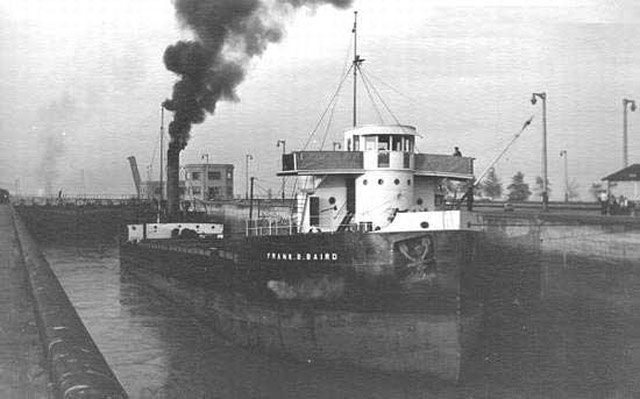
Canadian freighter Frank B. Baird, sunk on 22 May 1942 worldwartwo.filminspector.com
Canadian freighter Frank B. Baird, sunk by U-158 on 22 May 1942.

Battle of the Atlantic: U-753 (KrvKpt. Alfred Manhardt von Mannstein), on its fourth patrol out of La Pallice, surfaces and stops 326-ton British three-masted schooner E.P. Theriault in the Gulf of Mexico 55 miles west of Dry Tortuga. The Germans allow an orderly evacuation of the ship and then attempt to scuttle it, but they fail and it drifts ashore in the Bay of Cardenes, Cuba, on 27 May. The ship is refloated, repaired, and sold to Cuba, where it sails as the Ofelia Gancedo. The crew survives and makes landfall in Cuba in their lifeboats.

U-158 (Kptlt. Erwin Rostin), on its second patrol out of Lorient, surfaces and sinks 1748-ton Canadian freighter Frank B. Baird far south of Bermuda. Rostin uses his deck gun to sink the freighter. Norwegian freighter Talisman rescues the 23 crewmen and takes them to Point Noire, French Equatorial Africa.

U-588 (Kptlt. Victor Vogel), on its third patrol out of St. Nazaire, torpedoes and sinks 3282-ton US freighter Plow City 200 nautical miles (370 km) east of Cape May, New Jersey. There are one death and 30 survivors, who are picked up by USS Sapphire.

Battle of the Mediterranean: It is a quiet day at Malta, perhaps the first such day in months. There are a couple of Luftwaffe patrols near the island, but no bombing attacks and no fighter interceptions. RAF forces have been built up to previously unheard of strength recently.

Partisans: Serbian security forces hang partisan Stjepan Filipović, 26, at Valjevo, Yugoslavia (Serbia). Filipović, a communist and ethnic Croat, was commander of the Partisans' Tamnavsko-Kolubarski unit in Valjevo. A photo of him (top of this page) becomes famous worldwide as a symbol of resistance to tyrrany. There is a statue to Filipović in Valjevo. Both of his brothers also perish in the partisan operations.
El Paso, Texas, Herald-Post, 22 May 1942 worldwartwo.filminspector.com
As the 22 May 1942 El Paso Herald-Post headlines, Mexico takes a dim view of U-boat sinkings of Mexican ships.

Mexican/Axis Relations: As a consequence of U-boat sinkings of Mexican ships, including one on 20 May 1942 by U-106, Mexico declares war on Germany, Italy, and Japan.

US Military: The 19th Fighter Squadron, 18th Fighter Group, 7th Air Force transfers its P-40s from Bellows Field in Waimanalo to the new nearby Kualoa Field at Kualoa Ranch, Hawaii, while the 73rd Fighter Squadron transfers from Wheeler Field to Bellows Field to replace it. Kualoa is a satellite field used for training. Among its typical characteristics are that it is made of perforated high strength steel (Marston mats) and that the runway crosses a road (Kamehameha Highway) to the north shore.

Under General Orders 25, the US 1st Armored Division in Northern Ireland is divided into three units for training, discipline, and administration.

Former Ambassador to France Admiral William D. Leahy boards Swedish liner Drottningholm at Lisbon, Portugal, for his voyage home to New York. 

German Military: General Halder records that he has a meeting with Count Claus von Stauffenberg and Lt. Colonel Mueller-Hillebrand about staffing and "other current organization matters."

Halder also notes in his diary, "Preparation for chemical warfare." This is in reference to a meeting with Genera Wilhelm-Francis Ochsner. This is one of several oblique references in Halder's diary to the possible use of poison gas. There are allegations that the Wehrmacht used gas against Soviet partisans using catacombs south of Kerch, Crimea, around this time. To be fair, both sides make contingency preparations (including the production of large quantities of poison gas) for the possible use of chemical weapons throughout the war.
Adolf Hitler at the Carl Rover funeral, 22 May 1942 worldwartwo.filminspector.com
Adolf Hitler and Hermann Goering attend the funeral of Gauleiter Carl Röver in Berlin on 22 May 1942. It appears the widow is sitting next to Hitler in the place of honor. Also visible in the second row are Joseph Goebbels and Heinrich Himmler (mostly obscured).

German Government: In Berlin for a couple of days, Adolf Hitler attends the funeral of Gauleiter Carl Röver (Reichsstatthalter for the states of both Oldenburg and Bremen) in the mosaics room at the Chancellery. Röver, 53, officially died of either pneumonia or heart failure.

Why Obergruppenführer Röver, a relatively minor party functionary but longtime NSDAP member since 1924, merits Hitler's attention and lavish ceremony at the Chancellery is a bit unclear. Some historians, including David Irving, have claimed that Röver was assassinated on orders from Martin Bormann - ostensibly Röver's friend and sponsor - because Röver was proving to be an embarrassment to the NSDAP due to progressive dementia caused by advanced syphilis.

But there may be more to it. For years, Röver successfully has resisted Hermann Goering's (who also attends the funeral) attempts to incorporate Bremen into Prussia (Goering is Minister of the Interior for Prussia). Hitler consistently took Röver's side, and Goering could not have been too happy about that. This ceremony may be an oblique way for Hitler to signal that he still agrees with the deceased Röver and opposes Goering's empire-building plans.
The Carl Rover funeral, 22 May 1942 worldwartwo.filminspector.com
Reich Minister Alfred Rosenberg speaks during the Carl Röver funeral ceremony at the Chancellery, Berlin, on 22 May 1942.

Australian Homefront: In Townsville, Australia, about 600 African-American servicemen (laborers) of the 96th Battalion, US Army Corps of Engineers, mutiny. They do so after hearing a rumor that a white office had struck or murdered a black sergeant. The mutineers already had been banned from Townsville due to previous incidents. The mutineers fire machine guns at the tents of white officers, with at least one death and dozens injured (a contemporary report says that 19 men are killed). The mutiny lasts for eight hours. A Texas congressman visiting Australia, Lyndon B. Johnson, arranges to suppress news of the mutiny, which does not become public until 2012. The mutiny is put down with the assistance of Australian infantry units armed with live ammunition. This is considered one of the worst mutinies in United States military history and it is the first of several similar incidents during World War II (Port of Chicago in July 1944, Agana, Guam, in December 1944, Freeman Air Force Field in Indiana in 1945).
Adolf Hitler at the Carl Rover funeral, 22 May 1942 worldwartwo.filminspector.com
Adolf Hitler (center) attends the funeral of Gauleiter Carl Röver on 22 May 1942.

Holocaust: Transport trains arrive at Auschwitz carrying 1000 Slovak Jewish citizens transferred from Majadanek Concentration Camp at Lublin. Another nine previously arrested by the state security services (Sipo and SD) arrive from Helcl Prison in Krakow. Almost all of the new arrivals are dead by mid-August.

American Homefront: Baseball star Ted Williams enlists in the Navy Reserve after initially petitioning to be exempt from the draft as the sole source of support for his mother (Class 3-A). Pushback from sponsors and fans have contributed to his change of heart.

The Navy allows Williams to finish out the season. Williams will become a second lieutenant in the United States Marine Corps as a Naval Aviator. Having batted .406 in 1941 (the last player to best .400 to date), Williams is having another outstanding year and is on his way to the American League Triple Crown (leading in batting average, runs batted in, and home runs). After being called to duty in November 1942, Williams will miss the 1943, 1944, and 1945 baseball seasons.

The United Steel Workers of America is formed as a combination of smaller unions.
Poster celebrating Mexico's entry into the war on 22 May 1942 worldwartwo.filminspector.com
A poster celebrating the entry of Mexico in the war on 22 May 1942.

Future History: Theodore John Kaczynski is born in Chicago, Illinois. In high school, he shows a strong interest in mathematics and develops a reputation as a "walking brain." After participating in mind control experiments that may be part of the CIA's Project MKUlttra, he graduates from Harvard in 1962. He becomes a doctor of mathematics in 1967 but resigns from a teaching position abruptly in 1969. In the 1970s, he moves to a remote cabin in Lincoln, Montana, attempting to become self-sufficient. He develops obsessive views against development and begins acting violently, including setting booby traps and committing arson. This develops into his mailing or hand-delivering bombs to individuals he associates with trees and forests, including at least two individuals who apparently are targeted simply because their last names are "Wood."

For these violent acts, the as-yet-unidentified Kacynski becomes commonly known as the "Unabomber." This continues intermittently until 1995, when the Washington Post accedes to his demands and publishes his crazed manifesto condemning the Industrial Revolution. After a massive investigation, the FBI arrests Kaczynski on 3 April 1996. As of mid-2021, Ted Kaczynski is serving eight life sentences without the possibility of parole at a supermax prison in Florence, Colorado.

Barbara Parkins is born in Vancouver, British Columbia, Canada. At the age of 16, she moves with her mother to Los Angeles, California, where she studies acting. She makes her film debut in "20,000 Eyes" (1961). Later in the decade, she stars in ABC primetime soap opera "Peyton Place" and the film adaptation of Jacqueline Susann's novel "Valley of the Dolls." This begins an extensive acting career that lasts through the 1990s. As of mid-2021, Barbara Parkins is a photographer.  

Richard Raul "Richie" Garcia is born in Key West, Florida. After serving in the US Marine Corps as a combat engineer in the early 1960s, Garcia becomes a baseball umpire in 1970. He goes on to a prominent and popular career as a leading American League umpire that has several high-profile controversies, including his participation in the 1999 Major League Umpires Association mass resignation (which ends his umpiring career, though he returns to baseball in other capacities). As of mid-2021, Richie Garcia is retired in Florida.
Loyola college coeds support the war effort, 22 May 1942 worldwartwo.filminspector.com
College co-eds pitch in to help with the war effort. Skyscraper, 22 May 1942, Mundelein College Records, Loyola University Chicago Digital Special Collections, accessed June 3, 2021.

May 1942


2021

Tuesday, May 4, 2021

May 17, 1942: Germans Counterattack at Kharkov

Sunday 17 May 1942

Vought-Sikorsky XR-4 arrives at Wright Field, 17 May 1942 worldwartwo.filminspector.com
The US military's first helicopter, a Vought-Sikorsky XR-4, arrives at Wright Field, Riverside, Ohio, on 17 May 1942. Among those to greet the arrival is Orville Wright (Sikorsky Historical  Archives).
Battle of the Pacific: Badly damaged Japanese aircraft carrier Shōkaku reaches Kure, Japan, on 17 May 1942. Shōkaku is lucky to have made it after the damage sustained at the Battle of the Coral Sea, having almost capsized during a storm along the way. Its fellow carrier, Zuikaku, is still several days away from Kure. Both carriers are in bad shape and will take at least a month to repair and return to service. This means they will miss the next major Japanese operation in June.

US naval intelligence continues to struggle with the location of the upcoming Japanese offensive that they know from decrypted communications is in the works. Commander John Redman, commander OP-20-G in Washington, D.C., continues to believe the next objective is Oahu in the Hawaiian Islands. His boss, Admiral Richmond K. Turner, has a great influence on policy and believes him. The Japanese refer to the target as "AF," but nobody knows with certainty where that is. While opinion within the US high command increasingly suspects that AF is Midway Island, that remains unproven.

The USAAF takes precautions by placing the 7th Air Force on alert for a possible Japanese attack at Midway or elsewhere. It adds obsolete Douglas B-18 bombers to reconnaissance missions to supplement existing patrols by B-17 bombers. Around this time, the 72nd Bombardment Squadron is converting its B-18 Bolo bombers to B-17s, but that is a gradual process.

US Navy submarine USS Tautog, on its second patrol out of Pearl Harbor, torpedoes and sinks 2589-ton Japanese submarine I-28 two miles (3.2 km) west of Royalist Reef, Truk. Tautog is one of the submarines assigned to patrol the expected route of the Japanese carriers returning to Japan from the Battle of the Coral Sea. All 88 men on the I-28 perish.
I-164, sunk on 17 May 1942 worldwartwo.filminspector.com
Japanese submarine I-164, sunk on 17 May 1942, during its trials in Kure.
US Navy submarine USS Triton (SS-201, Lt. Cdr. Charles C. Kirkpatrick) torpedoes and sinks 1635-ton Japanese submarine I-164 (formerly I-64) southeast of Cape Ashizuri, Kyūshū, Japan. Kirkpatrick (who eventually becomes a Rear Admiral) uses his last Mark-14 bow torpedo, and the Japanese submarine sinks within two minutes. All 81 men on I-164 are thought to have perished, though Kirkpatrick spots about 30 swimmers after the sinking.

US Navy submarine USS Skipjack torpedoes and sinks 5477-ton Japanese transport ship Tajan Maru in the South China Sea near the mouth of the Gulf of Siam off Indochina.

US Navy submarine USS Silversides, on its first patrol out of Pearl Harbor, torpedoes and sinks 5871-ton Japanese freighter Thames Maru. In addition to Thames Maru, Silverfish torpedoes a second freighter, 5973-ton transport ship Tottori Maru, which also sinks (though the crew of Silversides is unable to verify this). The attack is hazardous for Silversides because it blunders into a Japanese fishnet marked by Japanese flags held aloft on bamboo poles above the surface. The submarine shrugs off the fishnet, which it drags along with it. The scene is somewhat unusual in that this means Silversides drags along the Japanese flag atop the bamboo poles, making this the only time a US submarine attacks enemy shipping while (inadvertently) flying the Japanese flag. Silversides, incidentally, is preserved as a National Historic Landmark at a museum in Muskegon, Michigan.

US Navy submarine USS Grampus, on its third patrol out of Fremantle and one of the eight submarines lurking off Truk Lagoon looking for Japanese carriers, is damaged by gunfire by Japanese patrol vessels. However, the submarine remains operational.

USS Gar, on its second patrol, attacks a Japanese ship during a daylight raid west of Truk. The crew believes it is a Q-ship, but, in fact, it is just an ordinary freighter. The identity and fate of the ship is unclear and any sinking is unconfirmed.

Eighteen Japanese A6M2 Zero fighters of the Tainan Kokutai based at Lae Airfield raid Port Moresby. The strafing mission accomplishes little because the Allies receive warnings and disperse their aircraft ahead of the raid. The Japanese lose two fighters that are damaged and crash into the Owen Stanley Mountains. Another fighter force-lands with the pilot surviving the war. Thirteen fighters make it back to base, some after landing at other airfields. Sixteen P-39 Aircobras of the 8th Fighter Group's 36th Fighter Squadron and 35th, 39th, and 40th Fighter Squadrons intercept the Japanese fighters. They get no victories and lose one plane. However, the US fighter pilots claim numerous victories that ultimately prove erroneous.

B-17s attack shipping at Koepang Bay, Timor.
Orville Wright greets Sikorsky and his helicopter at Wright Field on 17 May 1942 worldwartwo.filminspector.com
The Sikorsky XR-4 41-18874 at Wright Field, 17 May 1942. From left to right are E. Walsh, A. Planefisch, Igor Sikorsky, Orville Wright, R. Alex, Les Morris, B. Labensky. (Sikorsky Archives).
Battle of the Indian Ocean: British units continue straggling into the border town of Tamu to set up a center of resistance on the Indian border. Today, the 17th Indian Infantry Division arrives after a difficult withdrawal up the Kabaw valley. Its strength is down to 9,908 men. It will be sent north to Imphal, another border city and center of British resistance to the victorious Japanese in Burma. The Japanese units, meanwhile, are not pursuing the fleeing Allied units but instead are content to solidify their control of Burma.

Japanese Detachment A, a naval force composed of seven submarines and three auxiliary cruisers/supply ships,, encounters heavy seas en route to Madagascar. Several of the submarines take on water in heavy seas as they try to charge their batteries. I-18's port diesel is flooded and four cylinders seize and it falls behind the other submarines. I-20 also sustains damage but it is quickly repaired.
Reynolds News of 17 May 1942 worldwartwo.filminspector.com
London, England's Reynolds News of 17 May 1942 is full of reporting of overpowering Red Army tank strength near Kharkov.
Eastern Front: It is an unusually hot day in southern Russia, with temperatures hitting 90° Fahrenheit (32°C). The skies are clear and visibility is perfect. The two sides spend the day attacking in completely different directions, with each facing the possibility of a massive defeat if they are wrong.

German 3rd Panzer Corps in General Ewald von Kleist's First Panzer Army counterattacks at Kharkov. More Luftwaffe units have been transferred north from Crimea to Fliegerkorps IV and VIII, and the planes clear a path for the panzers. The attack is not against the bulging Soviet expansion in all directions south of Kharkov, but instead directed at the breakout point. There is outstanding coordination between ground units calling in airstrikes and the arrival of the planes, which do not have far to travel from their bases. The aim is to advance from north and south to cut off the Soviet supply corridor and create a pocket west of Barvenkovo. This is an altered version of a plan the Germans were working on before the Soviet attacks, Operation Fridericus, so the Germans have been able to react with uncommon speed.

The German counterattack takes the Soviets completely by surprise, and they are slow to react. In the morning, before he realizes what the Germans are up to, Marshal Semyon Timoshenko commits his second-stage forces, XXI and XXIII Tank Corps, to the expanding perimeter of the breakthrough instead of to the area of the German counterattack. These are his most powerful reserves and they are in completely the wrong place. During the day, these forces advance five miles north toward Kharkov, the Soviets' ultimate objective.
German armored personnel carrier in the Kharkov area, May 1942 worldwartwo.filminspector.com
A German medium armored personnel carrier (perhaps a Sd.Kfz. 251/10 with 3.7 cm anti-tank gun) on a temporary ferry in the Kharkov area, May 1942 (Federal Archive Image 169-0422).
The problem for the Soviets is that, no matter how far their tanks advance toward Kharkov, their offensive to take the city is doomed to failure if the German panzers far to the east cut them off. The German counterattack gets off to a very successful start. In the north, the panzers advance fifteen miles to the south to reach the first objective of Barvenkovo. In the south, the Seventeenth Army does even further, advancing 16/17 miles, about 2/3 of the way to their first objective of Izyum. At Fuhrer Headquarters, General Franz Halder writes in his war diary that First Panzer Army "has got off to a good start."

The Soviet units in the area of the southern German attack are commanded by General Malinovskiy of Ninth Army. Malinovskiy loses contact with his front-line units and reinforcements. He also has made a mistake of overconfidence, putting some of his reserves into the front line. His defensive line is thin and brittle and not a typical Red Army defense in depth.

Throughout the day, the Soviet command shrugs off the German counterattack. Timoshenko orders his XXIII Tank Corps (General Gorodnyanskov) out of reserve to help the Soviet 57th Army stop the German attack that reaches Barvenkovo. The Stavka releases two rifle divisions and two tank brigades from its theater reserve. These forces cannot get to the crisis areas in fewer than 24 hours, however, and in some cases much longer.
Beatrice Times, 17 May 1942 worldwartwo.filminspector.com
The 17 May 1942 Beatrice Times of Beatrice, Nebraska, headlines reports of declining German morale.
The acting chief of the Soviet General Staff, Marshal Vasilevskiy, is the only top Red Army commander who seems to appreciate the threat of the German counterattack today. He asks Stalin for permission to turn the entire offensive around and direct it at the German counterattack rather than continuing north and west. Stalin consults with the Military Council of the Southwestern Theater, which is led by Timoshenko, Political Commissar Nikita Khrushchev, and Timoshenko's Southwestern Front military chief of staff, Ivan Bagramyan. The situation is much different than in other armies because Commissars such as Khrushchev, with no or inadequate military training, have an equal voice in military decisions.

While Bagramyan basically agrees with Vasilevsky, Timoshenko and Khrushchev tell Stalin they can master the counterattack and continue their own offensive. Bagramyan, a very capable general, was one of the key planners of the original Soviet attack. However, he also is considered somewhat of a black sheep in the Red Army, having been court-martialed in 1941 for the losses at Kiev and Rostov, so he has less influence with the Stavka than he otherwise might. Based on the Military Council's recommendation, Stalin refuses Vasilevskiy's request to turn the offensive around to meet the new threat. It is a decisive moment on the Eastern Front with consequences that extend throughout the summer of 1942.

The new Geschwaderkommodore (wing commander) of Jagdgeschwader 77, Gordon "Mac" Gollob, continues his fast start. Flying from Kerch in Crimea, he claims three Soviet R-5s and one LaGG-3 for a total of seven victories in his first two days. This brings his total score to 93. The Luftwaffe continues to commit a major portion of its strength to the Crimean campaign. Today, German bombers sink 1200-ton Soviet auxiliary guard ship SKR-21 off Iokanga, with four deaths.

Basically, the ground fighting in Crimea is decided. However, in his war diary, General Franz Halder notes that "On the Kerch peninsula, the remnants of the enemy are still putting up fanatical resistance northeast of the town."
German searchlight in France, May 1942 worldwartwo.filminspector.com
German searchlights in France, May 1942 (Genzler, Federal Archive Image 101I-616-2514-36).
European Air Operations: RAF Fighter Command has a bad day over the French coast. During a 27-plane bombing mission to the Boulogne docks (one Wellington lost), bombers drop forty 500-lb bombs. This stirs up JG 53 at Le Touquet, which puts over 25 Fw 190s in the air. RAF No. 602 initiates an attack on ten of them over Güines (south of Calais), but then is bounced itself by another 15 German fighters lurking above them. Ferocious dogfights result in the loss of eight RAF fighters at the cost of one Luftwaffe plane, claimed by Squadron Leader Finucane. This is one instance where the British tactic of using bombers to draw up the enemy fighters to battle backfires.

The only other mission of the day is a raid by 32 Stirling and 28 Wellington Bombers of Group 3 after dark to the Frisian Island and Heligoland area. Losses are heavy, with five Stirlings and two Wellingtons lost to Luftwaffe night fighters. Today continues a Spring bombing lull by both sides, although, as seen, fighter activity remains heavy.
HMS King George V in drydock, 17 May 1942 worldwartwo.filminspector.com
HMS King George V in the Gladstone Dock at Liverpool, May 17, 1942, following the collision sank destroyer HMS Punjabi in the North Atlantic on 1 May. © IWM A 9949.
Battle of the Atlantic: It is a particularly bad day at sea for the Allied merchant fleet. Operation Neuland, the German U-boat offensive in the Caribbean, increasingly is the Kriegsmarine's most fertile hunting ground in the Atlantic. The Allied shipping losses there, particularly of tankers, are mounting at an alarming rate. Already these losses have led to gasoline rationing in the eastern United States as Texas oil must be shipped there around Florida. While the US Navy and Coast Guard have organized convoys from Boston to Florida, ship transits remain unorganized in the Caribbean and mostly independent. These easy successes mask improved Allied anti-submarine measures further north, but U-boats remain a threat everywhere and there are several losses today in the North Atlantic, too.

U-156 (Kptlt. Werner Hartenstein), on its third patrol out of Lorient, torpedoes and sinks 5072-ton British freighter Barrdale northeast of Barbados. There are one death and 52 survivors, who are rescued by Argentine freighter Rio Iguazu.

U-162 (FrgKpt. Jürgen Wattenberg), on its second patrol out of Lorient, torpedoes and sinks 6852-ton Norwegian tanker Beth 135 nautical miles (250 km) southeast of Barbados. There are one death and 30 survivors.

U-155 (Kptlt. Erich Würdemann), on its second patrol out of Lorient, torpedoes and sinks 7667-ton US freighter Challenger east of Grenada. Challenger is en route to Trinidad for repairs when it is sunk. There are eight deaths and 56 survivors, who are rescued by the patrol yacht USS Turquoise (PY-19).

U-155 also torpedoes and sinks 8136-ton British tanker San Victorio on its maiden voyage southwest of Grenada. There are 52 deaths and one survivor, who is rescued by USS Turquoise.

U-506 (Kptlt. Erich Würdemann), on its second patrol out of Lorient, torpedoes and sinks 5189 US tanker Gulfoil 75 miles southwest of the mouth of the Mississippi River. There are 21 deaths and 19 survivors, who are rescued by US freighter Benjamin Brewster.
MV Peisander, sunk on 17 May 1942 worldwartwo.filminspector.com
M.V. Peisander, sunk by U-653 off Nantucket, Massachusetts, on 17 May 1942.
U-653 (Kptlt. Gerhard Feiler), on its third patrol out of Brest, torpedoes and sinks 6225-ton British freighter Peisander 350 nautical miles (650 km) off Nantucket Island, Massachusetts. All 65 crewmen survive, rescued by USCGC General Greene.

U-432 (Kptlt. Heinz-Otto Schultze), on its fifth patrol out of La Pallice, shells, and sinks 324-ton US fishing trawler Foam about 85 nautical miles (157 km) south of Halifax, Nova Scotia. There are one death and 20 survivors, who are rescued by HMCS Halifax or reach the Sambro Lightship in their lifeboats.

U-588 (Kptlt. Victor Vogel), on its third patrol out of St. Nazaire, torpedoes and sinks 2117-ton Norwegian freighter Skottland midway between Boston and Halifax. There are one death and 23 survivors, who are rescued by Canadian fishing trawler O.K. Service IV.

U-135 (Kptlt. Friedrich-Hermann Praetorius), on its third patrol out of Brest, torpedoes and sinks 7127-ton British Fort ship Fort Qu'Appelle off the northern coast of Canada. There are 14 deaths. Survivors are picked up by HMCS Melville.

US 2612-ton freighter Ruth Lykes, torpedoed by U-103 late on 16 May, sinks shortly after midnight on 17 May in the Caribbean. There are six deaths and 30 survivors, who are rescued by Norwegian freighter Somerville. This is included here because some accounts place the sinking on the 16th, others on the 17th.

US Navy destroyer USS Hambleton (DD-455) collides with destroyer Ellyson (DD-454) while en route to the United States from the Gold Coast of Africa. Both ships make it to port.
Panzer General Ludwig Cruwell on 17 May 1942 worldwartwo.filminspector.com
Panzer General Ludwig Crüwell showing his (34th) Oak Leaves for the Knight's Cross, 17 May 1942. Crüwell is commander of the Afrika Korps (on infantry and two panzer divisions) under General Erwin Rommel, who commands Panzer Army Afrika (Federal Archives Picture 146-1991-039-17).
Battle of the Mediterranean: German E-boats have been operating with relative impunity just off the shores of Malta, planting mines and occasionally engaging in firefights with Royal Navy vessels. Today, British radio direction picks up some of these ships at 01:05 north of St. Elmo. At 02:35, coastal artillery near Valletta badly damages 79-ton S 34. While it remains afloat, the Luftwaffe scuttles it with four Bf 109s to keep it from falling into British hands. Other E-boats are damaged after dawn by Hurricane fighters of RAF No. 229 Squadron but at least two escape.
The Sikorsky XR-4, delivered to the US military on 17 May 1942 worldwartwo.filminspector.com
The US military receives its first helicopter on 17 May 1942. It is the Sikorsky XR-4, shown.
US Military: Battleship USS West Virginia, sunk during the Japanese air raid on Pearl Harbor, is refloated today. The repair process has been arduous, requiring huge wooden cofferdams around the ship and tnemic cement used to seal them. About 40,000 gallons of fuel oil are recovered from the ship. The ship will be towed to Drydock No. 1 and remain there for almost a year.

Igor I. Sikorsky and Charles Lester "Les" Morris fly Sikorsky's XR-4 helicopter from Stratford, Connecticut, to Wright Field in Riverside, Ohio. This completes the delivery of the first USAAF helicopter. The two pilots spend over 16 hours in the air, and the flight requires 17 refueling stops.

British Homefront: MP Sir Stafford Cripps, back from failed negotiations with Mahatma Gandhi in India, makes a speech to his constituents in Bristol about a second front in Europe. He says:

The only difference between [politicians and the public] is that the public can talk freely about [a new second front in Western Europe], whereas we cannot, because we have two responsibilities - to organize it at the proper time and place, and secondly not to give the enemy any information of our intentions. Already the Germans are getting uneasy at the militant offensive spirit of the British and Americans in this matter.

Cripps knows that the public is eager for a second front and is hinting at things that he knows the public wants to hear. However, at this time, there are no plans for an invasion of Western Europe anywhere. The only operation that is contemplated is a possible invasion of western Africa late in 1942, but even that is tenuous.
Jimmy Stewart on the cover of This Week on 17 May 1942 worldwartwo.filminspector.com
Jimmy Stewart, USAAF, portrayed on the cover of This Week magazine, 17 May 1942.
American Homefront: On 17 May 1942, all remaining Japanese-Americans in Orange County, California, are evacuated. This is "moving day." They are told to report to various Civil Control Stations or designated transit sites by today. These notifications generally are only made by notices attached to telephone poles, buildings, and the like. The departure sites are often public transit hubs, such as the Pacific Electric Railway state near Huntington Beach pier.

Future History: Henry Saint Claire Fredericks is born in Harlem, New York. Adopting the stage name Taj Mahal, he becomes a noted blues musician and occasional actor. Taj Mahal remains active in the business as of 2021.
Fenn College graduation on 17 May 1942 worldwartwo.filminspector.com
Fenn College commencement, Cleveland, Ohio, 17 May 1942. A lot of these graduates will wind up in the military (Cleveland State University Archives).

May 1942


2021