Showing posts with label U-107. Show all posts

Sunday, September 4, 2022

June 19, 1942: The Reichel Affair Threatens Blau

Friday 19 June 1942

Japanese POWs from the sunken Hiryu, picked up on 19 June 1942 worldwartwo.filminspector.com
Survivors of Japanese aircraft carrier Hiryu, sunk on 5 June, after being picked up by the U.S. Navy on 19 June 1942 (U.S. Navy).

Eastern Front: Adolf Hitler has been placing all of his hopes on the coming Summer offensive (Case Blau (Blue)) to capture the Soviet oil fields in the Caucasus and finally secure plentiful energy supplies. However, on 19 June 1942 the Germans receive terrible news that places the entire success of the offensive in question. Hitler himself, though, is kept in the dark about it until the 21st.

Contrary to well-known standing orders both in general and specifically put in place for Blau (War Directive ), a 23rd Panzer Division staff officer, Major Joachim Reichel, boarded a light transport aircraft (apparently a Fieseler FI-156 Storch) carrying a complete outline for the Blau offensive and specific plans for General der Panzertruppe Georg Stumme's Fortieth Panzer Corps. The pilot for some reason flies over the front lines, perhaps due to getting lost. A lucky shot by a Soviet rifleman pierces the fuel tank and forces the plane to crashland intact. 

Within hours, a German patrol finds the downed plane 4 km behind the Soviet lines but cannot find either Reichel or the pilot (they were shot after a brief firefight by a Soviet patrol and their bodies will be found by another German patrol two days from now). Most importantly, they do not find the briefcase containing the Blau plans.

The German high command now must assume that the plans for Blau have been compromised (they have, the plans are on Stalin's desk within a day). Field Marshal von Bock, commander of Army Group South, has the immediate reaction to start Blau immediately before the Red Army can react. OKH (General Franz Halder) agrees and tells him to put everything in readiness for a start on 26 June. However, the final decision is up to Hitler, and he is furious. He summons Bock to the Wolfschanzee in East Prussia for an explanation. Everything is now in doubt and nobody knows whether the grand offensive will even happen.

In his daily war diary, Halder's notes today do not mention the Reichel affair but do reflect upon more basic problems with the offensive:

The discussion with the top command on the efficient conduct of the Kupyansk-Izyum offensive follows a familiar and unpleasant pattern. Whereas von Bock, because of the terrain, wants to launch his tank drive directly from the west, top command considers that a mistake but feels no change ought to be ordered at this advanced stage of preparations, and approves von Bock's plan against its better judgment.

What Halder carefully skirts is identifying who this "top command" actually is - a sure sign it is Hitler himself, who according to Halder's notes (which may, of course, be inaccurate) briefly returned to headquarters in East Prussia on the 18th but now is back in Bavaria. This continues a pattern of Hitler doubting von Bock's judgment that began during the May Soviet counteroffensive at Kharkov and ultimately will lead to von Bock's final dismissal in mid-July.

Marilyn Monroe wedding day portrait 19 June 1942 worldwartwo.filminspector.com
The future Marilyn Monroe on her first wedding day, June 19, 1942.

Halder also mentions "very heavy economy attacks with local successes" from the trapped Soviet pocket on the Volkhov River in the north. This is Soviet General Andrei Vlasov's trapped 2nd Shock Army's last major attempt to break out. The attacks are aided in part by "adverse weather" that grounds the Luftwaffe.

In Crimea, General Manstein's 11th Army continues clearing out pockets of Soviet resistance, primarily a few remaining fortresses on "Battery Headland," the peninsula that dominates the bay's entrance. This is in preparation for the final assault on Sevastopol, but first, the 54th Army must take that peninsula. The final outcome in the sector north of Severnaya Bay is not in doubt following the fall of the key Soviet fortress Maxim Gorki. Luftwaffe air strikes are much less hazardous following the destruction of a key Soviet anti-aircraft platform in the bay. From first light, bombers based nearby conduct "rolling attacks" against all remaining valuable targets within the city. First, they use high explosive bombs, then, after noontime, incendiaries. 

Luftwaffe General von Richthofen, who is still in the theater prior to his transfer north to help with Blau, notes in his diary that Sevastopol is "a sea of flames," with smoke clouds stretching all the way to Feodosia, 150 km away. However, the chaotic supply situation soon will force a reduction in Luftwaffe sorties by around 40%.

Serbian partisans, 19 June 1942 worldwartwo.filminspector.com
Partisan soldiers of the 4th Proletarian Montenegrin Brigade and the Herzegovinian Detachment in the village of Lubina near Vrbnica on Zelengora, Serbia, June 19, 1942.

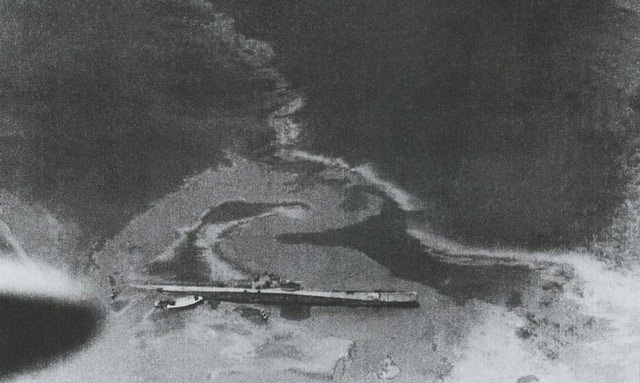
Battle of the Black Sea: Italian motor torpedo boat ("MTB") MAS-571 torpedoes and sinks Soviet 3000-ton transport evacuating wounded troops from Sevastopol. submarine Shch-214 off Crimea in the Black Sea. There are no survivors.

Separately, two other Italian MTBs based in Yalta chase a Soviet submarine, Shch-214, that has been spotted by reconnaissance aircraft near Cape Ay-Todor (five km west of Yalta). They catch up to it and sink the submarine near Cape Sarych. Everybody aboard, estimated at 39 crew and between 40-65 evacuees from Sevastopol, perishes. There are two survivors taken as POWs, one of whom perishes in captivity.

The two sinkings continue a series of similar Italian naval victories in the theater at little cost to themselves. These aggravating losses have forced Soviet Admiral Oktyabrskii to sharply curtail naval missions to Sevastopol, leading to German Admiral Schwarzes Meer (Black Sea Naval Command) war diary to include the entry today that "Enemy naval activity has greatly decreased."

The German Navy also gets a success when MTB S 102 torpedoes and sinks 2048-ton Soviet transport Belostok near Balaklava. There are 388 deaths. It is unclear if this happens on the 18th or 19th, so entries for this sinking are on both pages.

The Soviets have noticed the Italian successes, and after dark they send bombers of the Voyenno-vozdushnyye si/y (Soviet Air Force, or VVS) to attack German shipping at Yalta. The attack severely damages two Italian mini-submarines and cripples an MTB. 

German fishing schooner MFK-2263 hits a mine and sinks off Mariupol, Ukraine. Two men perish.

Battle of the Baltic: Soviet submarine Shch-317 torpedoes and sinks 2405-ton Danish freighter Orion off Visby, Sweden. There are one death and 21 survivors.

Danish 117-ton coaster Anna hits a mine and sinks in the Kattegat, off Paludian Flak. All four crewmen perish.

Canadian relocation notice, 19 June 1942 worldwartwo.filminspector.com
A relocation notice to Japanese Canadians issued in British Columbia newspapers on 19 June 1942 (Canadian government).

Battle of the Pacific: In one of the last direct consequences of the Battle of Midway, a U.S. PBY Catalina search plane spots a lifeboat east of the island and directs the destroyer U.S.S. Ballard to it. The lifeboat contains 35 sailors from the engineering room of fleet carrier Hiryū, sunk on 5 June 1942. After two weeks of exposure, one of the men passes away almost immediately. The POWs are taken to Midway, and then Pearl Harbor aboard the cargo ship USS Sirius.

U.S Navy submarine USS S-27 drifts toward shore during the night while recharging its batteries and at 00:43 grounds on rocks off St. Makarius Point, Kiska. The sub is gradually ground to pieces, and the crew abandons ship by 15:50 today.

The 11th Air Force sends B-24s to bomb Kiska but are forced to abort the mission due to heavy fog. One of the planes must make a crash-landing in the sea and two men are lost.

B-17s of the 5th Air Force attack Vunakanau Airfield, Rabaul, and nearby shipping.

U-552 returns to port, 19 June 1942 worldwartwo.filminspector.com
U-552, its Roter Teufel ("Red Devil") mascot plainly visible on the conning tower, returns to the typical warm welcome from German maidens at Saint Nazaire, France. Erich Topp is visible in the tower, with crew on deck. It has been a successful patrol, sinking five ships of 15,858 tons (Kramer, Federal Archive Image 101II-MW-6443-16A).

Battle of the Atlantic: Allied shipping losses off the American coast have been heavy for months now, and Allied leaders are starting to take notice. Today, U.S. Army Chief of Staff George Marshall writes to Admiral King:

The losses by submarines off our Atlantic seaboard and in the Caribbean now threaten our entire war effort....I am fearful that another month or two of this will so cripple our means of transport that we will be unable to bring sufficient men and planes to bear against the enemy in critical theaters to exercise a determining influence on the war.

Winston Churchill, currently visiting with President Roosevelt, is known to have this view as well, so it probably is not a coincidence that Marshall writes this grim note on this particular day.

U-701 (Kptlt. Horst Degen), on its third patrol out of Lorient, shells and sinks U.S. Navy trawler USS YP-389 (Lt R.J. Philips) 20 miles southeast of Cape Hatteras, North Carolina. The trawler is at a disadvantage because its main gun is out of commission due to a faulty firing spring. The U-boat's shelling starts a fire forward and floods the engine room, and the ship sinks by the stern at 10:15. There are six deaths and 18 survivors (some sources say 4 deaths and 21 survivors).

U-159 (Kptlt. Helmut Friedrich Witte), on its second patrol out of Lorient, shells and sinks 2710-ton Yugoslavian freighter Ante Matkovi in rough weather just north of Riohacha, Colombia. The ship quickly catches fire and sinks at 18:10. Rescue is not forthcoming because one of the first shells took out the radio mast, so the men must make shore in Colombia in their lifeboats. There are six dead and 23 survivors.

U-107 (Kptlt. Harald Gelhaus), on its sixth patrol out of Lorient, shells and sinks 35-ton U.S. schooner Cheerio eight miles off Mona, Puerto Rico. The crew sets the ship on fire after the first few shells and abandons ships - the flames attract the attention of a PBY Catalina. All nine crewmen, clinging to driftwood, then are rescued by USS CG-459.

British 758-ton passenger steamer Dalriada hits a mine in the Edinburgh Channel and sinks while clearing a wreck.

German 125-ton minesweeper R-41 is torpedoed and sunk in the Seine Estuary, France. It is unclear who did this, perhaps British MTBs, which have been in the general vicinity in recent days. In the same action, German surface units shell and sink British gun boat HM SGB-7 in the Seine Estuary.

A U.S. mine in the Gulf of Mexico sinks 3009-ton Yugoslavian freighter Boslijka northwest of Key West, Florida. 

U-552 returns to port showing her Red Devil mascot, 19 June 1942 worldwartwo.filminspector.com
Good view of U-552's deck gun as it comes into Saint Nazaire following its successful patrol on 19 June 1942 (Kramer, Federal Archive Image 101II-MW-6443-07A).

Battle of the Mediterranean: Having effectively surrounded the critical Allied port of Tobruk on the 18th, General Erwin Rommel begins final preparations for an assault to take it quickly. Reconnaissance of deployment areas takes place in the morning, and in the afternoon he sends his armored formations (15th and 21st Panzer Divisions on the right, the Italian Trieste and Ariete Divisions on the left) to the southeastern corner of the perimeter where he plans to make his main effort. The 90th Light Division occupying that area moves further east toward the coast to assume a defensive posture in case the British Eighth Army attempts a relief effort from its positions further south.

The attack is scheduled to begin early on the 20th. The plan is for a feint by XXI corps in the west before the two panzer divisions - 15th on the left and 21st on the right, with a motorized infantry group left behind by 90th Light commanded by Generalleutnant Erwin Menny in between - makes the main effort. The Germans are astonished when they arrive to find German ammunition depots left behind during their retreat from the area in November 1941 still in place and useable.

On the British side, the inexperienced 2nd Battalion, 5th Mahratta Light Infantry holds the key area in the southeastern corner of the perimeter. Inland from them are the 2/7th Gurka Rifles, while on the other side along the coast are the 2nd Cameron Highlands. The two panzer divisions are to attack the Mahrattas, while the two Italian armored divisions will take on the Cameron Highlands.

The British are confident, given how long they were able to hold the port in 1941, but the command is disorganized after the frantic retreat from the Gazala Line and does not yet have its forces properly disposed for counterattacks. The upcoming battle is a clear example of the value of speed in continuing offensive operations rather than pauses that allow the defenders to dig in and recover from past defeats.

Italian 778-ton coastal freighter Carlotta SS hits a mine and sinks off Cape Platamone, south of Cattaro.

Partisans: The Germans, in Operation Hannover and Hannover II, have been trying to eliminate a major partisan force led by Soviet general Below in the Bryansk region for some time. On the 18th, a patrol found orders on a dead Soviet officer stating that a breakout east across the "Rollbahn" (highway) that the Germans loosely control back toward Soviet-held territory will take place at a specific point at midnight on 18/19 June. With nothing else to go on, the Germans have reinforced the area with three lines of defense comprised of infantry and artillery. General Heinrici, a defensive specialist, is in command.

The partisan breakout begins right on time as the clock ticks into 19 June. The breakout force is massive, and fighting lasts into daylight. The Russians get about 1500 troops across the first defensive line, 500 across the second, and perhaps a few across the third line. Having taken massive casualties, the remaining Soviets are forced back into the pocket, and at noon, Heinrici orders immediate pursuit. However, it then begins to rain, and in the confusion and dense forests, Belov and his remaining troops (about 3000) find an undefended portion of the Rollbahn and cross over unmolested.

Cajon Blvd in San Diego, 19 June 1942 worldwartwo.filminspector.com
Looking west on El Cajon Boulevard from Alabama Street, San Diego, June 19, 1942 (The Boulevard).

Spy Stuff: The leader of the Operation Pastorius German saboteur group in New York City, George John Dasch, takes a train down to Washington, D.C., and walks into FBI headquarters. He experiences some skepticism until he shows Assistant Director D.M. Ladd a sack full of $84,000 of the operation's funds. FBI Director J. Edgar Hoover then begins arresting the German spies, which takes about two weeks. Hoover takes full credit for the arrests and neglects to mention to others that Dasch turned himself in.

Allied Relations: With Winston Churchill now in the United States,  the Second Washington Conference begins. It actually begins today in Hyde Park, New York, where Churchill travels to meet with President Roosevelt at his private residence. As he arrives, Churchill notices old warships from World War I tied up along the shoreline. In a flash of inspiration, he mentions to FDR that these sorts of obsolete vessels would be quite useful if sunk offshore to protect invasion landings from weather effects. FDR agrees and tells his naval authorities to make appropriate plans. This idea turns into the useful Mulberry Harbor at the D-Day (6 June 1944) landings.

The actual discussions revolve around the pressing question of where in Europe or Africa (and whether) the Western Allies should invade in 1942. The Americans want to open a Second Front in France, but Churchill and his generals demur. They prefer instead landings in the Mediterranean Theater - echoing German military experts such as Grand Admiral Raeder who have been advising Hitler to concentrate on the Mediterranean. This will remain the topic for discussion until the Second Washington Conference concludes (in Washington) on 25 June.

U.S. Military: Vice Admiral Robert L. Ghormley, USN, who has been recalled from a London post as "Special Naval Observer" for President Roosevelt for the assignment, assumes command of the South Pacific Area with headquarters at Auckland, New Zealand. He is the choice of both Admiral Nimitz, CINCPAC, and Admiral King. While Ghormley has a lot of experience, he has not commanded at sea since 1938 on the battleship Nevada and has no experience with aircraft carriers.

Picture Show Magazine, 19 June 1942 worldwartwo.filminspector.com
Picture Show Magazine for June 19, 1942, has Ray Milland and Paulette Goddard on the cover.

German Homefront: Alois Eliáš, the former Prime Minister of the Protectorate of Bohemia and Moravia who was arrested for partisan activities on 27 September 1941, is executed at the Kobylisy Shooting Range after a lengthy time on death row. Eliáš is the only head of state executed by the Germans during World War II. He receives a full state funeral on 7 May 2006 and is reburied at the National Monument in Vitkov, Prague.

The 1st Ranger Battalion is activated in Carrickfergus, North Ireland. It is led by William Orlando Darby, and his troops are sometimes called "Darby's Rangers." The unit is composed of approximately 500 volunteers chosen from units training in Ireland, and the vast majority of Darby's Rangers come from the five midwestern states of Minnesota, Iowa, Wisconsin, North Dakota, and South Dakota. This unit is designed to be elite, so elite that they use live ammunition during training.

American Homefront: Boston Braves outfielder Paul Waner collects his 3,000th career hit on June 19, 1942.

New York Yankees outfielder Joe DiMaggio strikes out three times in one game for the only time in his career against Mel Harder of the Cleveland Indians, who pitches a complete game victory.

The U.S. government urges United States pharmacies to turn in quinine supplies over 10 oz. Quinine is considered the best current cure for malaria, and heavy fighting in the southwest Pacific is set to take place in areas where malaria is prevalent.

At 432 S. Bentley Ave, in the West Los Angeles neighborhood of Westwood, the 16-year-old Norma Jeane Mortensen marries the 21-year-old "Big Jim" James Dougherty. Norma Jeane becomes better known in the 1950s by her stage name Marilyn Monroe. The house is still in existence and currently is valued at $2 million.

Marilyn Monroe wedding photo, 19 June 1942 worldwartwo.filminspector.com
The future Marilyn Monroe gets married on 19 June 1942 to James Dougherty in her Los Angeles home. They remain married throughout the war.

2022

Friday, November 26, 2021

June 10, 1942: Germans Destroy Town of Lidice to Retaliate for Heydrich Assassination

Wednesday 10 June 1942

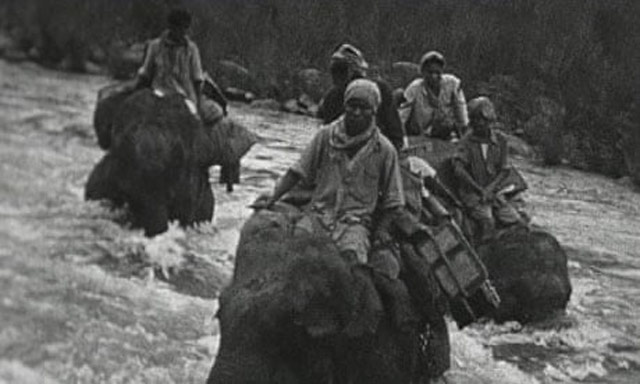
Elephants rescuing refugees in Burma, 10 June 1942 worldwartwo.filminspector.com
A still from a film taken by Gyles Mackrell, the tea planter who used elephants to save refugees in Burma. (Source: Cambridge University/PA).

Eastern Front: Army Group South begins Operation Wilhelm, a short envelopment across the Donets River east of Kharkov, on 10 June 1942. This is not the opening of the main summer offensive, but just a preliminary attack to improve the launching pad for Case Blue. The offensive launches in rainy weather when III Panzer Corps captures two bridges across the Burluk River and turns upstream. The VIII Corps attacks north of Volchansk, taking three bridges on the Donets and bypassing Volchansk on the northeast.

While Army Group South commander Field Marshal Fedor von Bock calls the day's results "gratifying" and General Halder notes the attack has "started off well," the rain slows down the tanks and disrupts the tight timeline. Only the infantry keeps trudging along. The plan is for Sixth Army's VIII Corps to turn south once east of Volchansk to meet First Panzer Army's III Panzer Corps heading up from the south. Speed is of the essence, both because this is only one of a sequence of operations on the docket that all depend on each other's success and because the Germans want to trap the Soviet 28th Army west of the pincers before it can escape to the east.

Meanwhile, General Erich von Manstein's siege of Sevastopol continues to stumble. The Red Army forces in the port launch a counterattack today that is stopped with the heavy assistance of the Luftwaffe dropping anti-personnel bombs on them. No Axis progress at all is made in the south, where the 30th Corps is stopped by the 109th Rifle Division. Soviet defenses on the Sapun Ridge (Sapun-gora) prove highly resistant to Axis attacks. The German bright spot is in the north, where the 132d Infantry Division clears the Haccius Ridge, while the Soviets hold the Maxim Gorky fort only due a fierce defense put up by the Soviet 1st Battalion of the 241st Rifle Regiment.

At Fuhrer Headquarters, General Halder has a lot to say today, mostly coming across as a pundit who has no personal stake or influence on what he is describing, like a football announcer who has no impact on what he is saying:
Notwithstanding heavy enemy counterattacks, good progress at Sevastopol. It appears that the enemy has moved artillery and infantry from the southern sector to the threatened northern sector; the attack tomorrow, therefore, is to be launched with maximum surprise.
In other words, the initiative is no longer completely in German hands. In any event, the whole campaign in Crimea is a sideshow and is not expected to have a significant effect on the larger war.

The stress is getting to  Luftwaffe commander General Wolfram von Richthofen. He becomes obsessed that there will be "friendly fire" incidents on Kriegsmarine ships and submarines. The commander of the German Black Sea Fleet (Admiral Schwarzes Meer) Vice-Admiral Friedrich Götting obligingly orders ships to sport prominent large Swastika flags as identification.

However, this good-faith gesture does not mollify Richtofen. Konteradmiral (Rear-Admiral) Robert Eyssen then sends Götting a message:
As it is impossible always to be informed if and when submarines and light forces of the German and Italian navies are in Crimean waters, Commanding General, 8th Air Corps [von Richthofen], has given orders prohibiting his planes from making any attacks whatsoever on any submarines or light forces, including Russian vessels in the entire Black Sea.
This is a strange situation, as there haven't been any friendly-fire incidents involving the ships. It leaves everyone but Richthofen shaking their heads. Götting is confused and exclaims:
There is no valid reason why these air attacks on submarines and light forces should be prohibited in the whole Black Sea area, as at present the German and Italian E-boats and submarines are only operating in the Crimean area.
Working behind von Richthofen's back, Götting then has Eyssen discreetly talk the matter over with the commander of Luftwaffe planes operating out to sea and not near Sevastopol where mistakes are likeliest, General Wolfgang von Wild. Eyssen and Von WIld privately agree that the prohibition makes no sense. Von Wild agrees to disobey this clear order and continue air attacks at sea (which the Kriegsmarine wants) outside of a small zone near Sevastopol.

This is a classic case of how these types of matters are handled in the Wehrmacht, technically insubordinate but just adapting to reality. It happens more and more as the war goes on, Wehrmacht fortunes deteriorate, and the German situation does not match up with Adolf Hitler's perception of reality.
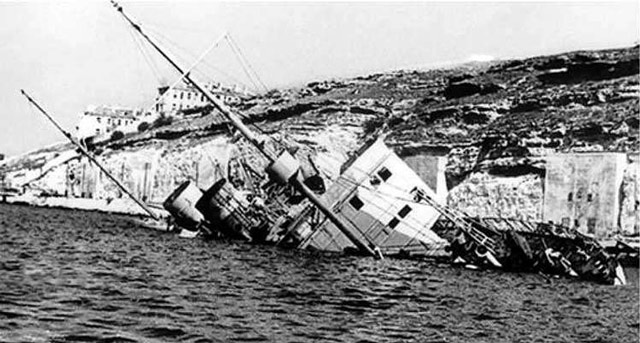
Sunken Soviet ship at Sevastopol, 10 June 1942 worldwartwo.filminspector.com
Abkhaziya after the 10 June 1942 Luftwaffe attack.

Luftwaffe Junkers Ju-88 bombers catch Soviet passenger/ cargo ship Abkhaziya at port in Sevastopol and sink it. Eight people lose their lives. The ship is raised after the war and broken up. The bombers also sink Soviet destroyer Svobodny (or Svobodney) at the south bay at Sevastopol. Svobodny has a crew of 271, but casualties are unknown.

Operation Kreml, a Wehrmacht deception campaign, shifts into high gear today. Army, corps, and division staffs begin holding meetings to discuss resuming the offensive toward Moscow by 1 August. The Luftwaffe also increases reconnaissance flights over Moscow and surrounding areas. Only the top people such as chiefs of staff and branch chiefs know the entire concept of an offensive toward Moscow is a complete sham and that the true orientation of the summer offensive is toward Stalingrad.

Operation Wilhelm, a Sixth Army operation near Izyum, begins today. It is a shallow pincer movement across the Burluk River intended to trap Soviet forces and set the stage for Case Blau. This minor local offensive is sometimes grandly styled as the beginning of the German summer offensive, but it is more a local, preliminary operation to secure a better launching pad for the main offensive. The operational plan is for VIII Corps in the north (south of Belgorod) to meet up with III Panzer Corps (east of Chuguyev/Kharkov) near Belyy Kolodez.  A quick look at the map shows that the  Germans have further to travel north and south than to the east, giving the Soviet forces plenty of time to escape the jaws of the pincer - which is exactly what happens.
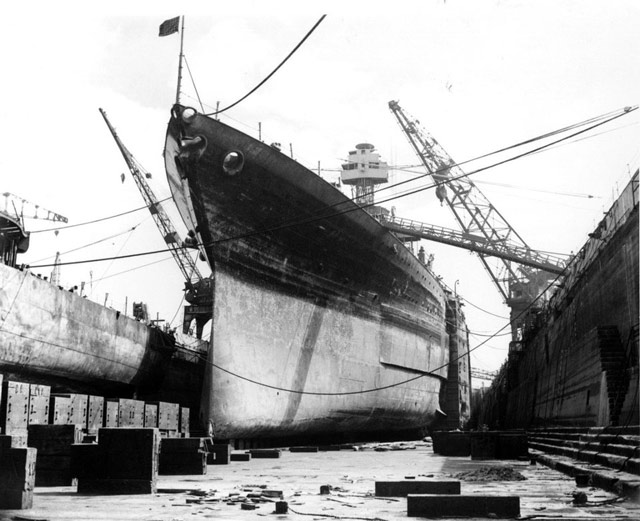
USS West Virginia at Pearl Harbor, 10 June 1942 worldwartwo.filminspector.com
USS West Virginia (BB-48) is shown still in a Pearl Harbor drydock getting its damage from the 7 December 1941 raid repaired. Photo was taken 10 June 1942. In a few months, it will sail to Puget Sound Naval Shipyard for permanent repairs. (US Navy). 

Battle of the Pacific: The Imperial Japanese Navy today reports the results of the Battle of Midway to the military liaison conference in deliberately vague terms in order to not lose face after its staggering losses there. Admiral Chūichi Nagumo is not present and will not submit a detailed report until 15 June. The main Japanese goal now is to hide the results of the defeat as completely as possible, and elaborate steps are planned to do this once the fleet returns to Japan.

As part of this deception campaign, Tokyo radio today grandly announces the unopposed occupation of Attu and Kiska in the Aleutians as a "great victory." US Patrol Wing 4 is flying patrols over the two islands and now knows that they are occupied, but this silly broadcast could have given the US significant information under slightly different circumstances. In any event, this is an example of the blatant propaganda of World War II. Just to be fair, the Allies sometimes hide their own losses as long as possible, too (see, for example, the sinking of HMS Barham, sunk on 25 November 1941), but this takes disinformation that is not outright lying (what is broadcast is reasonably accurate, it's just the emphasis and omissions that make this pure deception) to another level.

Some practical steps based on the failed tactics of the battle are taken. From now on, returning planes will be refueled and re-armed on the flight deck rather than taken below to the hangars. All unused fuel lines are to be drained in order to reduce the chance of catastrophic fires. New carrier designs are prepared to incorporate only two flight deck elevators, which proved to be a severe vulnerability of the old designs. Enhanced training in damage control and firefighting is mandated, but this is commonly seen as "unheroic" and instituted more in theory than actual practice. 

The Japanese reaction is understandable and does contain some good ideas, but the Japanese economy cannot replace the losses with nearly the capability of US industry. It is a classic case of "shutting the barn door after the horses have escaped." Training of replacement pilots must be accelerated, and this causes a drop in quality right when USAAF pilots are benefiting from their combat experience. The experienced crews, meanwhile, become overworked and dispirited, adding to the problems. The ships can and will be replaced, but the veteran pilots cannot.

The Japanese practice of mistreating prisoners that has permeated the war in the Pacific to date continues. While the Japanese attempt to cover their tracks carefully, they savagely execute the three U.S. Navy airmen taken prisoner during the battle in medieval style. Two are killed by tieing them to water-filled gasoline cans and then throwing them overboard.

Fifth Air Force raids Rabaul, bombing airfields and buildings.

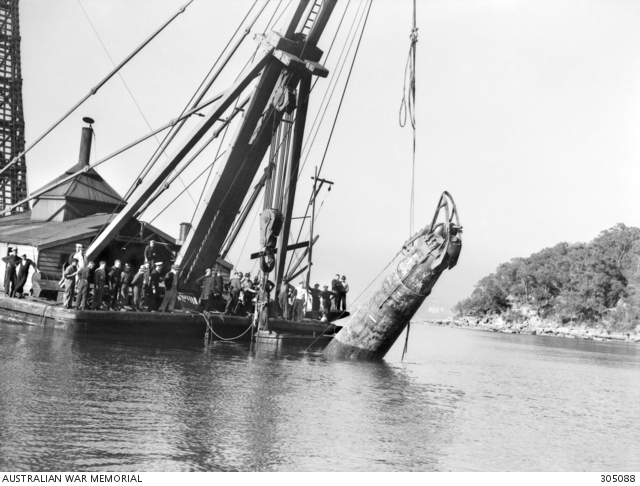
In Sydney Harbour, Australian authorities use a crane to raise mini-submarine M-21 from the depths. Four Japanese crew members of the submarines are cremated and buried today with full naval honors at the Eastern Suburbs Crematorium.

Convoy OC 1, the first from Melbourne to Newcastle, begins today. This is part of tightened control over commercial sea traffic around Australia as a result of the Japanese attacks at Sydney Harbour and elsewhere.
USRaising a sunken Japanese mini-submarine at Sydney Harbor, 10 June 1942 worldwartwo.filminspector.com
A floating crane raising mini-submarine No. 21 in Sydney Harbour, 10 June 1942. Source: Australian War Memorial 30588.

Battle of the Indian Ocean: Gyles Mackrell, a 53-year-old British tea exporter in the Indian provinces of Assam, uses about 20 elephants with Indian drivers to rescue at least 68 Burmese refugees (his own claim in his diary) or perhaps over 200 people (modern scholarship) fleeing the Japanese invaders across the treacherous Daphna River (swollen by monsoon rains) to India. Some are trapped on an island in the middle of the river that later washes away after the rescue. The elephants must walk more than 100 miles to even reach the river. The operation continues through the summer in spite of an order from British authorities to end it. Mackrell becomes known as "The Elephant Man" and is awarded the George Medal.

European Air Operations: The weather is 7/10th Cumulus clouds at 1500 feet (meters), so missions for the day are mostly scrubbed. The pilots spend the day watching combat films by Station Intelligence and the men find other ways to occupy themselves.
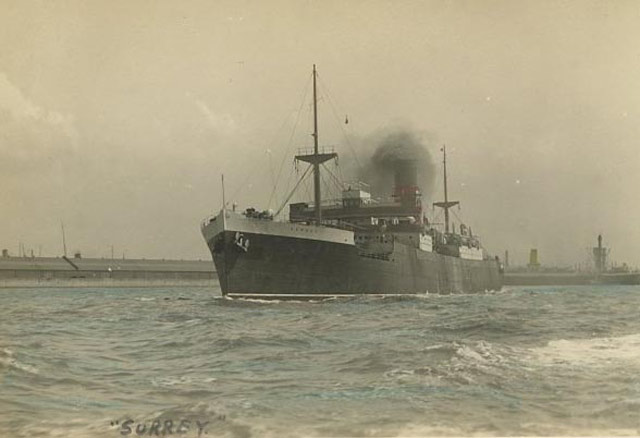
SS Surrey, sunk by U-68 on 10 June 1942 worldwartwo.filminspector.com
SS Surrey, sunk by U-68 on 10 June 1942, under way.

Battle of the Atlantic: U-68 (KrvKpt. Karl-Friedrich Merten), on its fourth patrol out of Lorient, torpedoes and sinks three British freighters, 8581-ton Surrey, 5025-ton Ardenvohr, and 5882-ton Port Montreal, all northeast of the Panama Canal.

In the first action, Merten fires three torpedoes at Surrey, two of which hit, and one at Ardenvohr. Of the two ships, Ardenvohr sinks quicker, within about eight minutes. About 45 minutes after the first strikes on Ardenvohr, Merten fires a coup de grâce that fails to explode, and then a second that does. There is an unusual incident when Merten picks up a British seaman from Surrey found clinging to a buoy to rescue him, then finds a lifeboat and lets the man join his crewmates. There are a dozen dead and 55 survivors of Surrey and one dead and 70 survivors from Ardenvohr.

Five or six hours later, Merten spots Port Montreal about 178 miles north of Cristobal, Panama. The ship's crew also spots U-68, but it is too late. As it turns to run, the freighter is hit by a torpedo in the stern and this causes it to sink fast. Merten describes it in his personal war diary as a lucky hit. It may have been luckier than that for the ship's crew, because Port Montreal is carrying 7500 tons of ammunition that could have created quite an explosion if the ship had been hit broadside. There are two dead and 86 survivors, who are picked up on 16 June by Colombian schooner Hiloa.

U-94 (Oblt. Otto Ites), on its ninth patrol out of St. Nazaire, also makes a convoy attack and hits multiple ships, this time southeast of Cape Farewell. All three torpedoes strike, though it is unclear which ship got hit twice. In any event, both ships sink. The victims are two British freighters, 4855-ton Ramsay and 6147-ton Empire Clough. There are eight survivors and 40 dead on Ramsay and five dead and 44 survivors on Empire Clough. Survivors of the ships are picked up by Portuguese trawler Argus, escort destroyer HMS Vervain (K 190), and the escort destroyer HMS Dianthus (K 95).
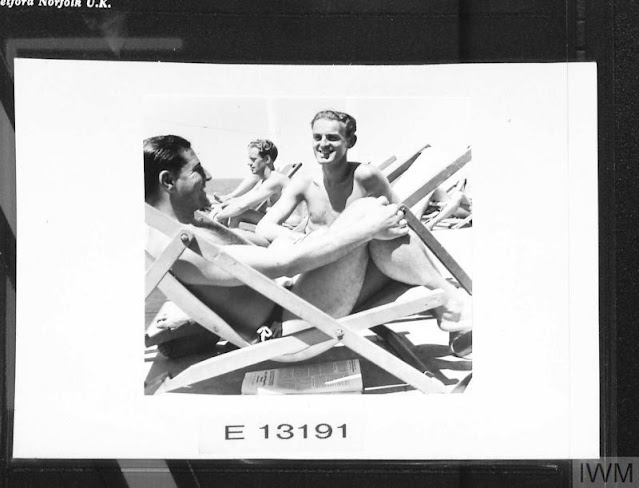
Allied soldiers enjoying a day at the club in Beirut  on 10 June 1942 worldwartwo.filminspector.com
"Original wartime caption: The British swimming club at Beirut is a popular rendezvous for both Free French and British forces." 10 June 1942. © IWM E 13191.

U-129 (Kptlt. Hans-Ludwig Witt), on its fifth patrol out of Lorient, torpedoes and sinks 4362-ton Norwegian freighter L.A. Christensen well east of Miami while en route from Durban to Philadelphia. The ship sinks within 12 minutes, but the crew has enough time to launch the lifeboats and all 31 crewmen survive. They are picked up after 12 hours by Norwegian freighter Bill. This is the first victory in a very successful cruise by U-129 during which it sinks over 40,000 tons of shipping.

U-107 (Kptlt. Harald Gelhaus) is usually credited with the sinking of 2606-ton US freighter Merrimack about 60 miles from Cozumel Island, Mexico. I have my doubts, because my records show that U-107 is in between patrols on 10 June 1942, but it's possible. More likely in my view is that an unidentified Italian submarine did the deed. Anyway, most of the crew abandons ship in one overcrowded lifeboat (the other is destroyed by the explosion). Unfortunately, all in the boat perish when it is sucked into the freighter's still-spinning propeller. Other men, including the master, simply jump overboard and make it to rafts. This proves to be the more successful strategy. Overall, 31 crewmen survive and 43 perish, with the lucky men in the water spotted by a PBY Catalina and picked up by USS Borie (DD 215).

Speaking of Italian submarines, Leonardo da Vinci uses its deck gun and a torpedo to sink 5483-ton Dutch freighter Alioth the ship is en route from Birkenhead to Capetown. I can't find a more precise location, but Italian submarines tend to operate south of the Mediterranean and often in the general vicinity of Sierra Leone. I'm guessing this was near Freetown. Everybody survives. This sinking is sometimes listed as occurring on 11 June 1942. Italian submarine captain records tend to be much spottier than their more precise and detailed Kriegsmarine counterparts.

Soviet submarine D-3 ("Krasnovgardeyets") mysteriously sinks with all hands in Varangerfjord, Norway (at the most northeastern portion of Norway, north of Finland). One theory is that the submarine hit a mine.

Norwegian 6049-ton freighter Haugarland hits a mine and sinks in the North Sea off Terschelling, Netherlands. The ship takes a day to sink, so this is usually listed as occurring on 11 June 1942.

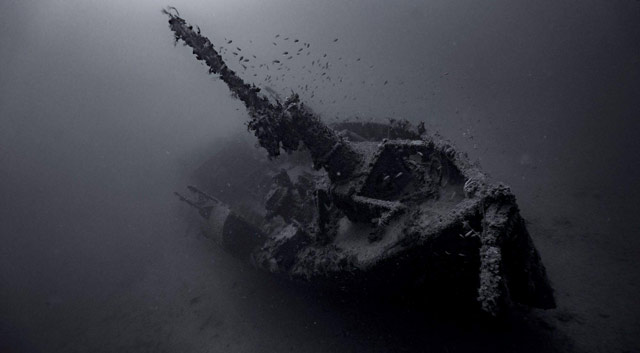
Royal Navy 96-ton drifter Groundswell, being used as minesweeper under the name Trusty Star, either hits a mine and sinks off Malta or is sunk there in an air raid. Either way, casualties are unknown.
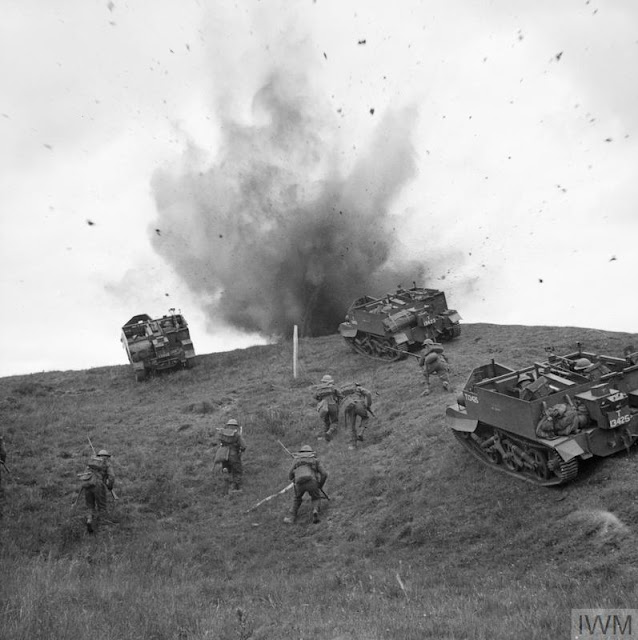
British Army war maneuvers near Sudbury on 10 June 1942 worldwartwo.filminspector.com
"Universal carriers and infantry of 10th Battalion, Royal Berkshire Regiment advance 'under fire' during training near Sudbury in Suffolk, 10 June 1942." © IWM H 20536

Battle of the Mediterranean: Fierce air battles continue above the fortress of Bir Hakeim, with the RAF's Desert Air Force flying more slightly more sorties than the Axis but also losing more planes. The Free French at Bir Hakeim begin retreating in small groups from Bir Hakeim during the early morning hours but continue to maintain the defense of the fortress throughout the day. The French are almost out of ammunition but manage to hold their lines against a determined Afrika Korps attack in the north. The Messmer and Lamaze units counterattack to restore the line, supported by Bren Gun Carriers, but expend their last mortar rounds during the day. The French are reduced to searching the corpses of their comrades for rifle ammunition.

After dark, the French send sappers to clear mines from the western side of the fortress to open an escape route and General Kœnig drives out around 20:30 in a Ford ambulance driven by Susan Travers, the only (unofficial at this time) female member of the French Foreign Legion who is assigned tot he medical detail. Kœnig and Travers barely make it out in their bullet-ridden vehicle. A small force of the Foreign Legion remains behind at the fort to disguise the retreat.

The Axis troops quickly get wind of this retreat and send up a flare, showing the column of French vehicles heading west and south. The 90th Light Division tries to block the road, but Kœnig orders the column to blast through, which it does during a wild mêlée in the dark. British troops of the 550 Company Royal Army Service Corps (RASC), escorted by the 2nd King's Royal Rifle Corps (KRRC) and the 2nd Rifle Brigade, assist the breakout from the south. Despite suffering many casualties, including the day's hero, Lamaze, Capitaine Charles Bricogne, and Lieutenant Dewey, most of the French manage to escape to British lines at Bir el Gubi. Foreign Legion commander Amilakhvari performs the sacrificial duty of remaining in command of a skeleton force holding out in the fortress.

Everyone with a map can see that Tobruk is in danger, so the British ramp up their supply activities to the port. That leads to a great deal of activity along the convoy route and some Allied losses today.

U-559 (Kptlt. Hans Heidtmann), on its eighth patrol out of Salamis, attacks two ships in Convoy AT-49 heading to Tobruk. At 04:56, Heidtmann attacks the convoy by firing three torpedoes and reports hits on a tanker and freighter. The former is 4681-ton Norwegian tanker Athene, which blazes for a full day before sinking due to its cargo of 600 tons of aviation fuel. There are 14 dead and 17 survivors. The latter ship is 5917-ton British oiler Brambleleaf, whose crew abandons ship and are picked up by RHS Vasilissa Olga (D 15) (seven dead and 53 survivors). Brambleleaf is towed to Alexandria, where it is used as an oil hulk until it suddenly sinks on 15 September 1944.

U-81 (Kptlt. Friedrich Guggenberger), on its seventh patrol out of Salamis, torpedoes and sinks 2073-ton British freighter Havre in the same Tobruk convoy. There are 20 dead and 30 survivors, who are picked up by British armed trawler HMS Parktown.

Operation Harpoon, another complicated convoy operation with British ships sailing from both ends of the Mediterranean to resupply Malta and British forces in Egypt, begins today. It is under the command of Admiral Vian on the Alexandria side and Admiral Curteis on the Gibraltar side. Some freighter sail independently, depending on the convoys to distract the Axis defenses.
HMS Trusty Star, sunk on 10 June 1942 worldwartwo.filminspector.com
HMS Trusty Star, sunk 10 June 1942, on the seafloor. Source: Gration, Dave, Heritage Malta.  

Partisans: German and Ustaše authorities begin the Kozara Offensive, an attack against partisan forces around the mountain of Kozara in the former Yugoslavia. The Germans supply 15,000 soldiers and the Independent State of Croatia over 20,000. The Hungarians supply five monitor ships.

As with most anti-partisan operations, the Kozara Offensive suffers from the difficulty of telling actual partisans from ordinary civilians. The mountainous, forested terrain also gives the defenders ample opportunities to take potshots at the advancing Axis forces from concealment. This leads to several times as many casualties on the Axis side. The partisan forces concentrate their units in the city of Široka Luka, with a major formation led by Josip Broz Tito. The Axis troops take many captives, but it is difficult to tell the partisans and civilians apart and the Germans wind up shipping them from Kozara to Sajmište concentration camp.

Applied Science: The US Navy establishes Project Sail at NAS Quonset Point, Rhode Island. This program will perform airborne testing of Magnetic Anomaly Detection (MAD) and other advanced projects such as 10 cm radar.

US/Soviet Relations: Soviet Foreign Minister Molotov is in Washington, D.C., as the Allies attempt to iron over some differences in strategy. Stalin wanted an invasion of northwestern Europe in 1941, and Molotov now presses home the urgent need for one in 1942. However, President Franklin Roosevelt fobs him off with vague phrases and unenforceable "wishes" and "hopes" that it might happen. In fact, Roosevelt knows that the Joint Chiefs of Staff have no plans whatsoever for an invasion of France in 1942. Instead, they are beginning to look at North Africa as the place to start. As a sign of good faith and comity among allies despite their other disagreements, Secretary of State Cordell Hull and  Foreign Minister Maxim Litvinov jointly sign a new Lend-Lease Agreement.

US Military: The second contingent of the 1st Armored Division arrives at Belfast on passenger ship Oriente. The division still does not have its full complement of tanks. Other soldiers from the 141st Armored Signals Company arrive on Dutchess of York, and the 47th Armored Medical Battalion arrives on SS North King.

German Military: Bernhard Woldenga, Geschwaderkommodore of JG 27, is promoted to a staff posting. The Luftwaffe often does this with officer pilots who are considered too valuable to lose in combat (Adolf Galland is the best example of this) or too vulnerable to keep flying for some reason. Woldenga is ill, so this case is probably the latter reason. Replacing him is Major Eduard Neumann replaces Woldenga, Hptm. Gerhard Homuth replaces Neumann as Gruppenkommandeur of I./JG 27, and Oblt. Hans-Joachim Marseilles replaces Homuth as Staffelkapitaen of 3./JG 27. This is quite a change of fate for Marseilles, who began his Luftwaffe career as a virtual outcast due to his unorthodox ways.
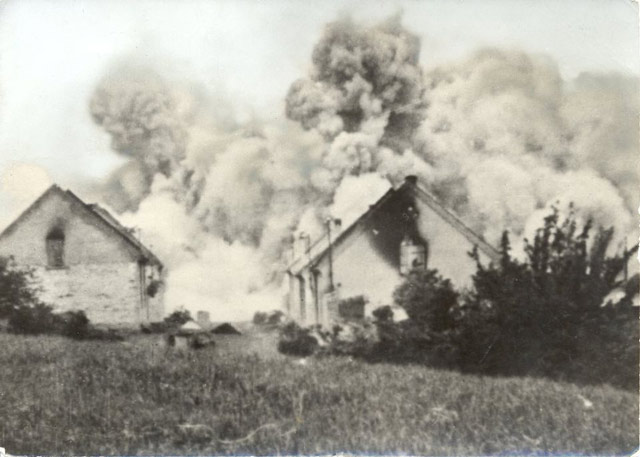
Germans destroy Lidice on 10 June 1942 worldwartwo.filminspector.com
German occupation authorities blow up the town of Lidice, 10 June 1942. Source: Lidice Memorial.

German Homefront: Having decided for spurious reasons that the Czech village of Lidice (20 km west of Prague) harbored the assassins of Reinhard Heydrich, the local authorities destroy the town. The operation is savage and permanent. The town has 503 residents and all who are found are disposed of in some fashion. 

The Germans arrive right after midnight and herd all the villagers into the main square. The Germans shoot all 173-199 men aged 14 to 84 that they find at a local farmhouse and send 195 women to Ravensbrück concentration camp (four pregnant women are forced to have abortions and then are sent to the camp). Women who refuse to leave their husbands are shot with them. The women are not told what happened to their husbands. The Germans make a point of tracking down village residents who happen to be out of town that day and kill them, too. The authorities then destroy every building and even dig up the town cemetery. 

The men are stood in long rows and there they fall. The photos show them laid out in eerily precise order in rows outside the farmhouse awaiting burial. Inmates at local concentration camp Terezin are made to dig mass graves for the victims.

Of the 95 children in Lidice, 81 are sent to Chelmno extermination camp in Łódź, Poland, to die, while eight or nine who have Germanic features are adopted by German families after first being brought to Puschkau, Poland, to learn German ways. In all, only 17 children survive the war. One of them, Václav Zelenka, later becomes mayor of the rebuilt town of Lidice.

The Germans carefully the results of the operation. They show it proudly widely to illustrate to anyone thinking of challenging their rule what might happen to their homes, too. It becomes worldwide news and helps harden hearts against the Third Reich.

The Germans also plan to destroy the smaller Czech village of Ležáky, which actually does have a connection to the Allies as evidenced by a forbidden radio transmitter belonging to Operation Silver A, a three-man Czech squad trained and inserted by the British SOE and RAF that is separate from, but assisted, Operation Anthropoid (the mission to assassinate Heydrich). All adults in Ležáky are to be killed and the leader of Silver A, Alfréd Bartoš, commits suicide.

The two agents who assassinated Heydrich, Jozef Gabčík, Jan Kubiš, remain at large despite a massive German manhunt. They are being shuttled between safe houses provided by the Jindra group. Frustrated, the Germans have adopted a carrot-and-stick approach to this problem, offering a huge reward and threatening further savage reprisals if the men are not betrayed. This is being heard with receptive ears.
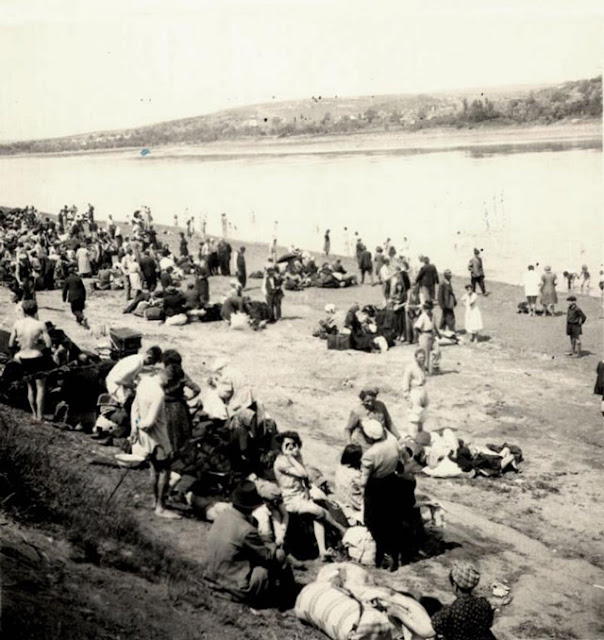
Jewish residents assembling at the Dneipr River for transport to concentration camps, 10 June 1942 worldwartwo.filminspector.com
Jewish inhabitants are assembled on the western bank of the Dneister River. They await deportation by Romanian authorities, who control the area based on ancient claims, to the Transnistria region across the river. Yad Vashem.

British Homefront: As announced in the King's Birthday Honours on 5 June 1942, economist John Maynard Keynes receives a hereditary peerage. He acquires the title "Baron Keynes, of Tilton, in the County of Sussex," and now is entitled to sit in the House of Lords on the Liberal Party benches.

American Homefront: Congress gives final approval to the "Big Inch" pipeline. This will transport crude oil from its production site in Texas to the northeast. This has become necessary due to U-boat successes against tankers along the east coast of the United States.

Future History: Gordon Henry Burns is born in Belfast, Northern Ireland. He becomes a popular Northern Irish journalist and broadcaster. Notable jobs include serving as the host of "The Krypton Factor" from 1977-1995 and serving as the chief anchorman of the BBC regional news show "North West Tonight" from January 1997 to October 2011. Burns, who is the second cousin of popular British singer/songwriter Ed Sheeran, enters retirement in 2013.

Ernest Preston Manning is born in Edmonton, Alberta, Canada. He becomes a member of Parliament for Calgary Southwest in 1993 under the Reform Party and leads the party until it is abolished in 2000. He then switches to the Canadian Alliance from 2000 to 2003 and has been in the Conservative Party since 2003.
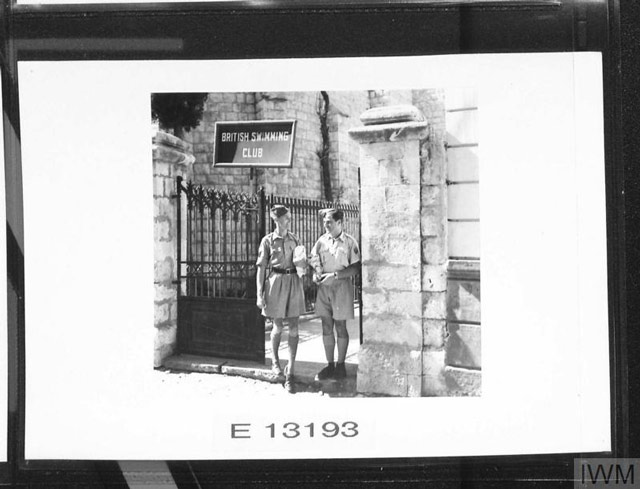
Allied soldiers at a swimming club in Beirut, Lebanon, 10 June 1942 worldwartwo.filminspector.com
"Original wartime caption: A British and Free French soldier set out in search of another diversion from the British Swimming Club." 10 June 1942. © IWM E 13193.

2021

Friday, November 12, 2021

June 8, 1942: Japanese Submarines Shell Australia

Monday 8 June 1942

Italian submarine beached in Spain, 8 June 1942 worldwartwo.filminspector.com
Italian submarine Luigi Torelli lying beached near Santander, Spain, on 8 June 1942. The submarine commander beached it after suffering damage from Allied aircraft on 6 June 1942 using Leigh Lights. It is ultimately repaired and restored to service.

Battle of the Pacific: In a coordinated attack in the early morning hours of 8 June 1942, two Japanese submarines fire their 140 mm deck guns at Sydney and Newcastle, Australia. The purpose is more symbolic than militarily effective, but it certainly catches the attention of a lot of people.

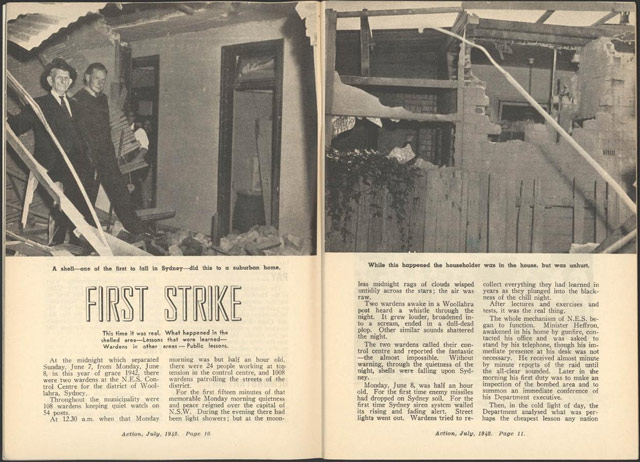
I-24 opens the attack by firing ten shells targeting the Sydney Harbour Bridge. They land in the suburbs of Bellevue Hill, Rose Bay, and Woollahra, with one shell landing in the harbor. One person is injured by falling masonry and debris even though only one of the ten shells explodes. There is no response from shore batteries due to the brevity of the attack.

Two hours later, Japanese submarine I-21 (Cdr Matsumura Kanji) shells the Australian city of Newcastle, New South Wales, on 8 June 1942 from a distance of 9 km (5.6 miles) northeast of Stockton Beach. The target this time is the BHP steelworks. It fires 34 shells, including 8 illumination rounds, but once again only one shell detonates. The attack does no significant damage, aside from destroying a house on Parnell Place. Fort On the alert due to the previous Sydney attack, Scratchley gunners respond with four shells but have little chance of scoring a hit on the submarine in the dark.

The only fatality from these attacks is a US Army Air Force pilot, Lieutenant Georg Cantello, who disobeys orders and takes off from Bankstown airport in a P-39 Aircobra to attack the submarines. He perishes when his plane crashes due to mechanical issues in Hammondville paddock. There is a memorial park, Lt. Cantello Reserve, in the City of Liverpool with a monument in his honor.

Japanese bombardment of Sydney, 8 June 1942 worldwartwo.filminspector.com
Australian "Action" magazine, the Official Journal of the National Emergency Services, has photos and a description of the 8 June 1942 shelling of Sydney in its July issue.

In response to the Japanese offensive in Australian waters that began with the attack on Sydney Harbour on 31 May 1942, the Australian government begins convoy operations on the east coast. Today, the first one, Convoy CO 1, departs from Newcastle bound for Whyalla.

The crew of a US Navy PBY-5A Catalina based at Dutch Harbor, Unalaska Island, spots two destroyers and four transport ships in Kiska Harbor. The crew then fly on to Attu and spot the Japanese presence there, too. This is the first news that the Japanese have invaded Alaska. An LB-30 of 11th Air Force also spots the Japanese.

In Hawaii, Admiral Chester Nimitz has ordered USS Enterprise and Hornet, now free due to the victory at Midway, to sail north to the Aleutian Islands in response to the attacks on Dutch Harbor. However, he quickly countermands this order when informed of the invasions at Attu and Kiska, fearing attacks on his carriers by land-based aircraft. The Japanese, meanwhile, are digging in on the islands and building airfields. Admiral Frank Fletcher, now aboard the aircraft carrier USS Saratoga, resumes command of the three-carrier task force northwest of Hawaii from Raymond Spruance. His carriers and the 11th Air Force in Alaska search for the remaining Japanese fleet but the planes spot only open water.

General Douglas MacArthur, Supreme Commander of Allied Forces in the Southwest Pacific Area (SWPA) in Melbourne, submits his first proposal for an Allied counteroffensive in the Pacific. He lists New Guinea, New Ireland, and New Britain as the initial objectives. It receives immediate opposition from Admiral Ernest King, Commander in Chief, United States Fleet (COMINCH), and Chief of Naval Operations (CNO), who, among other objections, does not like the idea of an Army general commanding an amphibious force. Negotiations over a compromise plan begin shortly. Another issue is that the Japanese remain on the offensive despite their recent defeat at Midway and that will affect operational choices.

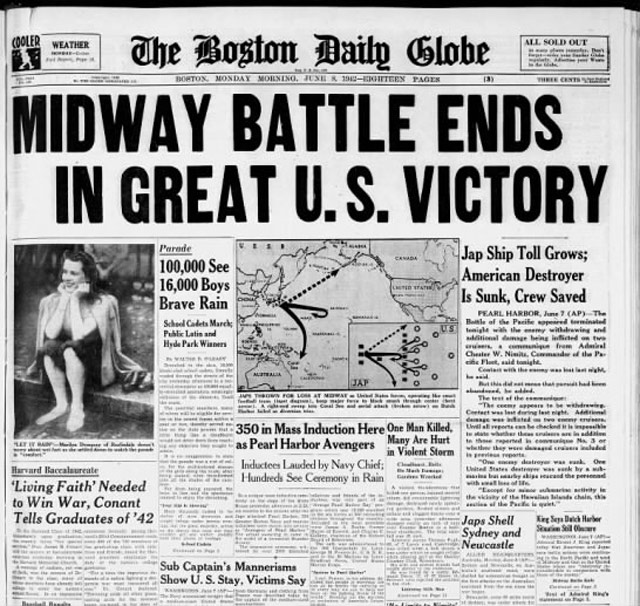
The Boston Daily Globe, 8 June 1942 worldwartwo.filminspector.com
The Boston Daily Globe of 8 June 1942 is full of cheery news about the US victory at the Battle of Midway. The very careful wartime manipulation of war news is evident in the header "American Destroyer Is Sunk, Crew Saved." That is absolutely true, but there is no mention of the far more consequential sinking of the USS Yorktown. 

Battle of the Indian Ocean: Japanese submarine I-16 uses its deck gun to sink 4847-ton Greek freighter Aghios Georgios IV between Aden and Table Bay in the Mozambique Channel. There are seven deaths.

I-20 torpeoes and sinks 5209-ton Greek freighter Christos Markettos off Mombassa. There are two deaths.

I-10 (Cdr Otani) torpedoes and sinks 5224-ton British freighter King Lud in the Mozambique Channel 350 miles east of Beira. All 39 people on board perish. This is I-10's third victory in the vicinity.

I-10 also uses its deck gun to sink 2158-ton Norwegian freighter Wilford in the Mozambique Channel in the same general vicinity east of Beira. There are nine deaths. Some sources place this sinking on 7 June 1942.

Norwegian freighter Wilton, sunk on 8 June 1942 worldwartwo.filminspector.com
Norwegian freighter Wilford, sunk by I-10 in the Mozambique Channel on 8 June 1942.

Eastern Front: German General Erich von Manstein's 11th Army continues its attack on Sevastopol in Crimea but makes little progress. Soviet counterattacks also fail, leading to a virtual stalemate. The German LIV Corps, aided by strong artillery fire and furious Luftwaffe attacks, do make some progress in the northern sector where the largest artillery batteries are located. Already the corps has lost 1700 casualties in exchange for a shallow bulge into the Red Army lines that is 3 km deep and 5 km wide. German 30 Corps in the south has suffered 496 casualties for minor penetrations into the out Soviet defensive line.

There are fierce dogfights over Sevastopol, with both sides represented by veteran ace fighter pilots. The Luftwaffe gets the better of the encounters. Lt. Ludwig-Wilhelm Burckhardt of 6./JG 77 downs 2 Soviet fighters and Oblt. Anton Hackl of 5./JG 77 destroys three Russian planes to bring his score to 57 victories. Hptm. Kurt Ubben of Stab III./JG 77 brings his score to 70 victories after he downs a Russian fighter.

There is growing frustration in Manstein's headquarters with the pace of the offensive. Luftwaffe General Wolfram von Richtofen observes that his planes fly 1200 sorties during the day without achieving much and lamely explains, "We hope gradually to beat down the enemy by mass bombing."  He complains that flying so many missions is 'extremely strenuous." Conditions are made worse on both men and equipment by sweltering  105° Fahrenheit (40° Celsius) heat.

At Fuhrer Headquarters in East Prussia, General Halder is okay with the progress, but there is a hint of concern in his diary entry:
Assault of Sevastopol makes satisfactory progress on the first day against stiff opposition; high ammunition expenditures and severe losses. All other fronts quiet. Successful counterattacks at Kirishi.  
Kirishi, meanwhile is a town 115 kilometers (71 mi) southeast of St. Petersburg on the Volkhov River that defends Lyuban. The front has stayed stagnant there since the fall of 1941, a sign of the stalled German offensive into the USSR.

European Air Operations: The weather remains unsettled throughout the day, getting worse as time goes by. During RAF air patrols along the continent coast, they sink 7003-ton German patrol boat Sperrbrecher 15 Taronga off Scharhörn. The ship makes port but is a complete loss and written off.
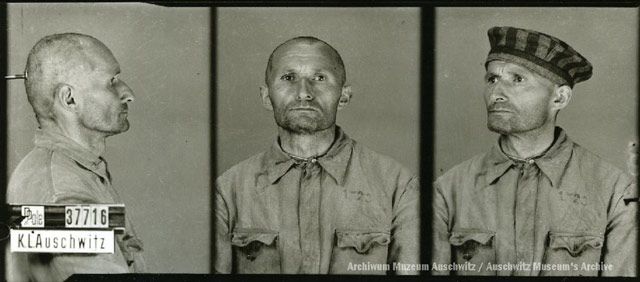
Auschwitz victim executed on 8 June 1942 worldwartwo.filminspector.com
Polish teacher Władysław Dobija, executed at Auschwitz on 8 June 1942 (Auschwitz Memorial). 

Battle of the Atlantic: U-135 (Kptlt. Friedrich-Hermann Praetorius), on its third patrol out of Brest, torpedoes and sinks 4549-ton Norwegian freighter Pleasantville 200 miles northwest of Bermuda. There are two dead and 45 survivors, 10 of whom who are picked up about 24 hours later by freighter Chickasaw City while the remaining 35 are picked up by freighter Paderewski on 11 June.

U-504 (KrvKpt. Hans-Georg Friedrich Poske), on its third patrol out of Lorient, uses its deck gun to sink 3901-ton Honduran freighter Tela in the Gulf of Mexico near Rio Bravo. The ship sinks by the stern within five minutes There are 11 dead and 43 survivors, who abandon ship in two lifeboats and two rafts and are picked up twelve hours later by freighter Port of Montreal. Their adventure is not over, as U-68 sinks Port of Montreal in turn on 10 June 1942, during which two of the Tela survivors perish.

U-504 also uses its deck gun to sink 1512-ton British freighter Rosenborg in the same general area east of the Yucatan Peninsula. This is after Poske misses with two torpedoes. He must use 60 shots to sink the ship. There are four dead and 23 survivors, who are picked up by Norwegian freighter Geisha.

U-172 (Kptlt. Carl Emmermann), on its second patrol out of Lorient, torpedoes and sinks 1654-ton US freighter Sicilien 10 miles south of Cape Beata, Dominican Republic. There are 46 dead and 31 survivors, who get in rafts and make it to Barahona, Dominican Republic.

U-128 (Kptlt. Ulrich Heyse), on its third patrol out of Lorient, torpedoes and sinks 9234-ton Norwegian tanker South Africa 400 miles east of Trinidad. The ship breaks in two and sinks within two minutes. Survival is made difficult due to the tanker's full load of 9614 tons of lube distillate and 4146 tons of diesel oil. Heyse surfaces and points out a man in the water that the lifeboats then pick up, gives the men some cans of bread and two bottles of rum, and directs them toward land. There are six dead and 36 survivors in two lifeboats. The subsequent sequence of events almost defies belief. One lifeboat (14 men) is spotted by freighter Plaudit, but the men refuse rescue after getting some supplies because it is heading to Pernambuco on 12 June and sail on toward Trinidad. They then decline another rescue offer from sailing vessel Minnie M. Mosher before making landfall at Galara Light (Toko Bay) on 16 June. The other lifeboat (25 men) is spotted by tanker Acastra on 12 June, but the men also refuse rescue after taking on supplies because it is heading for Freetown. They also decline an offer on the 13th from Argentinian tanker 13 de Diciembre after taking on supplies. They are picked up by an American seaplane tender on 14 June 45 miles east of Trinidad.

U-107 torpedoes and sinks 3249-ton US freighter Suwied 140 miles southeast of Cozumel Island. the ship sinks within three minutes, preventing a distress call. There are six dead and 33 survivors, who are picked up by USCGC Nemesis (WPC 111) after 19 hours. Some sources place this sinking on 7 June 1942, where I also discuss this sinking.

British patrol boat HMT Catherine founders off Scapa Flow. Casualties are unknown.
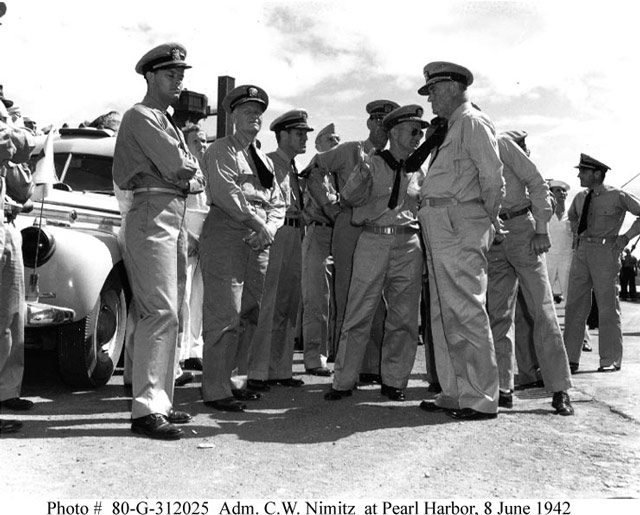
Admiral Chester Nimitz and his staff on 8 June 1942 worldwartwo.filminspector.com
Admiral Chester Nimitz (second from left) and his party await the arrival of survivors of USS Yorktown aboard Fulton (As-11), 8 June 1942. Also visible are Rear Admiral William L. Calhoun in the right front and Rear Admiral Lloyd J. Wiltse, of Nimitz' staff, in the center background (Naval History and Heritage Command 80-G-312025).

Battle of the Mediterranean: The situation in Libya remains unchanged today. The Germans continue their attack on the fortress of Bir Hakeim but make no progress, while the British 7th Motor Brigade and 29th Indian Infantry Brigade attempt raids on the Axis supply lines.

Time is on General Erwin Rommel's side because the Free French at Bir Hakeim cannot be resupplied and they are running low on everything. Today, Rommel personally leads an attack on the fortress from the north beginning at 10:00, supported by a massive Luftwaffe assault by 45 Ju 87 Stukas, 3 Junkers Ju 88 medium bombers, and ten Messerschmidt Me-110 fighter-bombers escorted by 54 Bf-109 fighters (3 losses two German and one Italian).

While the attack continues throughout the afternoon supported by another attack by 60 Stukas, the defenses hold. The British Desert Air Force (DAF) flies 478 sorties (8 fighter losses) during the day and drops supplies to the garrison after dark. The Italian Macchi C 202 fighters are particularly effective, shooting down three RAF planes.

In a friendly fire incident, the Italian submarine Alagi (Cdr Serio Puccini) spots a convoy 20 nautical miles north of Cape Bon, Tunisia. Captain Puccini assumes it is an Allied one, but it is a typical Axis convoy from Naples to Tripoli. Puccini fires three torpedoes and sinks 5085-ton Italian destroyer Antoniotto Usodimare. There are 141 killed and 165 survivors. This sinking is sometimes listed as occurring on 8 August 1942.

U-83 (Kptlt. Hans-Werner Kraus), on its eighth patrol out of Salamis, gets two victories today. First, it uses its deck gun to sink 100-ton Palestinian sailing ship Esther six miles northwest of Sidon, Lebanon. There are no survivors.

U-83 then uses its deck gun to sink 231-ton Egyptian freighter Said 15 miles southwest of Jaffa. This is after U-83 missed with two torpedoes, and it takes 50 rounds to sink the ship. There are five dead and nine survivors.
A US Naval blimp of the type involved in a fatal crash on 8 June 1942 worldwartwo.filminspector.com
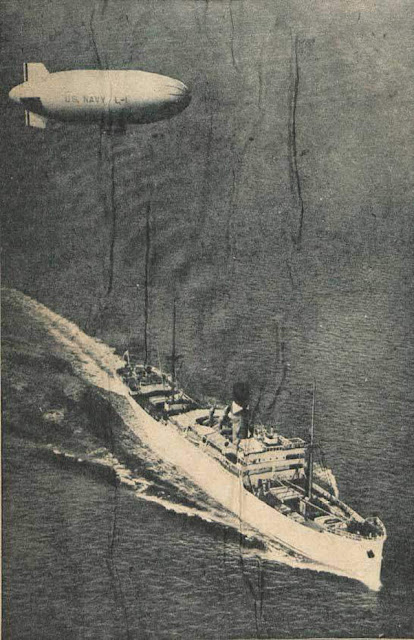
US Navy blimp L-1. This is of the same class as L-2, which crashed in a fatal accident on 8 June 1942. It is shown above Panamanian freighter Musa.

US/Soviet Relations:  Soviet Ambassador to the United States Maxim M. Litvinov informs Harry Hopkins that the Soviet Union is agreeable to the establishment of a Lend-Lease air corridor between Alaska and Siberia. Since Japan is not at war with the USSR, it could not interfere with such flights without instigating a conflict with the Soviets.

US Military: The European Theater of Operations, United States Army (ETOUSA) is formed by the Department of War, though it doesn't begin operation officially until 4 July 1942. Its organizational divisions are Army Ground Forces (AGF), United States Army Air Forces (USAAF), and Army Service Forces (ASF) operations north of Italy and the Mediterranean coast. It replaces United States Army Forces in the British Isles (USAFBI) and its first commander for a brief period of time is Maj. Gen. James E. Chaney. The AGF currently has the 34th Infantry Division in Northern Island, which has released British troops from duties by patrolling the border between British Northern Ireland and the neutral Irish Free State.

Brigadier General Howard C Davidson, commander of VII Fighter Command, is promoted to Commanding General, 7th Air Force.

Canadian Military: Royal Canadian Air Force's No. 111 (Fighter) Squadron flies its Curtiss P-40 Kittyhawk fighters to Elmendorf Field, Alaska. This is part of the RCAF effort to reinforce Allied defenses on its western flank.

German Homefront: Following the elaborate funeral of Reinhard Heydrich on 7 June 1942, the Prague authorities embark on vicious reprisals. The Gestapo, with little to go on, receives a spurious report that the small town of Lidice is the hiding place of Heydrich's assassins and plans an operation to destroy it. This report is based on nothing but the town's reputation as the home of some Czech army officers who are now in hiding in Great Britain. A radio transmitter belonging to the Silver A team (a three-man Allied infiltration team that supported Operation Anthropoid, the assassination of Heydrich) is found in the village of Ležáky and so it, too, is targeted. Heydrich's two assassins, Jozef Gabčík and Jan Kubiš, remain at large shuttling between safe houses in Prague. A second Heydrich funeral is scheduled for Berlin on 9 June.
Time magazine 8 June 1942 worldwartwo.filminspector.com
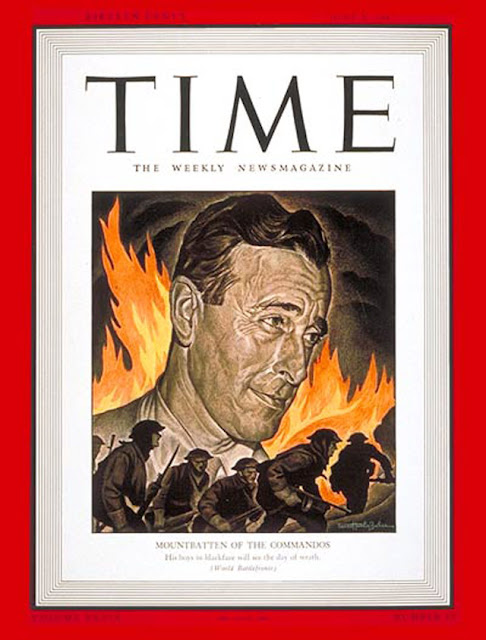
"Mountbatten of the Commandos" is on the cover of the 8 June 1942 Time magazine (cover credit: Ernest Hamlin Baker).

British Homefront: The Guardian publishes an editorial today noting increasingly harsh living conditions in the Reich "since last winter." Its main theme is that "since last autumn’s clear failure to “annihilate” the Russians, the German civilian front has been increasingly tired and dispirited." This reflects the wishful thinking of RAF Bomber Command led by General Arthur"Bomber" Harris, who believes that his forces can crush the Reich from the air by destroying its people's will to fight. In this sole and strict sense, the Allied bombing campaign is proving to be a massive failure, as people in Germany may be down but the bombing is not making them demand surrender as they did in 1918.

Naval airship G-1, involved in a fatal crash on 8 June 1942 worldwartwo.filminspector.com
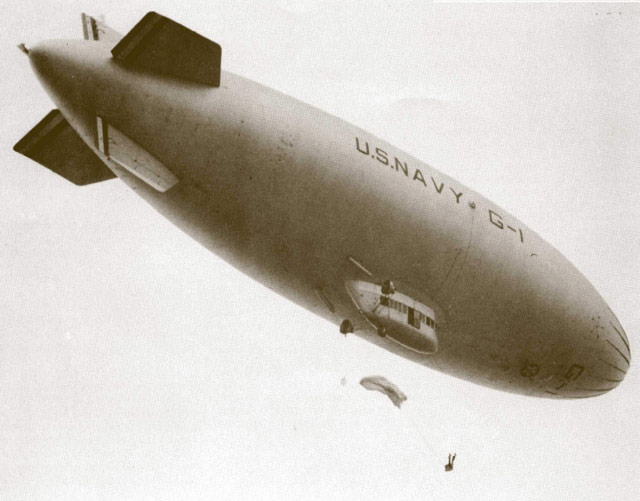
US Navy Airship G-1, involved in a fatal crash on 8 June 1942. It is shown dropping a parachutist.

American Homefront: During the night, two U.S. Navy airships (G-1 and L-2) collide five miles north of Manasquan, New Jersey, while performing experimental visual and photographic reconnaissance at 400 feet. Twelve men, naval personnel and civilian technicians, perish. The blimps fall into the sea and only the co-pilot of L-2, Ensign Howard Fahey, survives. Only three bodies are recovered.

Due to the victory at the Battle of Midway, the US government cancels the invasion alert for the West Coast.

Bing Crosby makes a new recording of "Silent Night," which he first recorded on 21 February 1935, for his holiday compilation album "Merry Christmas." This is one of four recordings Bing makes of the "Silent Night." One of the reasons Crosby keeps returning to the song is that the recordings are so popular that the music label, Decca, complains that repeated stampings quickly wear out the master tapes.

Model Jane Greer models women's uniforms in the 8 June 1942 issue of Life magazine (see below), posing in a "Nurse's Aide" uniform on the cover. Movie producer and inventor Howard Hughes spots her and decides to make her an actress. He signs her to a personal services contract, which was somewhat customary for actresses at the time but gave him inordinate control over her career which he fully exploited. This begins Greer's decades-long Hollywood acting career and a very turbulent relationship with Hughes wherein he alternately helps and hurts her career and personal relationships. Greer is best known for film noirs, particularly with RKO, such as "Out of the Past" (1947), "The Big Steal" (1949), "Run for the Sun" (1956), and "Man of a Thousand Faces" (1957). Greer passes away on 24 August 2001.

Future History: Peter Grimwade is born in Ayr, Ayrshire, Scotland, UK. he becomes a noted television director, particularly on the Doctor Who series in the early 1980s. He passes away on 15 May 1990.

Life magazine, 8 June 1942 worldwartwo.filminspector.com
Life magazine, 8 June 1942, features a "Nurse's Aid" on the cover. It is actually model Jane Greer, who parleys this break into a memorable acting career.


2021