Showing posts with label The Cauldron. Show all posts

Tuesday, October 12, 2021

June 5, 1942: Last Moments of Admiral Yamaguchi

Friday 5 June 1942

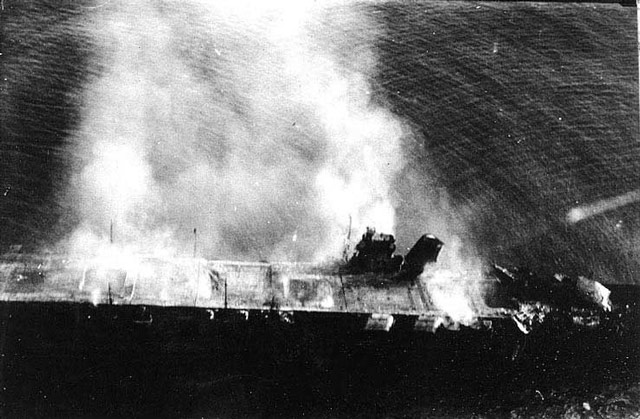
Hiryu sinking 5 June 1942 worldwartwo.filminspector.com
"Japanese aircraft carrier Hiryu ("Flying Dragon") burning shortly after sunrise on 5 June 1942, a few hours before she sank. Photographed by a plane from the carrier Hosho. Note collapsed flight deck at right. Part of the forward elevator is standing upright just in front of the island, where it had been thrown by an explosion in the hangar." It is Admiral Yamaguchi's funeral pyre. (US Naval History and Heritage Command NH 73064).

Battle of the Pacific: Admiral Chester Nimitz takes the unusual step of announcing the results of the Battle of Midway to the press on 5 June 1942 even as the battle continues. It is clear to everyone that this has been a complete debacle for the Japanese. It can only get worse for them now that the U.S. Navy has an overwhelming advantage due to the sinking of the four Japanese aircraft carriers.

Following the 4 June destruction of the four Japanese fleet carriers, Midway Island's defenders receive a vague report at 04:15 from the submarine USS Tambor (Cdr John Murphy), first sent to Hawaii, that the remaining Japanese fleet is approaching. Murphy later makes a half-hearted attack run on the ships, but misses. Upon receiving the report from Pearl, the island's defenders quickly launch eight B-17 bombers from Eastern Island, but the crews cannot spot anything in the early morning haze.

At 06:30, another report comes in from a Midway-based PBY Catalina that it has sighted "2 battleships" heading away from the island. A follow-up message says "Ships damaged, streaming oil." Marine Aircraft Group 22 then sends up two flights VMSB-24, six Dauntlesses (Capt. Marshall A. Tyler) and six Vought SB2U Vindicators (Captain Richard E. Fleming). The "battleships" turn out to be heavy cruisers Mikuma and Mogami. They are streaming oil because they collided during the night. The planes spot the oil slick, which allows them to zero in on the cruisers.

Admiral Yamaguchi's last moments 5 June 1942 worldwartwo.filminspector.com
"Last moments of Admiral Yamaguchi," war art painting by Kita Renzo. "Rear Admiral Tamon Yamaguchi, commander of the Japanese Carrier Striking Force's Carrier Division Two, elected to remain aboard his flagship Hiryu when she was abandoned during the early morning of 5 June 1942. He is depicted here in the middle of the scene as he bids farewell to his staff." Naval History and Heritage Command SC 301067


Tyler and his men attack Mogami but only score some near misses. Fleming then dives on Mikuma from out of the sun. Fleming does not survive - there is contradictory evidence whether his plane crashes into the Mikuma or the water nearby. The attack starts a fire that kills the men in Mikuma's engine room.

With the Mikuma crippled, eight B-17s (Lt. Col. Brooke Allen) then attack Mogami, but only score some near misses. Mikuma and Mogami ten head westward to escape, with Mikuma eventually sinking on the 6 June. Late in the day, Admiral Yamamoto orders all ships in the vicinity of Midway to retire. Japanese destroyers scuttle blazing carriers Hiryu and Akagi early in the day. The leader of the carrier force, Rear Admiral Tamon Yamaguchi, having lost his entire command, refuses to leave Hiryu and goes down with the ship.

For his heroism in leading the successful attack on Mikuma, U.S. Marine Richard Eugene Fleming will be posthumously awarded the Medal of Honor, the highest U.S. military decoration. President Franklin D. Roosevelt gives it to his mother on 24 November 1942.

To the northeast of Midway, Admiral Raymond Spruance, in charge of the combined task force 16 that includes aircraft carriers USS Enterprise and Hornet, seeks out but cannot find the Japanese surface fleet. Late in the day, he sends out scout planes, but they narrowly miss spotting Admiral Nagumo's main fleet. They do spot a destroyer and attack it, but miss. The planes return after dark, and the carrier crews must turn on their lights for the planes to land.

Spruance is extremely put out at the unacceptably vague report from submarine Tambor early in the day because it is vague and unhelpful. He also is upset at Commander Murphy for a lack of aggressiveness in not attacking the ships he spotted. He will have Murphy relieved of his command when Tambor returns to Pearl Harbor.
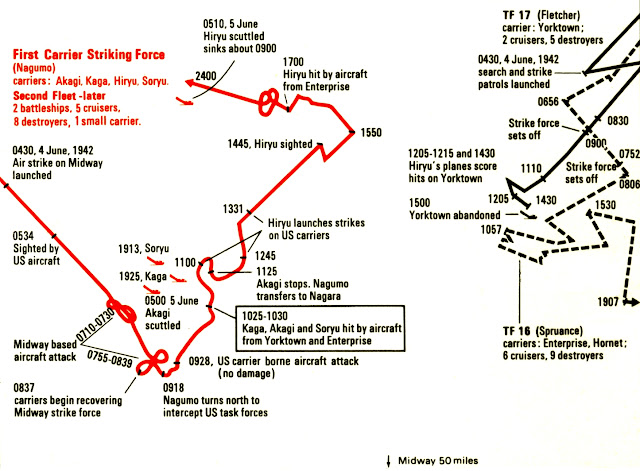
Map of Battle of Midway 5 June 1942 worldwartwo.filminspector.com
Map of the Battle of Midway 4-5 June 1942 (Onwar.com).

Rear Adm. Robert A. Theobald, in command of Task Force 8, which has been stationed uneventfully about 400 miles south of Kodiak Island in the Aleutians, receives a report of enemy warships in the Bering Sea. The report states that they are heading south toward Unalaska Island. Theobald sends his task force, which has no aircraft carriers, to investigate.

Intended U.S. air attacks using land-based bombers fail due to weather conditions. While six B-17 Flying Fortresses do report bombing enemy shipping, it turns out that in the hazy conditions they actually bomb some uninhabited islands (Pribilof Islands). While all these failed air attacks are going on, the Japanese order 1200 men of the Adak-Attu Occupation Force under Rear Admiral Omori Sentaro to proceed toward Attu for a landing on the 6th.

In reality, the Japanese force near the Aleutian Islands under the command of Vice Adm. Boshiro Hosogaya is moving south, but only to join Admiral Yamamoto's remaining fleet in the general vicinity of Midway Island. They are to join Yamamoto's forces in a desperate effort to lure the U.S. Navy carriers into surface combat. However, late in the day, Yamamoto decides that this plan will not work and sends Hosogaya back north to complete the landings in the western Aleutians. The Japanese high command in Tokyo dispatches two aircraft carriers from Japan to reinforce Hosogaya. Their hope is that the U.S. carriers might try to intervene in the Aleutian Island landings and be destroyed.

USS Yorktown remains afloat, though listing badly. At great hazard, a salvage party of 29 officers and 141 enlisted men board the sinking ship to see if anything can be done to save it. After the damage it has taken from multiple strikes, it is amazing that Yorktown still floats.

U.S. Navy submarine Pompano torpedoes and damages Japanese 131-ton guard ship Sumiyoshi Maru No. 8 off Truk Island. The entire crew survives by transferring to nearby ship Shoko Maru.

The Fifth Air Force sends B-17s to bomb a coal jetty, wharves, and a warehouse at Rabaul.
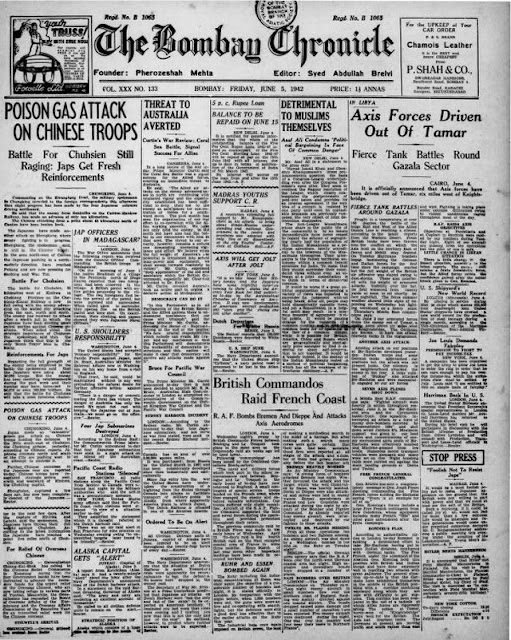
Bombay Chronicle 5 June 1942 worldwartwo.filminspector.com
The 5 June 1942 Bombay Chronicle headlines "Poison Gas Attack on Chinese Troops."

Battle of the Indian Ocean: There is a lot of Japanese naval activity off the west African coast today. The Japanese high command has sent a large force of submarines and other vessels to the vicinity of Madagascar in an attempt to decimate the British Far Eastern Fleet, and today that concentration of power pays off for them.

Japanese armed merchant cruisers Hokoku Maru and Aikoku Maru, operating 350 nautical miles (650 km) northeast of Durban, shell and sink 6757-ton British freighter Elysia. There are 22 dead. Elysia takes four days to sink. Hokoku Maru and Aikoku are there primarily to resupply the large number of Japanese submarines in the area.

Off the coast of Mozambique in the Mozambique Channel, Japanese submarine I-10 gets two successes. It sinks 2639-ton Panamanian freighter Atlantic Gulf (2 dead), and also 4999-ton US armed freighter Melvin H. Baker. British freighter Twickenham rescues the crew of Melvin H. Baker.

Japanese submarine I-20 torpedoes and sinks 5086-ton Panamanian freighter Johnstown off Mozambique. There are two deaths.
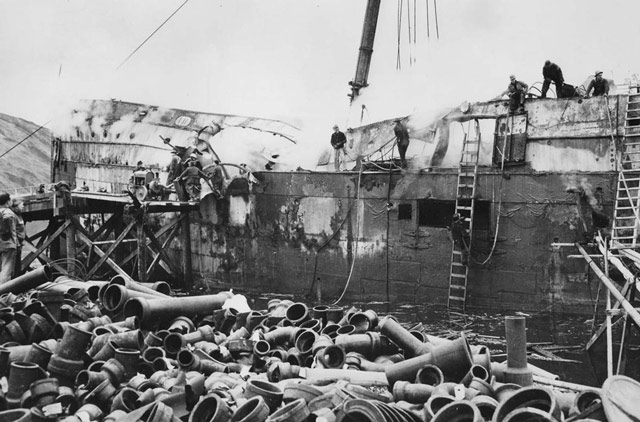
Dutch Harbor 5 June 1942 worldwartwo.filminspector.com
A damaged U.S. ship at Dutch Harbor following Japanese air attacks, Alaska, on 5 June 1942.

Eastern Front: In the Crimean Peninsula, General Erich von Manstein prepares to launch his long-awaited attack on the Soviet holdouts at Sevastopol. His 11th Army has LIV Corps to the north, 30th Corps (General Maximilian Fretter-Pico) to the south, and Romanian Mountain Corps 3 (General de divizie Gheorghe Avramescu) to the east. 

The Luftwaffe (Generaloberst Wolfram Freiherr von Richthofen) attacks throughout the day, as do 700 large German artillery pieces. Manstein's 203,800 men, including 65 Sturmgeschütz III self-propelled assault guns, oppose 118,000 Red Army troops holding the port. Today, the German bombardment, which has been rotating each day, shifts to the northern Red Army defensive line facing LIV Corps.

Fw. Anton "Toni" Hafner of 8./JG 51 claims 7 Soviet planes today to bring his score to 43 victories.

European Air Operations: It is a very hot day with some ground haze. The RAF engages in mostly convoy patrols with a few going along the French to Dutch coasts. RAF No. 141 Squadron pilot Warrant Officer Hamar shoots down a Dornier Do 217 E 20 km west of Leiden.
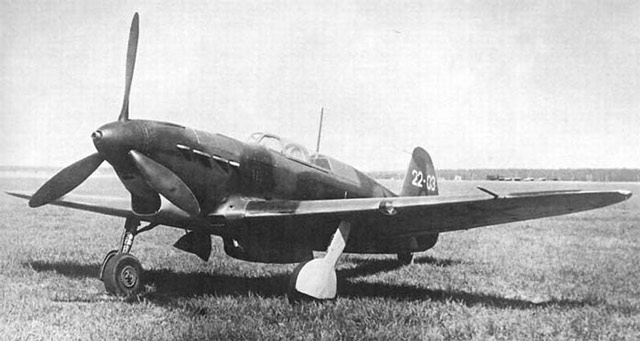
Yak-7B prototype 5 June 1942 worldwartwo.filminspector.com
Yakovlev Yak-7B prototype no.22-03 during trials in June 1942. It will become a useful close support fighter that serves first with the 42nd Fighter Aviation Regiment (IAP) at the North-Western front and then at Stalingrad and in the Caucasus.

Battle of the Atlantic: U-68 (KrvKpt. Karl-Friedrich Merten), on its fourth patrol out of Lorient, torpedoes and sinks 6693-ton U.S. tanker L.J. Drake in the Caribbean southeast of Santo Domingo. Merten uses three torpedoes, all of which hit and create a huge fireball. All 41 men aboard perish.

U-172 (Kptlt. Carl Emmermann), on its second patrol out of Lorient, torpedoes and sinks 3480-ton US freighter Delfina 130 miles northwest of San Juan, Puerto Rico. Emmerman has to follow the freighter for seven hours, during which he misses the ship with three torpedoes (due to malfunctions, not poor aim). The ship sinks within 20 minutes. There are four dead and 27 survivors, some of whom make landfall at Montecristi, Dominican Republic, and others are quickly picked up by US patrol boat USS YP-67.

U-94 (Oblt. Otto Ites), on its ninth patrol out of St. Nazaire, uses its deck gun and sinks 320-ton Portugues three-masted sailing ship Maria da Glória in codfish fishing grounds off Greenland. Ites does not see any markings so assumes it is an enemy vessel. Once the ship raises the Portuguese flag, Ites stops shooting, but it is too late for the ship. Once the crew abandons the ship, Ites resumes firing and sinks it. There are 36 dead and 8 survivors.

U-159 (Kptlt. Helmut Friedrich Witte), on its second patrol out of Lorient, uses its deck gun against 265-ton Brazilian sailing ship Paracury southeast of Santo Domingo in roughly the same area as where U-68 sinks L.J. Drake. The seas are rough, so the U-boat uses its 20mm anti-aircraft gun to punch holes in the waterline, causing it to capsize. Casualties are unknown. The ship remains afloat long enough for someone to find it, salvage it, and return it to service.
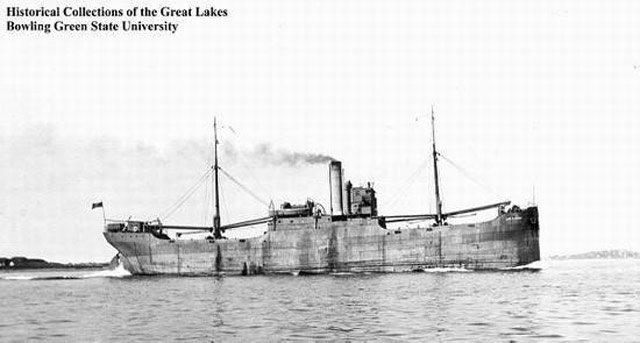
US freighter Velma Lykes, sunk 5 June 1942 worldwartwo.filminspector.com
U.S. freighter Velma Lykes, sunk on 5 June 1942 by U-158 in the Caribbean (Bowling Green State University).

U-158 (Kptlt. Erwin Rostin), on its second patrol out of Lorient, torpedoes and sinks 2572-ton U.S. freighter Velma Lykes off Puerto Juarrez, Yucatan Peninsula, Mexico. The ship sinks within one minute. There are 15 dead and 17 survivors, who cling to rafts and are picked up on the 6th by freighter Ardenvorhr after being spotted by a Catalina. The men of the Velma Lykes have further troubles when U-68 torpedoes and sinks their rescue ship, but they all survive that sinking, too.

British 1798-ton freighter Sonja Maersk runs aground and sinks off Ketch Harbor, Nova Scotia, due to heavy fog. There are no casualties.
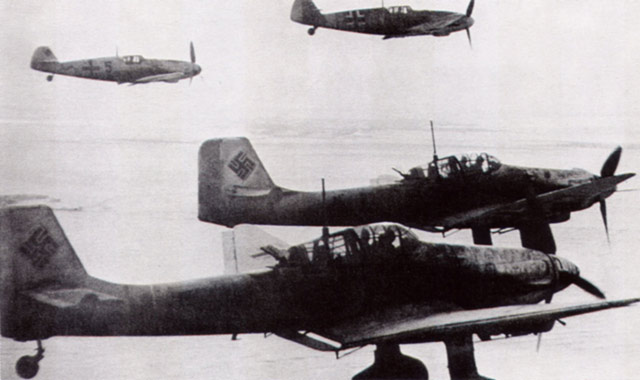
Stukas and Bf 109s June 1942 worldwartwo.filminspector.cmo
Messerschmitt Bf 109F4 JG5 Black 1 and 5 escorting Ju 87 Stukas of SG5.1 in Russia, June 1942

Battle of the Mediterranean: The land battle in Libya has been deadlocked for a week, and today the British Eighth Army decides to do something about it. General Neil Ritchie's forces launch Operation Aberdeen, an attempt to encircle German General Erwin Rommel's forces in "the Cauldron." Rommel's forces, meanwhile, still encircle the Free French outpost at Bir Hakeim.

The Axis forces in the Cauldron, however, have had time to prepare killing zones with their tanks and anti-tank gun positions. The British make no progress with their early-morning attacks from the north and only slight progress by the 7th Armoured and 5th Indian divisions from the east. The British 32nd Army Tank Brigade in the north loses 50-70 tanks.

Rommel, fortified by the morning success against the British tanks, reacts quickly. In the afternoon, he splits his forces, counterattacking east toward Bir el Hatmat with Ariete and 21st Panzer divisions and to the north with elements of the 15th Panzer Division. The attack to the east has great success, forcing the headquarters of two British divisions, two brigades, and others to flee in a panic. This effectively decapitates the British response. The 15th Panzer attack to the north also has success, forcing the 22nd Armoured Brigade back with a loss of 60 of its 156 tanks. This turns into a wild retreat in which the British abandon three Indian infantry battalions, a reconnaissance regiment, and four artillery regiments to be captured. The front then settles down for the night.

At Bir Hakeim, the surrounded  Free French remain safe within their fortifications but are running out of supplies such as food and water. The Desert Air Force flies cover overhead to disperse Luftwaffe attacks, but Axis artillery continues to batter away at the fort. The German 90th Light Division prepares to attack the fort on 6 June using pioneers to clear the minefields around it.

Convoy WS-19Z, which carries Force X, sails from the Clyde for Gibraltar. This is the prelude to Operation Harpoon, or the Battle of Pantelleria, when an eastbound convoy sailing from Gibraltar will pass a westbound convoy out of Alexandria (Operation Vigorous) in mid-June. Unknown to the Allies, who have been reading German codes with Operation Ultra, the Italian military intelligence service (Servizio Informazioni Militare) has broken the U.S. code being used in the Mediterranean. The Axis thus has an early warning of these two joint operations due to communications made by the U.S. Military Attaché in Egypt, Colonel Bonner Fellers.
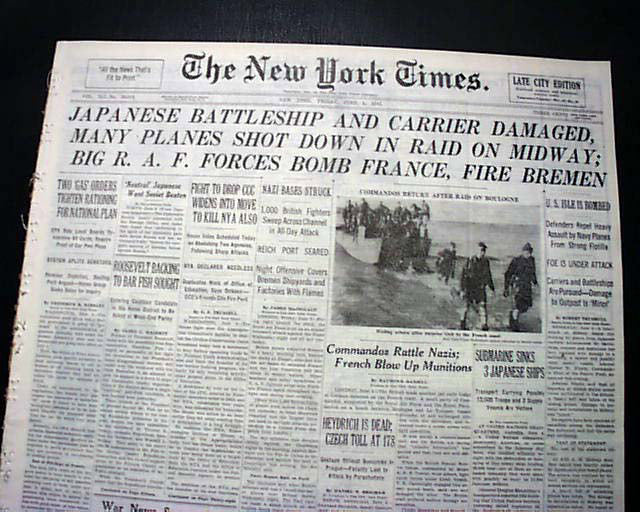
NY Times headlines June 1942 worldwartwo.filminspector.cmo
For once, the U.S. media actually downplays the real war news. The 5 June 1942 NY Times headlines that "Japanese Battleship and Carrier Damaged" when, in fact, the Japanese have lost four carriers. However, the truth comes out today as Admiral Nimitz lists the real successes at the Battle of Midway.

US/Axis Relations: The United States declares war on Bulgaria, Hungary, and Romania. Relations also now are strained with Finland due to its hosting Adolf Hitler to celebrate Marshal Mannerheim's 75th birthday on 4 June.

US Military: General Brehon B. Somervell, commander of the Army Service Forces, completes an inspection of US forces in Northern Island.

Two Douglas A-24 Dauntless dive bombers collide at Charters Towers, Queensland, Australia at 1000-1500 feet during a training flight. Three of the four men survive by parachuting out, but pilot 2nd Lt. Norman J. Davidson, whose plane was hit by the other plane's propeller from underneath, perishes.
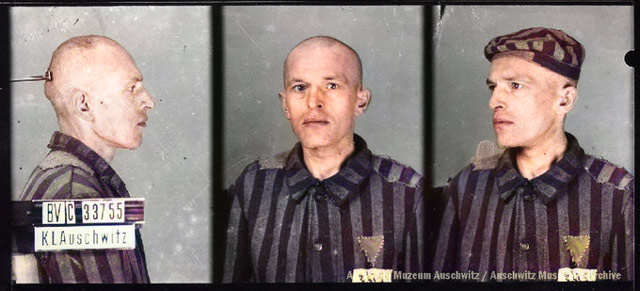
Auschwitz victim June 1942 worldwartwo.filminspector.cmo
Sloveč cabman Vaclav Novotny perishes in Auschwitz on 5 June 1942. Auschwitz Memorial (colorized).

Holocaust: Train Convoy No. 2 deporting people from France departs today for the East. The edict authorizing this train specifies that it should "deport Communists, Jews and anti-social elements to the East, in retaliation." Helmut Knochen (March 14, 1910 – April 4, 2003), the senior commander of the Sicherheitspolizei (Security Police) and Sicherheitsdienst in Paris, oversees the operation. SS Captain (Hauptsturmführer) Theodor Dannecker, leader of the Judenreferat at the SD office in Paris, has composed the list of deportees. 

This batch is composed of about 1000 mostly Jewish men aged 18 to 54, primarily Poles who fled the occupation there. They were arrested at Drancy, Beaune-la-Rolande, and Pithiviers and then taken to Compiègne between 14 May and 20 August 1941. Many of these men have been found unfit for work. Of these men, roughly 800 are taken to Auschwitz and are dead within ten weeks.
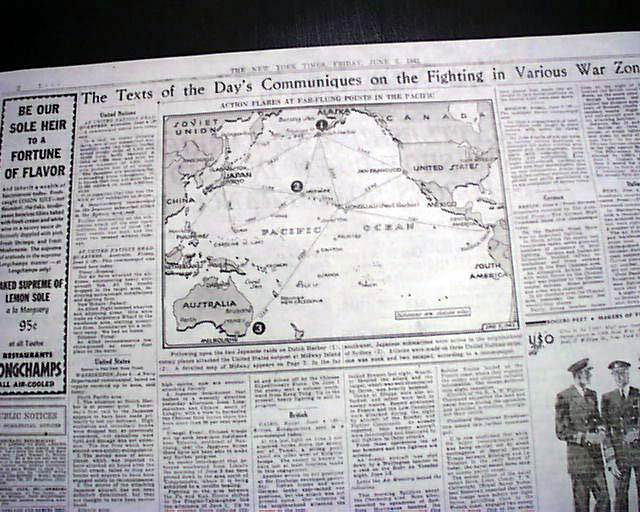
Map of Pacific battles in NY Times 5 June 1942 worldwartwo.filminspector.cmo
A war map in the 5 June 1942 NY Times helpfully shows American readers where the sites of three recent battles in the Pacific, at Midway, Sydney, and the Aleutians, are.

British Homefront: King George VI publishes his 1942 Birthday Honours. This involves various awards, rewards, appointments, and bestowing of honors. Among many other announcements, the economist John Maynard Keynes is made a Baron, filmmaker Alexander Korda is made a Knight Bachelor, and RAF Air Chief Marshal Charles Portal is awarded the Knight Grand Cross of the Order of the Bath (GCB).

American Homefront: Former child actress Virginia Lee Corbin, known at the start of her career as Baby Virginia Corbin, passes away at the age of 31 in Chicago, Illinois from tuberculosis. She is one of many silent film actors unable to transition to the talkies and retired shortly before her death. 
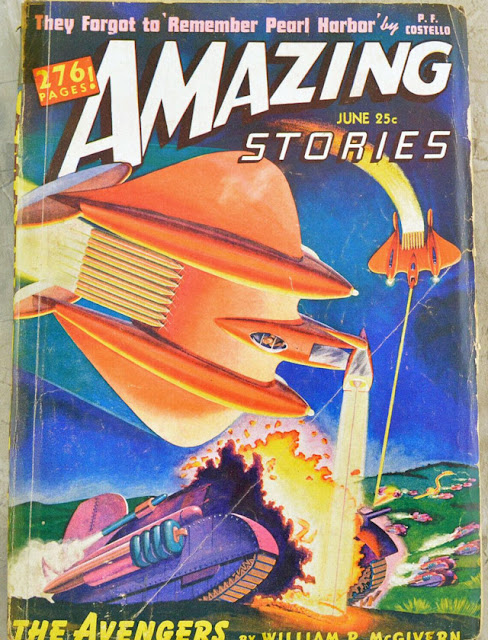
Amazing Stories June 1942 worldwartwo.filminspector.cmo
This June 1942 edition of Amazing Stories features the short story "The Avengers" by William P. McGivern. Hey, whatever happened to them? Actually, these Avengers are different than the Stan Lee ones, which debuted in Avengers #1 issued September 1963.


2021

Sunday, September 26, 2021

May 31, 1942: The Attack on Sydney Harbour

Sunday 31 May 1942

Sydney Harbour mini-sub attack 31 May 1942 worldwartwo.filminspector.com
A Japanese mini-sub that entered Sydney Harbour on the night of 31 May 1942 but got caught in netting. The crew, unable to escape, scuttled it with themselves inside (Gordon Short, The Sydney Morning Herald).

Battle of the Pacific: After dark on 31 May 1942, three Japanese Kō-hyōteki-class mini-submarines, (M-14, M-21, and M-24) and their two-man crews enter Sydney Harbour, Australia. Only one of the subs, M-24, makes a successful attack, firing its two torpedoes to sink converted ferry HMAS Kuttabul (21 dead, 19 Australians and 2 British). The M-24 crew then attempts to exit the harbor only to wreck off Sydney's Northern Beaches at Bungan Head (sub discovered in 2006).

This begins a two-week-long campaign by the "mother" submarines to disrupt shipping in the area, during which they sink three ships and kill 50 sailors. The "Attack on Sydney Harbour," which includes submarines shelling Sydney and Newcastle on 8 June 1942, is the only time those cities have been attacked.
B-17E taking off at Midway, 31 May 1942 worldwartwo.filminspector.com
"U.S. Army Air Force Boeing B-17E Flying Fortress bombers of the 431st Bombardment Squadron take off from the airfield on Eastern Island, Midway Atoll, on the afternoon of 31 May 1942. The plane in the center is an early-model B-17E-BO (s/n 41-2397), with a Bendix remotely controlled belly turret, flown by 1st Lt. Kinney." Naval History and Heritage Command USAF-22635-AC.

In the Central Pacific, both Japanese and US carriers are converging on Midway Island. The Japanese intend to invade, but they don't know the US Navy has discovered their plans and is lying in wait. The sides are roughly equal, with four Japanese fleet carriers opposing three US fleet carriers and land aircraft based on Midway. At Midway, B-17 bombers begin flying search operations looking for the Japanese ships. These searches, which include PBY Catalinas, focus on the seas to the north.

Admiral Nimitz is not taking any chances regarding the outcome of the upcoming confrontation at Midway. He already has ordered his only reserve aircraft carrier, USS Saratoga, to complete its repairs at San Diego and head to Pearl Harbor ASAP. Today, the navy shifts two battleships, Colorado and Maryland, to San Francisco to protect the west coast in case of a Japanese breakthrough.

US Navy submarine USS Pollack (SS-180) torpedoes and sinks Japanese auxiliary submarine chaser Shunsei Maru No. 5 off Murotosan, Japan.

B-17s of the 5th Air Force attack Lae and Salamaua, New Guinea.

Australian ship sunk in Sydney Harbour, 31 May 1942 worldwartwo.filminspector.com
Australian Navy depot ship (former ferry Kuttabul) sunk by a Japanese mini-submarine in Sydney Harbour on the night of 31 May 1942 (Gordon Short, The Sydney Morning Herald). 

Battle of the Indian Ocean: As one group of Japanese mini-subs attacks Sydney Harbour, another group has been attacking Royal Navy warships at Diego Suarez, Madagascar. Having blown a 30x30 foot hole in battleship HMS Ramillies and sunk freighter British Loyalty, the two subs exit the bay and head northwest. M-16b is lost and never found, while M-20b - the one that made the attacks - winds up beached at Nosy Antalikely (Antali Keli) islet after its battery runs out. The two crewmen receive help from friendly locals, make it to the mainland, and head for their recovery area at Cape Amber on foot.

With their cover blown, Japanese submarine I-10 launches its "Glen" seaplane for the second day in a row to fly over Diego Suarez. The British, oblivious, fail to notice.
Australian ship sunk in Sydney Harbour, 31 May 1942 worldwartwo.filminspector.com
Kuttabul lying on the bottom in Sydney Harbour after being torpedoed on 31 May 1942.

Eastern Front: The front has settled down since the German victory southeast of Kharkov, where the victors are busy counting prisoners. At Fuhrer Headquarters in East Prussia, General Franz Halder comments about the upcoming Case Blue that "Build-up is proceeding according to plan."

The Germans have another big opportunity to the north, where large Soviet forces are essentially trapped on the wrong side of the Volkhov River. Halder comments, "The enemy's intention to pull out of the Volkhov bulge is now quite obvious; not clear about Pogostye bulge."

What Halder doesn't know is that General Lieutenant A. A. Vlasov, commander of the 2nd Shock Army in the bulge, has repeatedly asked for permission to retreat but has been denied. Now, Vlasov's army is so weak that it doesn't matter whether he is allowed to retreat or not. Vlasov is preparing a final, desperate breakout at Myasnoi Bor that will decide the fate of his army.
HMS Highlander at sea, 31 May 1942 worldwartwo.filminspector.com
British destroyer HMS Highlander at sea, 31 May 1942 (© IWM FL 1984).

European Air Operations: While Cologne recovers from the stunning 1000-plane RAF Bomber Command raid of 30/31 May, the British try again with a massive raid against Essen. This one, however, achieves little in comparison to the firestorm created at Cologne.

The de Haviland Mosquito bomber makes its operational debut today. Four of the bombers of RAF No. 105 Squadron visit Cologne to drop a few more bombs and take some reconnaissance photos.

The Luftwaffe retaliates for the Cologne raid with a "Baedecker Raid" against Canterbury. It causes large fires that lead to heavy damage.
Artist depiction of RAF attack on Cologne, 31 May 1942 worldwartwo.filminspector.com
Mass bomber raid on Cologne (The National Archives UK, artist unknown).

Battle of the Atlantic: The final six ships of Convoy PQ-16 make port in Archangel, ending the convoy. PQ-16 lost eight ships, six to air attack, one to a mine, and one to U-703. Despite the losses, the Allies consider the convoy a success because of the badly needed war supplies brought to the Soviet Union. It also includes Heavy Lift Ships including SS Empire Elgar that remain in the USSR to facilitate convoy unloading for 14 months.

U-107 (Kptlt. Harald Gelhaus), on its sixth patrol out of Lorient, torpedoes and sinks 4536-ton Panamanian freighter Bushranger west of Jamaica. This sinking is sometimes said to have occurred on 1 June, as different accounts have the torpedo hitting before or after midnight on the 31st. There are 17 dead and 26 survivors, who are picked up on 12 June by UCGS USS Nike.

U-506 (Kptlt. Erich Würdemann)g, on its second patrol out of Lorient, gets its final victory of a patrol during which it has sunk eight ships of 39,906 tons and damaged three more of 23,358 tons. This victim is 2292-ton British freighter Fred W. Greene, which sinks 200 miles southeast of Bermuda. The ship is carrying 725 tons of military stores and general cargo, including 48 motor trucks, construction equipment, beer, cigarettes, and 48 bags of mail. Würdemann has to use his deck gun because he is out of torpedoes. There are five dead and 36 survivors, who are picked up on the 1st by two different US destroyers, Bernadou (DD 153) and Ludlow (DD 438).

U-432 (Kptlt. Heinz-Otto Schultze), on its fifth patrol out of La Pallice, torpedoes and sinks 1188-ton Canadian freighter Liverpool Packet 15 miles west of Seal Island (near Cape Sable), Nova Scotia. There are two deaths and 19 survivors, who make it to shore in their lifeboat at Seal Island.

Italian submarine Comandante Cappellini torpedoes and sinks 8214-ton British tanker Dinsdale southwest of St. Paul Rocks off Brazil. There are thirteen deaths.

Comandante Cappellini also torpedoes and sinks 8214-ton British Royal Fleet Auxiliary RFA Dinsdale northeast of Pernambuco. There are five dead and 52 survivors.
British anti-tank gun in North Africa, 31 May 1942 worldwartwo.filminspector.com
Truck-mounted 6-pdr anti-tank gun in the Western Desert, 31 May 1942.

Battle of the Mediterranean: With German General Erwin Rommel's Afrika Korps having pulled back into a defensive position called "The Cauldron," the battle along the Gazala Line has entered a new phase. The key factor for both sides is supplies for thirsty men and tanks. To solve this problem, Rommel sends the 90th Light Division and the Italian Trieste Division to assault the British 150th Infantry Brigade blocking the supplies in the 'Sidi Muftah box." The attack, launched in the morning, continues throughout the day, making good progress but not breaking through the British defenders.

In Rome, General Albert Kesselring is tired of having the British sink his supply ships to Rommel. Today, he submits a plan to invade Malta to the Italian Commando Supremo. However, the ultimate decision rests with Hitler, and he isn't ready to repeat a Crete-style invasion.
The Arizona Daily Star, 31 May 1942 worldwartwo.filminspector.com
The Arizona Daily Star for 31 May 1942 headlines the previous day's Memorial Day celebrations. Off to the side is a column about the British counterattack against Rommel in Libya.

On the Allied side, the supply situation of the Free French holding out at the fortress of Bir Hakeim is alleviated when fifty supply trucks of the 101st Transport Company break through the German encirclement. A French raid from the fort destroys five tanks and a German armored vehicle repair shop. In the air overhead, things do not go as well for the Allies. They lose fifteen fighters and a bomber, their worst losses of the battle, to nine Luftwaffe losses. 

British submarine HMS Proteus and Taku torpedo and badly damage 6836-ton Italian freighter Gino Allegri about 80 miles west of Benghazi. The ship remains afloat until finished off by RAF aircraft.

HMS Proteus also torpedoes and sinks 1571-ton Italian freighter Bravo northwest of Benghazi.

Obfw. Erich Krenzke of 6./JG 27 is captured after he is forced to crash-land his Bf 109F-4 behind British lines near Acroma and El Adem. He finishes his career with eight victories.
Fascist hikers in France, 31 May 1942 worldwartwo.filminspector.com
An Italian hiking group organized by the Fascists in Mulhouse, France, hike through Upper Alsace, 31 May 1942 (Proietti, Ugo, Federal Archive Image 212-357)

Battle of the Black Sea: Soviet submarine SHCH-214 shells and sinks 85-ton Turkish sailing ship Mahbubdihan northeast of Cape Igneada, Turkey.

US Military: US ration strength in Northern Ireland as of this date is 32,202, including 1626 officers, 102 nurses, 16 warrant officers, and 30,458 enlisted men.

American Homefront: Golfer Sam Snead, known as "Slammin' Sammy Snead," wins the PGA Championship at Seaview Country Club in Galloway Township, New Jersey. It is the first of what become seven major titles. Immediately after this event, which is the last major championships held until 1944, Snead joins the US Navy and serves in it for the remainder of World War II. Following his honorable discharge, Snead resumes winning tournaments (a record 82 PGA Tour events) until he retires in 1987. As of this writing, Snead remains tied for the most lifetime PGA Tour events won.
Bomb damage in Cologne from raid of 30/31 May 1942 worldwartwo.filminspector.com
Bomb damage in Cologne city center from the May 30/31 RAF 1000-plane raid. This is Unter Goldschmied (Federal Archive Picture 121-1334).

May 1942


2021

May 30, 1942: First RAF Thousand-Plane Raid

Saturday 30 May 1942

Operation Millenium 30 May 1942 worldwartwo.filminspector.com
Cologne Cathedral illuminated during Operation Millenium, 30-31 May 1942.

Battle of the Pacific: Having spent 72 hours in drydock, during which its flight deck was patched and whole sections of internal frame were replaced, USS Yorktown (Task Force 17) departs Pearl Harbor on 30 May 1942 to join Enterprise and Hornet near Midway Island. Repairmen from repair ship Vestal, damaged on 7 December 1941, remain on the ship and continue to work as it sails. Yorktown's depleted air group is replenished with units from aircraft carrier Saratoga, which is under repair in San Diego. The carriers plan to rendezvous northeast of Midway.

Admiral Nimitz, meanwhile, has not forgotten about Saratoga. Today, he orders Captain Ramsey to sail from San Diego as soon as possible even if not 100% ready for action. The 7th Air Force dispatches six B-17 bombers from Hawaii to Midway to reinforce the 15 already there.

The Japanese invasion fleet bound for Midway already is at sea. Today, a task force of two light aircraft carriers and two troop transport ships departs from northern Honshu for the Aleutian Islands part of the plan.

The US 11th Air Force based in Alaska brings a new airfield at Umnak, Aleutian Islands, into operation with B-26 bombers of the 77th Bombardment Squadron (Medium).

Japanese patrol planes approach the French Frigate Shoals, but they spot two US Navy ships anchored there and are forced to turn back. Their mission was to rendezvous with a submarine there, refuel, and fly reconnaissance over Pearl Harbor. This is now impossible and the Japanese do not find out with certainty that the US Navy carriers have left. The US ships are stationed at the shoals because they know the Japanese have used them in the past as transit points for bombing missions against Hawaii.

US Navy submarine Pompano  (SS-181) torpedoes and sinks Japanese troop transport Atsuta Maru in the East China Sea east of Okinawa. There are 39 crew and 37 passengers killed. Pompano escapes a depth charge attack by the transport's destroyer escort.

Pix magazine 30 May 1942 worldwartwo.filminspector.com
Pix magazine, 30 May 1942.

Battle of the Indian Ocean: Two Japanese submarines (I-16 and I-20) stationed about ten miles off Diego Suarez, Madagascar, launch mini-subs to penetrate the harbor. Both subs make it into the harbor, which the British have left unguarded despite having spotted a Japanese floatplane on the 29th. At 17:10, the I-20 mini-sub M-20b (Lt. Akieda Saburo) launches a torpedo that hits Royal Navy battleship HMS Ramillies. The torpedo blows a 30x30 foot hole in the port bulge forward of "A" turret. This cuts off the entire ship's electrical system and floods the forward magazines and shell rooms.

Saburo is not done yet. He and the other sub remain in the harbor and, at 21:20, Saburo fires his second and last torpedo, which sinks 6,993-ton tanker British Loyalty in 65 feet of water (later raised and used as a hulk at Addu Atoll, Maldives). The subs remain in the harbor until the 31st.

B-17 bombers of the 10th Air Force again bomb the airfield at Myitkyina, Burma. This is the last attack against this target for the time being. 

Eastern Front: The final, weak Soviet attempts to break out of the encirclement southeast of Kharkov end today. Less than 10% of the trapped men have managed to escape. The Germans march the roughly 250,000 (the exact number is a matter of scholarly debate) Red Army prisoners in long columns through Kharkov and then on to prison camps. At Fuhrer Headquarters in East Prussia, General Franz Halder notes in his war diary "All fronts equally quiet. On the Volkhov, the access to the bulge has been narrowed down."

The loss of the Kharkov battle irreparably destroys Marshal Semyon Timoshenko's military reputation. Stalin will replace him as commander of the Stalingrad Front on 22 July 1942 with Vasily Gordov. Thereafter, Timoshenko will be given only one more command before being basically cashiered.

Boeing B17F 30 May 1942 worldwartwo.filminspector.com
The Boeing B-17F Flying Fortress makes its first flight at Boeing Field, Seattle, on 30 May 1942. This is a new series of B-17 bombers that incorporated 400 improvements learned from missions to date in the war. 

European Air Operations: After a lengthy period of preparation, RAF Bomber Command launches Operation Millenium at dusk. It sends over 1000 bombers to raid Cologne, the first 1000-plane raid of the war. The main targets are the city's chemical and machine-tool factories. The planes drop 1455 tons of bombs and incendiaries during a 90-minute attack. The firestorm kills 469 people and leaving 45,000 homeless.

Hermann Goering is having dinner at Veldenstein Castle when he gets a call from Josef Grohe, the Gauleiter of Cologne. During Grohe's explanation of the severity of the attack, Goering calls him a liar and hangs up. Soon after, another call comes in - this time from Adolf Hitler, who is in Berlin and has heard the same reports. Goering assures Hitler that at most 70 bombers attacked. When Goering learns later that air and flak defenses claim to have shot down 40 bombers, he claims it was a great defensive victory. Another 116 RAF bombers are damaged.

Winston Churchill, meanwhile, knows exactly how many bombers were sent - 1046 planes - and announces to the press that it was over 1000. Hitler, speaking to an aide, comments to an aide:
It is out of the question that only seventy or eighty bombers attacked. I never capitulate to an unpleasant truth. I must see clearly if I am to draw the proper conclusions.
Aside from the devastation to the city, the raid begins a rift between Hitler and Goering that only grows with time.

During an RAF Coastal Command patrol off Terschelling, the planes bomb and sink 2956-ton Swedish ore carrier Värmdö in the North Sea off Den Helder, North Holland. The ship was carrying ore to Rotterdam. There are seven deaths.

A German flak ship shoots down an RAF Hudson III (AM842) out of North Coates during a convoy attack in the Waddenzee, South of Schiermonnikoog. All four crewmen perish.

German flak ship that shot down an RAF bomber on 30 May 1942 worldwartwo.filminspector.com
The crew of a German flak ship showing off the wheel of an RAF Hudson III they shot down on 30 May 1942.

Battle of the Baltic: German 1354-ton freighter Orkan hits a mine laid by Soviet submarine Lembit and sinks near Greifswalder Oie, Swinemunde. Casualties are unknown.

Battle of the Atlantic: Having lost seven ships to air raids, Convoy PQ 16 makes port in Murmansk (eight ships continue on to Archangelsk and reach that port safely). The Luftwaffe sends Junkers Ju 88 bombers of  II./KG 30 against the Murmansk-bound ships, and during these attacks Hero of the Soviet Union Leonid Ivanovich Rodionov is shot down and killed after claiming two planes himself.

German auxiliary cruiser Michel (HSK-9), operating in the South Atlantic, spots 6800-ton US Liberty ship George Clymer. The Liberty ship is stopped with engine trouble and makes an easy target. The raider hits the ship with two torpedoes (actually, it launches a motor torpedo boat that scores the hits), but is then chased off by nearby Royal Navy AMC Alcantara (which doesn't see Michel and assumes it was torpedoed by a U-boat). The George Clymer is so badly damaged that the crew has to abandon it, and Alcantara later scuttles it on 6 July 1942. Everybody survives.

U-404 (Kptlt. Otto von Bülow), on its third patrol out of Brest, torpedoes and sinks 5491-ton US freighter Alcoa Shipper 500 miles east of Cape Charles, Virginia. The lookouts on the freighter spot the U-boat well before the attack, but evasive maneuvers do not prevent a torpedo strike. The ship, carrying 8340 tons of bauxite ore, sinks within five minutes. The U-boat surfaces after the sinking, questions the men in their lifeboat, and leaves them bottles of rum, cigarettes, and a pair of dungarees for a sailor who was undressed. There are seven dead and 25 survivors, who are picked up just over two days later by Norwegian freighter Margrethe Bakke.

An unidentified submarine torpedoes and sinks the 2161-ton Norwegian freighter Baghdad east of Martinique. The ship sinks within minutes. There are nine deaths and 21 survivors. U-155 (KrvKpt. Adolf Cornelius Piening), on its sixth patrol out of Lorient, is usually credited with this sinking, but some records indicate that it was still in port at Lorient on this date.

German 1592-ton minesweeper Sperrbrecher-166 Schirmeck sinks after a collision with training ship Obra. The ship apparently is refloated and returned to service.

French 288-ton trawler Edmond René is lost off Boulogne-sur-Mer, Pas-de-Calais, of unknown causes (perhaps a mine).

Sperrbrecher 166, sunk on 30 May 1942 worldwartwo.filminspector.com
Sperrbrecher 166, sunk on 30 May 1942 after a collision but refloated and repaired.

Battle of the Mediterranean: In Libya, the Axis offensive is struggling. German General Erwin Rommel, low on supplies and facing determined Free French resistance at the fortress of Bir Hakeim, pulls back the leading tanks of the Afrika Korps to the west. This forms a defensive perimeter, dubbed "The Cauldron," that is protected by British minefields on its western side.

Rommel sends some brave men through the minefield to make contact with Italian X Corps to the west and open a supply lane. These troops run into the British 150th Brigade at the "Sidi Muftah box" and destroy it early on the 31st to establish a connection with the Italian Corps. Meanwhile, fierce battles erupt near Bir Hakeim as the French attempt to close the supply lane there opened through the minefield on the 29th, while the Germans attempt to defend it.

The Germans previously captured 620 soldiers of the 3rd Indian Motor Brigade but, unable to watch over them, simply let them loose in the desert. These men make it to the Bir Hakeim fortress today. This only adds to the French supply issues, especially of water. 

British submarine HMS Proteus torpedoes and sinks 1571-ton Italian freighter Bravo in the Gulf of Sidra. Casualties are unknown.

British 72-ton utility tug HMS St. Angelo hits a mine off Grand Harbour, Malta, and blows up. There are at least four deaths.

Colonial League Day in Munich on 30 May 1942 worldwartwo.filminspector.com
Colonial Union day in Munich, at which Governor of Bavaria Franz Ritter von Epp gives a speech (Denzel, Federal Archive Image 146-2008-0172).

Partisans: Félix Otto Cadras, a leading French partisan and communist (participating in organizing the National Front partisan organization), is executed by a German firing squad at Fort Mont-Valérien, Paris, along with Arthur Dallidet, Louis Salomon, and Jacques Decour. These executions are in reprisal for an attempted assassination at Le Havre on 23 May 1942. Cadras will be made a Chevalier of the Legion of Honor by a decree of 17 January 1961, and a school and a street are named after him.

Allied Relations: RAF Air Chief Marshall Sir Charles F Portal and Lieutenant General Henry H "Hap" Arnold, Commanding General USAAF, meet to discuss the basing of US planes in Great Britain. Arnold's plan calls for 66 combat groups and additional observation squadrons by March 1943.

American Homefront: It is Memorial Day in the United States.

Attempting to evade being sent to an intern camp, Fred Korematsu has had plastic surgery on his eyelids. However, today he is arrested on a street corner in San Leandro, California. He will begin a court case, Korematsu vs. United States, 323 U.S. 214 (1944), that reaches the US Supreme Court. It upholds the exclusion of those of Japanese ancestry from the US West Coast. The conviction is overturned in a case filed in 1983 and disavowed by the Supreme Court in Trump vs. Hawaii (2018), though this latter opinion is not binding, being merely dictum.

USS Runner is launched, 30 May 1942 worldwartwo.filminspector.com
Launching of submarine Runner, Portsmouth Naval Shipyard, Kittery, Maine, United States, 30 May 1942 (US Navy).

May 1942


2021